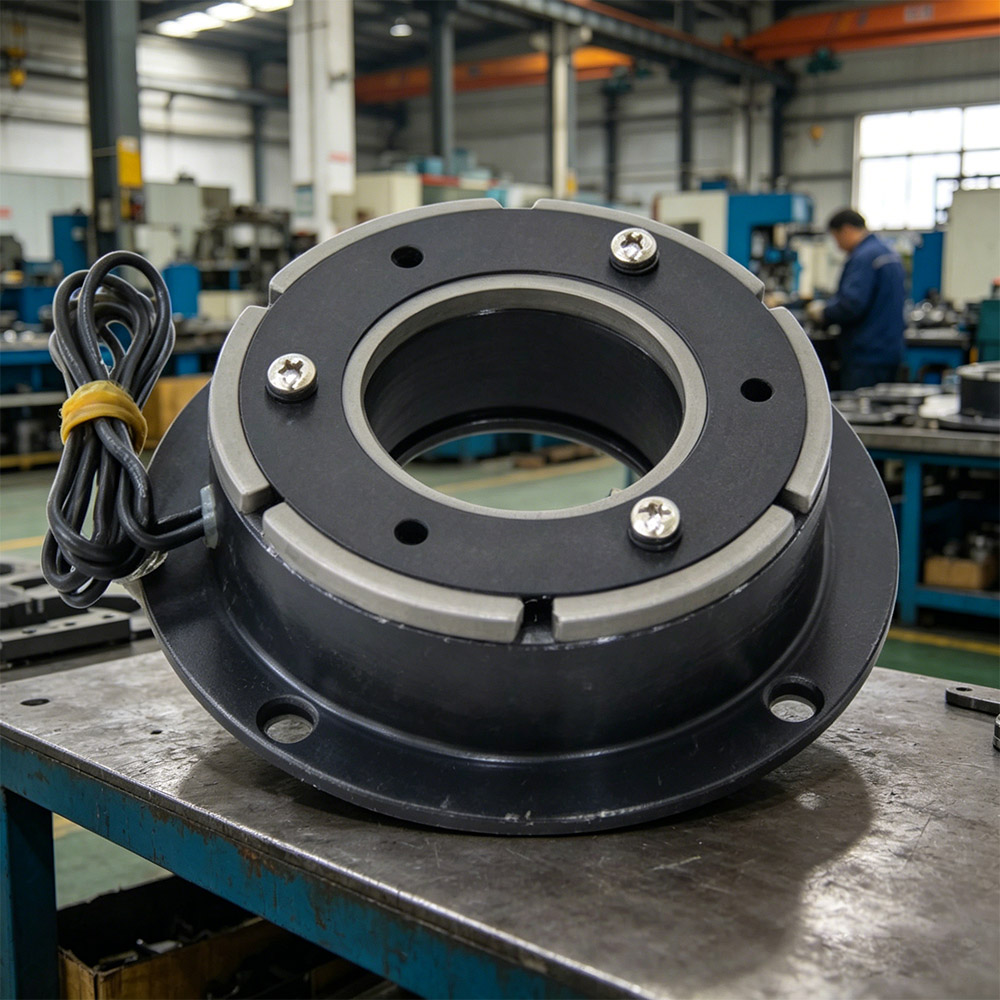
Shaft Mounted Electromagnetic Clutch: Precision Control Solutions for Industrial Applications

All Categories

shaft mounted electromagnetic clutch

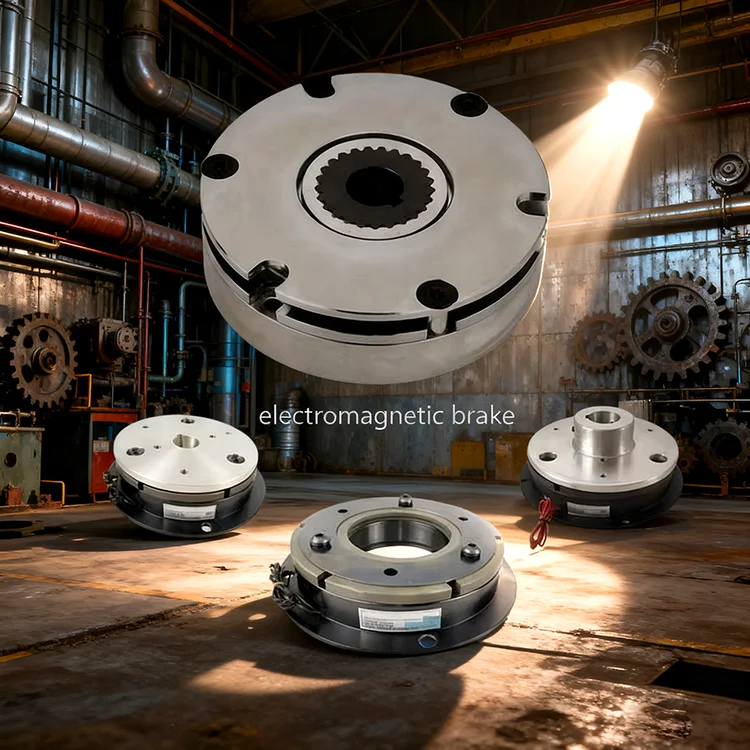
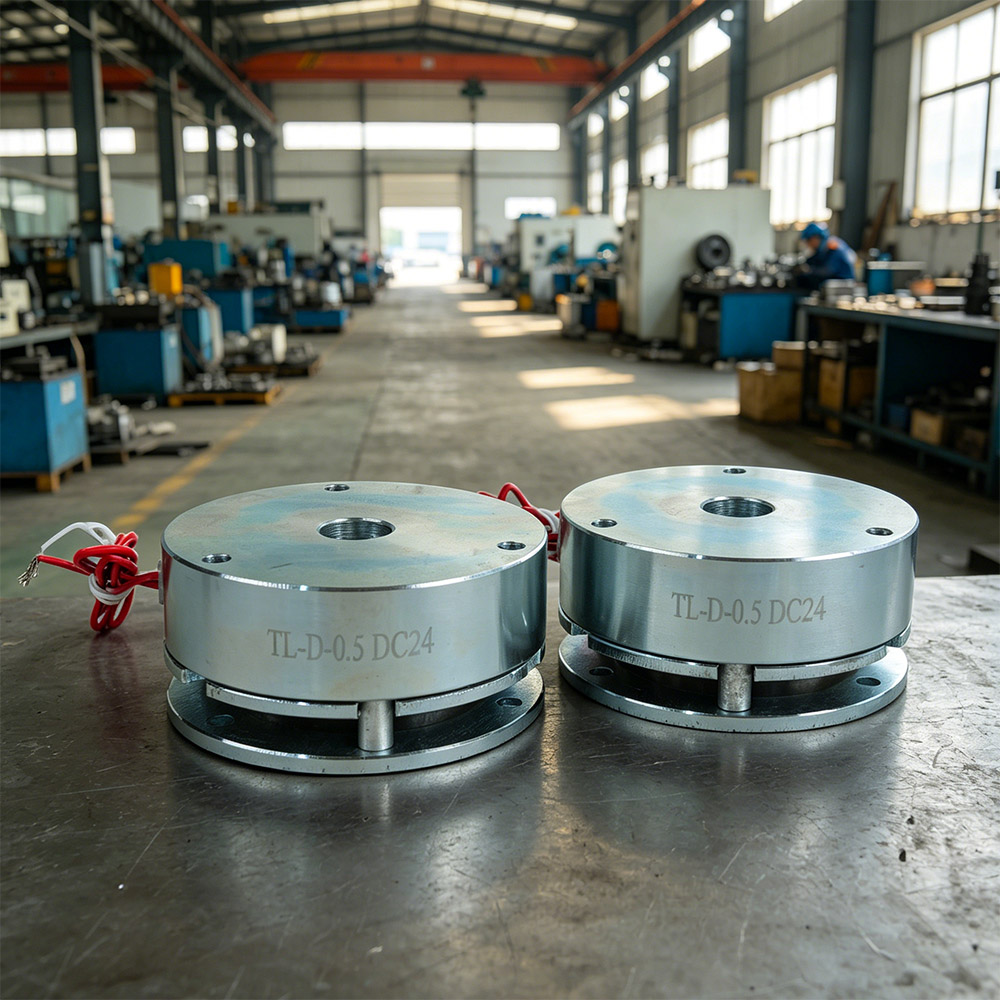
A shaft mounted electromagnetic clutch represents a sophisticated power transmission solution that enables precise control over mechanical engagement and disengagement through electromagnetic force. This innovative device mounts directly onto a shaft, providing a compact and efficient method for controlling rotational motion in various industrial applications. The shaft mounted electromagnetic clutch operates by utilizing electromagnetic coils that generate a magnetic field when energized, causing friction plates to engage and transmit torque from the driving shaft to the driven components. When the electrical current is removed, springs separate the friction surfaces, immediately disengaging the clutch and stopping power transmission. The core technological features of this mechanism include rapid response times, typically measured in milliseconds, allowing for instantaneous engagement and disengagement cycles. The design incorporates heat-dissipating materials and ventilation structures to manage thermal buildup during operation, ensuring consistent performance even under demanding conditions. Modern shaft mounted electromagnetic clutch systems feature adjustable torque capacities, enabling customization based on specific application requirements. These devices find extensive applications across manufacturing automation, packaging machinery, printing equipment, conveyor systems, industrial robotics, textile processing, food production lines, and material handling equipment. Their ability to provide remote control capabilities makes them particularly valuable in automated systems where manual operation would be impractical or unsafe. The shaft mounted electromagnetic clutch design eliminates the need for complex linkages or mechanical actuators, simplifying installation and reducing maintenance requirements. Advanced versions incorporate protective features such as thermal sensors, overload protection, and wear indicators that signal when replacement becomes necessary. The compact footprint of these clutches allows integration into space-constrained environments without compromising functionality, while their modular design facilitates easy replacement and service. This technology continues to evolve with improvements in materials science, electromagnetic efficiency, and control electronics, making the shaft mounted electromagnetic clutch an increasingly essential component in modern industrial operations.

Popular Products

The shaft mounted electromagnetic clutch delivers numerous practical benefits that directly impact operational efficiency and cost-effectiveness for businesses across various industries. First and foremost, these devices offer exceptional precision in controlling power transmission, allowing operators to start and stop machinery smoothly without jarring impacts or mechanical stress. This smooth engagement significantly extends the lifespan of connected equipment by reducing wear on gears, bearings, and other drivetrain components. The electromagnetic operation eliminates the need for manual intervention, creating safer working environments by keeping operators at a distance from moving machinery. Companies experience substantial reductions in downtime because these clutches require minimal maintenance compared to traditional mechanical alternatives. The absence of complex linkages and cables means fewer components that can fail or require adjustment over time. Installation becomes remarkably straightforward since the shaft mounted electromagnetic clutch attaches directly to existing shafts without extensive modifications to machinery layouts. This simplicity translates to lower installation costs and faster equipment commissioning. Energy efficiency represents another significant advantage, as these clutches consume electrical power only during engagement transitions, resulting in reduced operating expenses over the equipment lifecycle. The rapid response capability enables precise cycle control in automated processes, improving production throughput and product quality. Manufacturers benefit from the consistent torque transmission characteristics that ensure repeatable performance across millions of operating cycles. The shaft mounted electromagnetic clutch adapts easily to various voltage requirements and control systems, making integration with existing electrical infrastructure seamless. Temperature tolerance is another practical strength, with properly specified clutches operating reliably in environments ranging from cold storage facilities to heated industrial spaces. The remote activation capability allows centralized control of multiple machines, streamlining operations and enabling sophisticated automation strategies. Noise reduction is an often-overlooked benefit, as electromagnetic engagement operates much quieter than mechanical clutches with their characteristic clicking and rattling sounds. This quieter operation creates more pleasant working conditions and may help facilities meet noise regulation requirements. Flexibility in torque selection means businesses can match clutch specifications precisely to their applications, avoiding over-engineering and unnecessary expense. The predictable wear patterns and long service intervals of these clutches simplify maintenance planning and inventory management. When replacement does become necessary, the modular design allows quick component swaps without removing entire assemblies or realigning connected equipment. Overall, the shaft mounted electromagnetic clutch provides a compelling combination of reliability, efficiency, and operational convenience that delivers measurable returns on investment through reduced maintenance costs, improved safety, enhanced productivity, and extended equipment life.

Practical Tips

Transmission Pain Points in Printing/Textile/Chemical Machinery: How Electromagnetic Clutches Improve Equipment Stability?

08

Dec

Transmission Pain Points in Printing/Textile/Chemical Machinery: How Electromagnetic Clutches Improve Equipment Stability?

Struggling with transmission instability in printing, textile, or chemical machinery? TJ-A electromagnetic clutches eliminate slip, boost throughput 15–20%, and ensure asbestos-free safety. Discover how top global manufacturers achieve 99.8% reliability—request a spec sheet today.
View More
High-Quality Web Guide Control Systems From a Leading Domestic Manufacturer With 20 Years of Expertise

08

Dec

High-Quality Web Guide Control Systems From a Leading Domestic Manufacturer With 20 Years of Expertise

Discover high-precision web guide control systems from a trusted domestic manufacturer with 20 years of R&D expertise. Reduce waste, boost efficiency, and ensure reliability. Request a quote today.
View More
The Pain of Non-Standard Transmission in Special Working Conditions

09

Apr

The Pain of Non-Standard Transmission in Special Working Conditions

Struggling with standard transmission failures in extreme temps, dust, or tight spaces? TianJi’s 20-year R&D delivers reliable custom clutches & brakes—engineered for your exact specs. Get a free technical consultation today.
View More

Get Your Custom Quote

Tell us your requirements and get a tailored solution for your project.
Name
Mobile
Email
Please include
Message
0/1000

shaft mounted electromagnetic clutch

Instantaneous Response and Precision Control

Instantaneous Response and Precision Control

The exceptional response speed of the shaft mounted electromagnetic clutch stands as one of its most valuable characteristics for modern industrial applications. When electrical current flows through the electromagnetic coil, the magnetic field forms within milliseconds, causing immediate engagement of the friction surfaces that transmit rotational power. This near-instantaneous activation allows machinery to transition from stationary to operational states with remarkable speed and accuracy. In automated production environments where cycle times directly impact output capacity, these rapid engagement cycles enable higher throughput without sacrificing control quality. The precision extends beyond simple on-off functionality, as varying the electrical current intensity can modulate the engagement force, creating controlled slip conditions for gentle acceleration of heavy loads. This variable engagement prevents shock loading that could damage delicate components or cause product defects in sensitive manufacturing processes. The shaft mounted electromagnetic clutch maintains consistent response characteristics throughout its service life, unlike mechanical systems that experience performance degradation as components wear. This reliability ensures that automated sequences remain synchronized and repeatable across thousands or millions of cycles, which is critical for maintaining production quality standards. The electrical control interface integrates seamlessly with programmable logic controllers, enabling sophisticated automation strategies that respond to real-time sensor inputs and process variables. Engineers can program complex engagement patterns, timed sequences, and conditional logic that would be impossible with purely mechanical clutch systems. The rapid disengagement capability proves equally important for safety applications, where emergency stop functions must halt machinery movement immediately to prevent accidents or equipment damage. When the control signal is removed, spring forces separate the friction surfaces within milliseconds, interrupting power transmission before dangerous conditions develop. This instantaneous response provides an additional layer of protection beyond mechanical brakes or stops. The precision control offered by the shaft mounted electromagnetic clutch reduces material waste in processes where exact positioning or timing determines product quality, such as cutting, printing, or assembly operations. The ability to engage and disengage power transmission without stopping the prime mover also conserves energy and reduces wear on motors and drives. This selective power transmission allows a single motor to serve multiple functions or stations, with individual clutches activating specific mechanisms as needed throughout a production cycle, optimizing equipment utilization and reducing capital investment requirements.
Maintenance Efficiency and Operational Reliability

Maintenance Efficiency and Operational Reliability

The maintenance advantages of the shaft mounted electromagnetic clutch deliver substantial long-term value through reduced service requirements and extended operational availability. Unlike mechanical clutches that rely on cables, linkages, or hydraulic systems requiring periodic adjustment and lubrication, the electromagnetic design contains fewer wearing components and operates through contactless magnetic force generation. This fundamental design difference means that many maintenance tasks associated with traditional clutches simply do not apply to electromagnetic versions. The friction surfaces within the clutch assembly do experience gradual wear during normal operation, but modern materials and design optimization have extended replacement intervals significantly compared to earlier generations. Many industrial applications achieve service lives exceeding five years or millions of engagement cycles before replacement becomes necessary. When maintenance does become required, the modular construction of the shaft mounted electromagnetic clutch facilitates rapid service without extensive disassembly of surrounding equipment. Technicians can often replace worn friction discs or complete clutch assemblies within minutes rather than hours, minimizing production interruption. The predictable wear patterns enable condition-based maintenance strategies, where components are replaced based on actual condition rather than arbitrary time intervals, optimizing maintenance resource allocation. Advanced models incorporate wear indicators or electrical monitoring capabilities that provide early warning of approaching service needs, allowing maintenance scheduling during planned downtime rather than responding to unexpected failures. The sealed construction of quality electromagnetic clutches protects internal components from environmental contamination, dust, moisture, and chemical exposure that would rapidly degrade open mechanical systems. This environmental protection extends service life in challenging applications such as food processing, outdoor equipment, or chemical manufacturing where exposure is unavoidable. The absence of hydraulic fluids eliminates leak risks and the associated cleanup, environmental compliance issues, and fluid replacement costs. The electrical operation means no lubricants requiring periodic replenishment or disposal, further reducing maintenance burden and environmental impact. The shaft mounted electromagnetic clutch operates reliably across wide temperature ranges without performance variation, unlike mechanical systems where temperature affects cable tension, hydraulic viscosity, or material properties. This temperature stability ensures consistent operation in applications experiencing environmental fluctuation throughout daily or seasonal cycles. The electromagnetic coil design incorporates thermal protection and heat dissipation features that prevent damage during extended engagement periods or high-cycling applications. When properly specified for the application duty cycle, these clutches operate indefinitely without thermal degradation. The simplicity of the electrical control interface reduces troubleshooting complexity when issues do arise, as technicians can quickly isolate problems to the clutch assembly, wiring, or control circuitry using standard electrical testing equipment.
Versatile Application Integration and Customization

Versatile Application Integration and Customization

The adaptability of the shaft mounted electromagnetic clutch across diverse industrial sectors and applications demonstrates its versatility as a power transmission solution. Engineers appreciate the wide range of torque capacities available, from small clutches handling fractional horsepower applications to industrial units transmitting hundreds of foot-pounds of torque. This range ensures appropriate solutions exist for applications spanning precision laboratory equipment to heavy industrial machinery. The mounting configuration offers flexibility in orientation and positioning, accommodating both horizontal and vertical shaft installations without performance compromise. This mounting versatility simplifies machine design and allows optimal component placement within space-constrained equipment layouts. The shaft mounted electromagnetic clutch integrates with various motor types including AC induction motors, servo motors, and variable frequency drives, providing compatibility with existing drive systems regardless of technology generation. The electrical interface accepts standard voltage levels commonly available in industrial facilities, whether 24-volt DC control circuits, 120-volt AC, or other regional standards, eliminating the need for specialized power supplies or voltage conversion equipment. For applications requiring specific performance characteristics, manufacturers offer customization options including modified friction materials for particular operating environments, special coatings for corrosion resistance, or enhanced heat dissipation features for high-duty-cycle applications. The modular design philosophy allows combination with other components such as brakes, bearings, or gear reducers to create integrated assemblies that simplify machine design and reduce component count. In packaging machinery, the shaft mounted electromagnetic clutch enables precise indexing and positioning control essential for accurate product handling and labeling operations. Printing equipment relies on these clutches for registration control and web tension management that ensures print quality across high-speed production runs. Conveyor systems utilize electromagnetic clutches for zone control, allowing independent operation of conveyor sections to optimize material flow and accumulation. Textile processing equipment depends on clutch control for tension regulation during weaving, spinning, and finishing operations where material handling determines product quality. Robotics and automation systems incorporate these clutches in joint mechanisms and tool changers where rapid engagement and precise control enable complex manipulation tasks. The food processing industry values the sealed construction and washdown compatibility available in specialized versions designed for sanitary environments. Material handling equipment uses electromagnetic clutches in lifting mechanisms, positioning systems, and load transfer applications where safety and control are paramount. Medical device manufacturing relies on the precision and repeatability of electromagnetic engagement for assembly processes with stringent quality requirements. The agricultural equipment sector employs these clutches in implement drives where reliable engagement under varying load conditions is essential. As industrial automation continues advancing, the shaft mounted electromagnetic clutch remains relevant through its compatibility with Industry 4.0 initiatives, accepting integration with sensors, networks, and data acquisition systems that enable predictive maintenance and process optimization strategies that define modern manufacturing excellence.
email goToTop