Electromagnetic Brake for Motor - Precision Safety Braking Solutions for Industrial Applications

All Categories

electromagnetic brake for motor

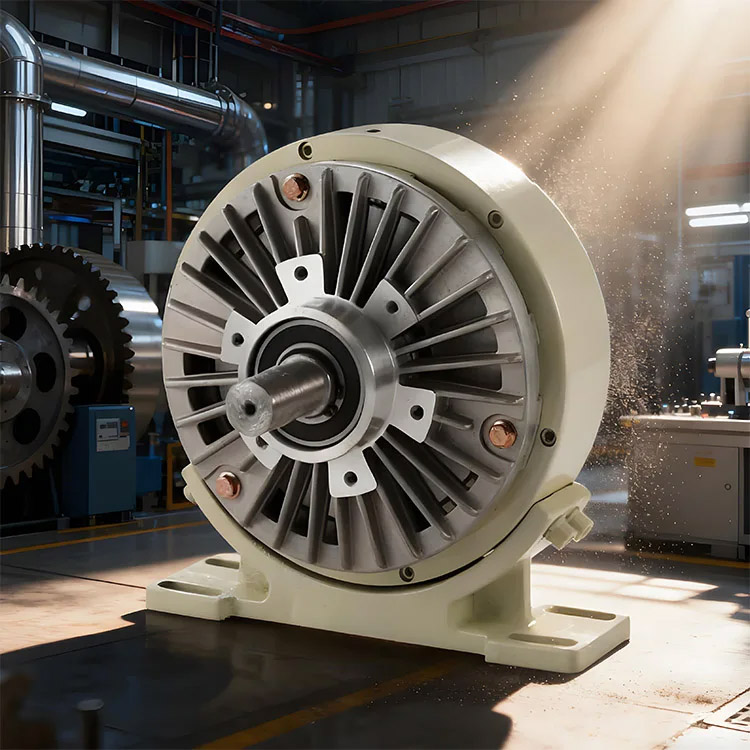
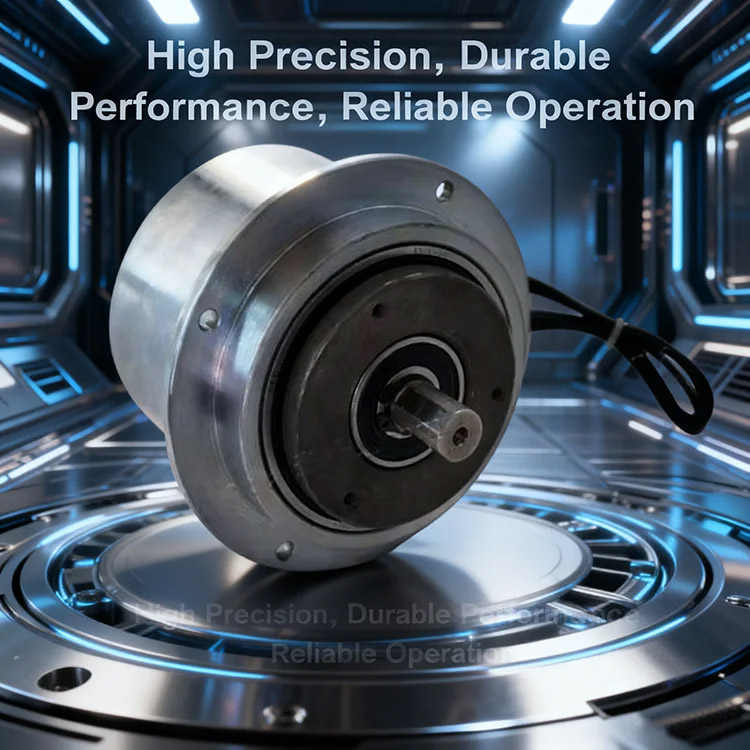
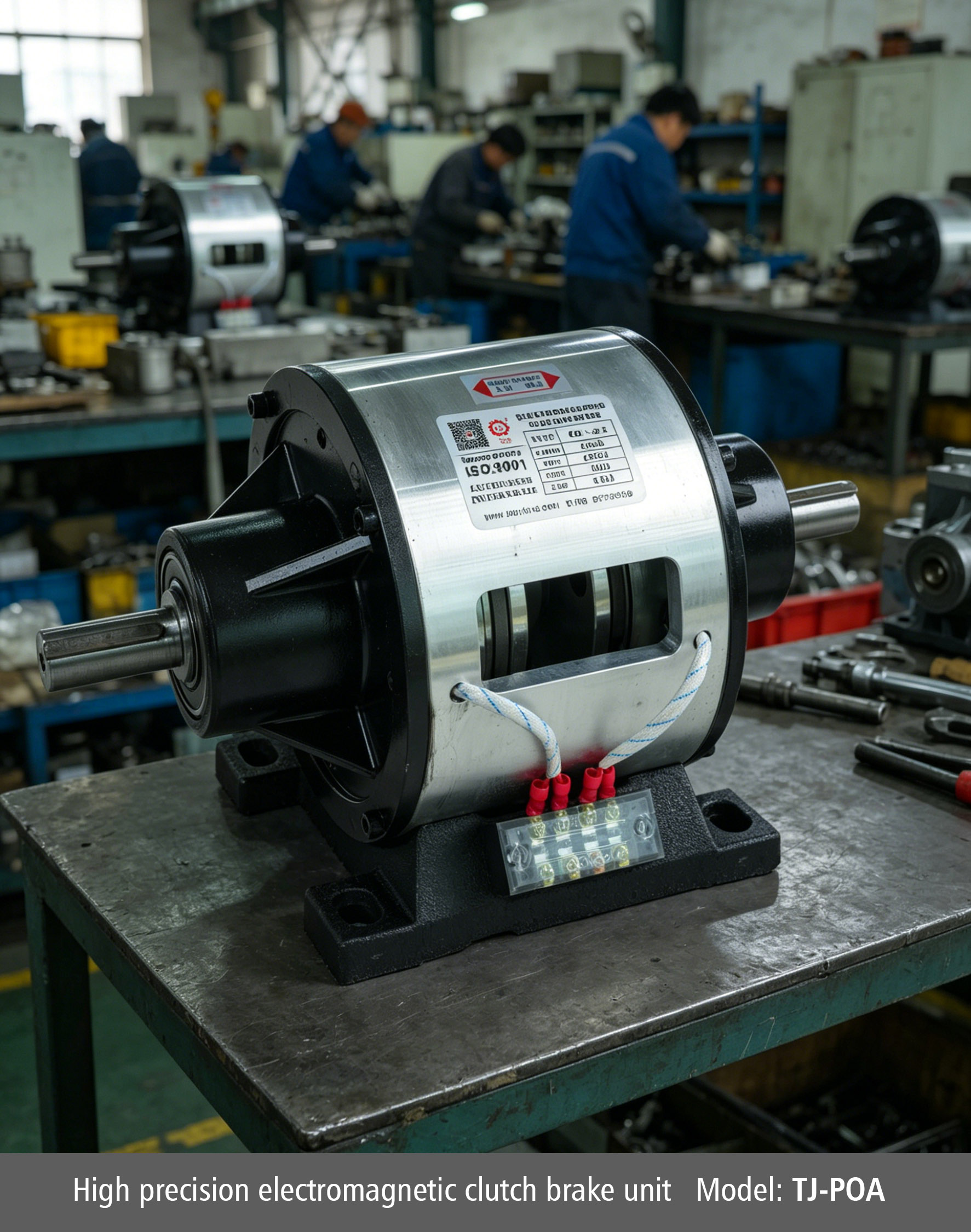
An electromagnetic brake for motor represents a sophisticated braking solution designed to provide immediate stopping power and precise holding capabilities for electric motors across countless industrial applications. This essential safety component operates through electromagnetic principles, utilizing electrical current to create magnetic force that engages or releases braking action. When power flows through the electromagnetic coil, it generates a magnetic field that attracts the armature plate, compressing friction surfaces together to create braking torque. The electromagnetic brake for motor functions as a fail-safe mechanism, automatically engaging when power is disconnected, ensuring machinery stops safely during power interruptions or emergency situations. These braking systems integrate seamlessly with various motor types, including AC motors, DC motors, and servo motors, making them versatile solutions for diverse mechanical systems. The technological design incorporates precision-engineered components such as friction discs, pressure springs, electromagnetic coils, and armature assemblies that work harmoniously to deliver consistent performance. Modern electromagnetic brake for motor units feature compact configurations that mount directly onto motor shafts or flanges, minimizing space requirements while maximizing braking efficiency. The braking response time typically ranges from milliseconds to fractions of a second, providing rapid deceleration that protects both equipment and personnel. Applications span manufacturing automation, material handling systems, robotics, medical equipment, packaging machinery, printing presses, and countless other industrial sectors requiring reliable motion control. The electromagnetic brake for motor delivers adjustable braking torque, allowing engineers to calibrate stopping force according to specific load requirements and operational conditions. Advanced models incorporate thermal management features, dissipating heat generated during frequent braking cycles to maintain optimal performance and extend service life. These braking systems comply with international safety standards and certifications, ensuring regulatory compliance across global markets and industries.

New Product Recommendations

The electromagnetic brake for motor offers substantial practical benefits that directly impact operational efficiency, safety, and cost-effectiveness for businesses across industries. First and foremost, these braking systems provide instantaneous response times, stopping rotating equipment within milliseconds when activated, which dramatically reduces the risk of workplace accidents and equipment damage. This rapid engagement proves invaluable in emergency situations where every fraction of a second matters for protecting workers and preventing costly machinery collisions. The fail-safe design principle ensures that braking automatically activates during power loss, creating an inherent safety mechanism that operates independently of control system failures. This reliability gives facility managers and safety officers peace of mind, knowing that equipment will stop safely even during unexpected electrical outages. Installation simplicity represents another significant advantage, as the electromagnetic brake for motor typically mounts directly to existing motor housings without requiring extensive modifications or specialized tools. Maintenance requirements remain minimal compared to mechanical braking alternatives, with fewer moving parts that wear or require regular adjustment. The absence of hydraulic fluids or pneumatic lines eliminates potential leak hazards and reduces environmental concerns associated with fluid disposal. Energy efficiency stands out as a compelling benefit, since electromagnetic brakes consume power only during release operations, while the engaged braking position requires no continuous energy input. This characteristic translates to lower operational costs and reduced electrical consumption over the equipment lifecycle. Precise control capabilities allow operators to fine-tune braking force and timing, optimizing performance for specific applications and load conditions. The compact footprint of electromagnetic brake for motor assemblies saves valuable space in crowded machinery layouts, enabling more efficient equipment design and factory floor utilization. Durability proves exceptional, with quality electromagnetic brakes delivering millions of operating cycles before requiring component replacement. Temperature tolerance allows operation in challenging industrial environments, from cold storage facilities to high-heat manufacturing processes. Noise reduction benefits emerge from the smooth, controlled braking action, creating quieter work environments compared to mechanical clutch systems. Compatibility with modern automation systems enables seamless integration with programmable logic controllers, motion controllers, and industrial networks for sophisticated motion control strategies. The electromagnetic brake for motor eliminates the need for complex linkages or cable systems, simplifying machine design and reducing potential failure points throughout the mechanical assembly.

Practical Tips

Transmission Pain Points in Printing/Textile/Chemical Machinery: How Electromagnetic Clutches Improve Equipment Stability?

08

Dec

Transmission Pain Points in Printing/Textile/Chemical Machinery: How Electromagnetic Clutches Improve Equipment Stability?

Struggling with transmission instability in printing, textile, or chemical machinery? TJ-A electromagnetic clutches eliminate slip, boost throughput 15–20%, and ensure asbestos-free safety. Discover how top global manufacturers achieve 99.8% reliability—request a spec sheet today.
View More
High-Quality Web Guide Control Systems From a Leading Domestic Manufacturer With 20 Years of Expertise

08

Dec

High-Quality Web Guide Control Systems From a Leading Domestic Manufacturer With 20 Years of Expertise

Discover high-precision web guide control systems from a trusted domestic manufacturer with 20 years of R&D expertise. Reduce waste, boost efficiency, and ensure reliability. Request a quote today.
View More
The Pain of Non-Standard Transmission in Special Working Conditions

09

Apr

The Pain of Non-Standard Transmission in Special Working Conditions

Struggling with standard transmission failures in extreme temps, dust, or tight spaces? TianJi’s 20-year R&D delivers reliable custom clutches & brakes—engineered for your exact specs. Get a free technical consultation today.
View More

Get Your Custom Quote

Tell us your requirements and get a tailored solution for your project.
Name
Mobile
Email
Please include
Message
0/1000

electromagnetic brake for motor

Superior Safety Through Fail-Safe Operation and Emergency Protection

Superior Safety Through Fail-Safe Operation and Emergency Protection

The electromagnetic brake for motor delivers unparalleled safety advantages through its inherent fail-safe design philosophy, which fundamentally differs from traditional braking mechanisms that require active power to engage. This critical safety feature means that when electrical power is interrupted, whether through intentional shutdown, emergency stop activation, or unexpected power failure, the brake automatically engages through spring force, bringing the motor to a controlled stop without requiring any external intervention. This passive safety mechanism provides essential protection in environments where human safety depends on immediate equipment stoppage, such as manufacturing facilities with overhead cranes, conveyor systems transporting personnel, or medical equipment where motion control directly impacts patient wellbeing. The electromagnetic brake for motor operates on a simple yet effective principle: electromagnetic force overcomes spring pressure to release the brake during normal operation, but spring force immediately applies braking torque when power ceases. This design eliminates the dangerous scenario where brake failure could allow uncontrolled motion, which poses severe risks in vertical lifting applications, inclined conveyors, or machinery handling heavy loads. Emergency response capabilities extend beyond simple power loss protection, as the electromagnetic brake for motor integrates seamlessly with emergency stop circuits, safety sensors, and protective relay systems to create comprehensive safety architectures. Response times measuring in milliseconds ensure that hazardous motion stops almost instantaneously when danger is detected, preventing injuries that could occur during longer stopping distances. The predictable, consistent braking performance eliminates uncertainty in safety calculations, allowing engineers to precisely determine safe operating zones and emergency stopping distances with confidence. Redundancy options further enhance safety, with dual brake configurations providing backup protection for critical applications where brake failure consequences would be catastrophic. The electromagnetic brake for motor requires no manual adjustment or periodic brake shoe tightening, eliminating the possibility of improperly maintained brakes failing during emergency situations. This maintenance-free reliability ensures that safety protection remains constant throughout the equipment lifecycle, rather than degrading between service intervals as mechanical brakes often do. Testing and verification procedures become straightforward, with simple electrical checks confirming brake functionality without requiring complex mechanical inspections or disassembly.
Exceptional Precision Control for Advanced Motion Management

Exceptional Precision Control for Advanced Motion Management

The electromagnetic brake for motor provides sophisticated precision control capabilities that enable advanced motion management strategies essential for modern automation and positioning applications. Unlike crude mechanical braking methods that offer only on-off functionality, electromagnetic braking systems allow graduated control of braking torque through precise current modulation to the electromagnetic coil. This variable braking force enables smooth deceleration profiles that protect delicate products, reduce mechanical shock loads on drivetrain components, and eliminate jarring stops that compromise positioning accuracy. Applications requiring exact positioning, such as robotic arms, CNC machinery, and precision indexing tables, benefit tremendously from the controllable braking characteristics that the electromagnetic brake for motor delivers. The repeatable performance ensures that stopping positions remain consistent across millions of cycles, maintaining tight tolerances that would be impossible with wear-prone friction brakes lacking electromagnetic precision. Advanced control algorithms can implement regenerative coordination, where the electromagnetic brake for motor works in harmony with motor drive regeneration to optimize energy recovery while ensuring controlled deceleration. Programmable braking profiles allow engineers to customize deceleration curves for different operational modes, product types, or safety conditions, providing flexibility that mechanical systems simply cannot match. The electromagnetic nature enables dynamic braking force adjustment based on load sensing, where heavier loads receive proportionally greater braking torque to maintain consistent stopping distances regardless of payload variations. This adaptive capability proves particularly valuable in material handling applications where load weights fluctuate dramatically between cycles. Response linearity means that small changes in control signals produce proportional changes in braking force, enabling precise motion control algorithms to function optimally without compensating for nonlinear brake characteristics. The electromagnetic brake for motor integrates naturally with servo systems and motion controllers, accepting standard control signals and providing feedback for closed-loop positioning strategies. Micro-positioning capabilities emerge when combining precise braking control with incremental motor movements, enabling machinery to achieve positioning accuracies measured in micrometers. Vibration damping represents another precision benefit, as controlled brake engagement can actively suppress mechanical oscillations in long shafts, articulated arms, or compliant mechanisms. The predictable thermal characteristics allow compensation algorithms to maintain precision even as operating temperatures vary, unlike mechanical friction systems where temperature dramatically affects braking performance and positioning repeatability.
Outstanding Longevity and Minimal Maintenance Requirements

Outstanding Longevity and Minimal Maintenance Requirements

The electromagnetic brake for motor distinguishes itself through exceptional operational longevity and remarkably low maintenance requirements that deliver substantial total cost of ownership advantages compared to alternative braking technologies. The fundamental design eliminates many wear-prone components found in hydraulic or pneumatic braking systems, with no seals to leak, no fluids to change, and no air lines to maintain or repair. The enclosed construction protects critical friction surfaces from environmental contaminants such as dust, moisture, and corrosive chemicals that rapidly degrade exposed brake components in harsh industrial settings. Quality electromagnetic brake for motor assemblies routinely achieve service lives exceeding ten million operating cycles before friction material replacement becomes necessary, translating to years of continuous operation in most applications. This durability stems from optimized friction material selection, precision-machined contact surfaces, and thermal management designs that prevent the overheating conditions that accelerate wear in conventional brake systems. The self-adjusting characteristics eliminate the periodic gap adjustments required by mechanical brakes, where wearing friction surfaces gradually increase clearance and degrade performance until manual adjustment restores proper operation. Electromagnetic compensation automatically maintains consistent braking torque as friction materials gradually wear, ensuring performance remains within specifications throughout the service interval. Maintenance procedures, when eventually required, involve straightforward friction disc replacement that technicians can complete quickly without specialized skills or expensive diagnostic equipment. The electromagnetic brake for motor design incorporates easily accessible components, with modular construction allowing brake cartridge replacement without removing the entire motor assembly from the machinery. Predictive maintenance becomes feasible through simple electrical monitoring, where coil resistance measurements and current consumption analysis reveal developing issues long before brake failure occurs. This proactive approach prevents unexpected downtime and allows maintenance scheduling during planned production breaks rather than responding to emergency failures. The absence of adjustment requirements eliminates a common source of brake performance variability, where improperly adjusted mechanical brakes either drag continuously, wasting energy and accelerating wear, or provide insufficient holding torque, creating safety hazards. Contamination resistance proves superior to open brake designs, with sealed electromagnetic brake for motor units operating reliably in dirty environments that would quickly destroy exposed friction surfaces. Temperature stability ensures consistent performance across wide operating ranges, with quality units functioning reliably from subzero cold storage temperatures to elevated heat encountered near furnaces or in tropical climates without requiring environmental controls or cooling systems.
email goToTop