Magnetic Particle Clutches and Brakes - Precision Torque Control Solutions for Industrial Applications

All Categories

magnetic particle clutches and brakes

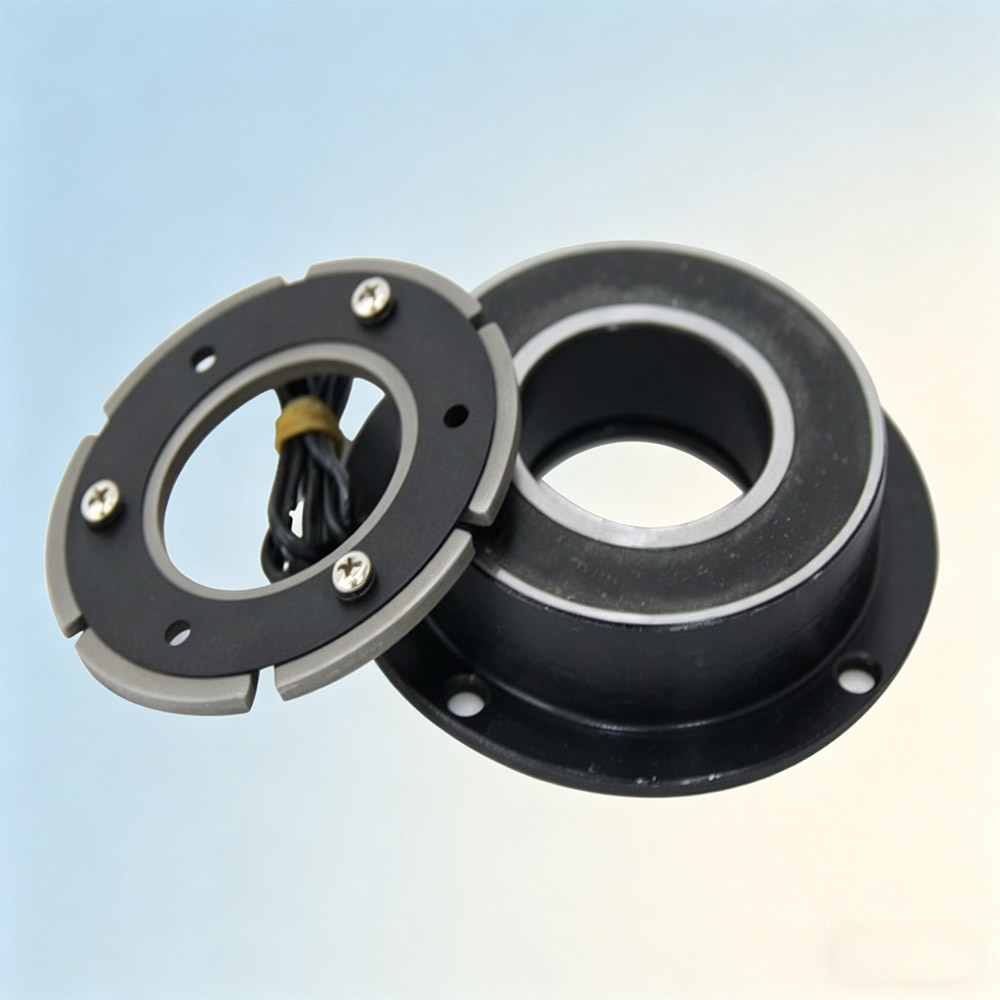
Magnetic particle clutches and brakes represent advanced electromagnetic control technology that delivers precise torque transmission and stopping power in industrial machinery. These innovative devices utilize magnetic particle technology to create smooth, controllable engagement between rotating components, offering exceptional performance in applications requiring accurate tension control and precise stopping capabilities. The fundamental operation of magnetic particle clutches and brakes relies on specialized ferromagnetic particles suspended within a contained chamber. When an electromagnetic field activates, these particles align and form chains that solidify, creating a direct mechanical connection between input and output shafts. This unique mechanism enables stepless torque adjustment through simple current regulation, providing operators with infinitely variable control over power transmission. The technological features of magnetic particle clutches and brakes distinguish them from conventional mechanical systems. Their electromagnetic design eliminates physical contact during disengagement, significantly reducing wear and extending operational lifespan. The instant response time allows for rapid engagement and disengagement, typically within milliseconds, ensuring precise machine control. Temperature stability remains consistent across varying operational conditions, maintaining reliable performance even during extended operation cycles. These devices excel in diverse applications spanning multiple industries. In printing machinery, magnetic particle clutches and brakes maintain consistent web tension, ensuring high-quality output without material damage. Packaging equipment benefits from their precise stopping accuracy, enabling exact positioning for cutting and sealing operations. Wire winding machines utilize their smooth torque control to achieve uniform coil tension throughout production runs. The textile industry relies on these systems for accurate fabric handling, while converting machinery employs them for precise material processing. Food processing equipment incorporates magnetic particle clutches and brakes for sanitary, reliable operation. Their adaptability extends to testing equipment, exercise machines, and automation systems where controlled resistance and precise motion control prove essential for optimal performance and product quality.

New Product Releases

Magnetic particle clutches and brakes deliver substantial practical benefits that directly impact your operational efficiency and bottom line. The primary advantage lies in their exceptional control precision, allowing you to adjust torque output smoothly without stepped intervals. This continuous adjustment capability means you can fine-tune your machinery to exact specifications, eliminating the guesswork associated with traditional mechanical systems. Your operators gain the ability to dial in perfect tension or braking force simply by adjusting electrical current, making setup faster and more intuitive. The maintenance requirements for magnetic particle clutches and brakes remain remarkably low compared to friction-based alternatives. Since engagement occurs through electromagnetic particle alignment rather than surface-to-surface contact, wear patterns that plague conventional clutches simply do not develop. You will experience fewer breakdowns, reduced replacement part costs, and extended intervals between service appointments. This translates directly into higher machine uptime and lower total cost of ownership throughout the equipment lifecycle. Installation simplicity provides another compelling advantage for your operations. These compact units integrate seamlessly into existing machinery without requiring extensive modifications or complex mounting arrangements. The straightforward electrical connections eliminate complicated linkages, and the self-contained design minimizes installation time and labor costs. Your maintenance teams will appreciate the accessibility and serviceability when inspection or adjustment becomes necessary. Response speed represents a critical benefit in high-precision applications. Magnetic particle clutches and brakes engage and disengage almost instantaneously, enabling your machinery to react quickly to changing process demands. This rapid response eliminates the lag time that can cause material waste, positioning errors, or quality defects in production environments. Your production consistency improves as the system maintains exact control parameters regardless of speed variations or load changes. Heat dissipation capabilities ensure reliable performance during extended operation cycles. The magnetic particle design efficiently manages thermal buildup, preventing the performance degradation common in friction clutches under continuous use. Your equipment maintains consistent torque characteristics throughout production runs without requiring cooling periods or performance derating. Operating costs decrease significantly because magnetic particle clutches and brakes consume power only during active engagement. When disengaged, power draw drops to minimal levels, reducing your energy expenses compared to continuously energized systems. The electrical control also enables integration with automated systems, programmable controllers, and monitoring equipment, giving you enhanced process control and data collection capabilities that support quality improvement initiatives and predictive maintenance strategies.

Practical Tips

Transmission Pain Points in Printing/Textile/Chemical Machinery: How Electromagnetic Clutches Improve Equipment Stability?

08

Dec

Transmission Pain Points in Printing/Textile/Chemical Machinery: How Electromagnetic Clutches Improve Equipment Stability?

Struggling with transmission instability in printing, textile, or chemical machinery? TJ-A electromagnetic clutches eliminate slip, boost throughput 15–20%, and ensure asbestos-free safety. Discover how top global manufacturers achieve 99.8% reliability—request a spec sheet today.
View More
High-Quality Web Guide Control Systems From a Leading Domestic Manufacturer With 20 Years of Expertise

08

Dec

High-Quality Web Guide Control Systems From a Leading Domestic Manufacturer With 20 Years of Expertise

Discover high-precision web guide control systems from a trusted domestic manufacturer with 20 years of R&D expertise. Reduce waste, boost efficiency, and ensure reliability. Request a quote today.
View More
The Pain of Non-Standard Transmission in Special Working Conditions

09

Apr

The Pain of Non-Standard Transmission in Special Working Conditions

Struggling with standard transmission failures in extreme temps, dust, or tight spaces? TianJi’s 20-year R&D delivers reliable custom clutches & brakes—engineered for your exact specs. Get a free technical consultation today.
View More

Get Your Custom Quote

Tell us your requirements and get a tailored solution for your project.
Name
Mobile
Email
Please include
Message
0/1000

magnetic particle clutches and brakes

Superior Torque Control and Tension Management Capabilities

Superior Torque Control and Tension Management Capabilities

Magnetic particle clutches and brakes provide unmatched torque control precision that revolutionizes how manufacturing processes handle tension-sensitive materials and operations. The electromagnetic particle engagement system creates infinitely variable torque adjustment across the entire operating range, delivering control resolution impossible to achieve with mechanical clutches or brake systems. This exceptional precision stems from the direct relationship between applied electrical current and magnetic field strength, which proportionally affects particle chain formation and resulting torque transmission. When you increase current flow, the magnetic field intensifies, causing more particles to align and form stronger chains that transmit greater torque. Decreasing current weakens the field, allowing particle chains to break down and reduce torque output smoothly without abrupt transitions. This linear relationship between input signal and output torque enables predictable, repeatable performance that simplifies process optimization and quality control. The practical implications for your production operations are substantial. In web processing applications such as printing, laminating, or coating, maintaining consistent material tension prevents defects like wrinkles, stretching, or registration errors that compromise product quality. Magnetic particle clutches and brakes hold tension within extremely tight tolerances regardless of roll diameter changes, material property variations, or speed fluctuations that occur during normal production. The system automatically compensates for these variables when integrated with tension sensing equipment, maintaining perfect material handling throughout entire production runs. Wire and cable manufacturing operations benefit tremendously from this precise control capability. Achieving uniform conductor spacing, consistent insulation thickness, and proper cable geometry requires exact tension management during winding and spooling operations. Magnetic particle clutches and brakes maintain the precise drag force needed to wind materials smoothly onto spools without creating loose wraps or excessive tension that causes stretching or damage. The result is superior product consistency, reduced scrap rates, and improved production yields that directly impact profitability. The stepless adjustment feature eliminates the trial-and-error approach required with mechanical systems featuring discrete settings. Your operators can make minute adjustments during production without stopping machinery, responding immediately to quality feedback and process variations. This dynamic control capability supports just-in-time manufacturing philosophies and lean production methodologies by minimizing setup time, reducing material waste, and accelerating changeovers between different products or specifications.
Extended Service Life and Minimal Maintenance Requirements

Extended Service Life and Minimal Maintenance Requirements

Magnetic particle clutches and brakes deliver exceptional longevity and reliability that significantly reduces maintenance burden and operational costs over the equipment lifecycle. The fundamental design principle eliminates the primary failure mode that plagues conventional friction clutches and brakes: surface wear from mechanical contact. Traditional systems rely on friction materials pressing against rotating surfaces to transmit torque or create stopping force. This continuous rubbing generates heat, wears away material, and creates dust contamination that accelerates component degradation. Eventually, friction surfaces become glazed, grooved, or worn beyond specification, requiring costly replacement and extended machine downtime. Magnetic particle technology completely avoids this wear mechanism. During disengaged operation, no physical contact occurs between input and output components. A small clearance gap separates the rotating elements, preventing any rubbing or friction that could cause wear. When engaged, the magnetic particles themselves create the coupling force by forming temporary chains between components. These particles do not wear away like friction materials because they never experience the sliding contact that causes abrasion. Instead, they simply rearrange their alignment in response to magnetic field changes, maintaining their functional properties indefinitely. The contained particle chamber protects the magnetic medium from environmental contamination that could compromise performance. Sealed construction prevents dust, moisture, or chemical exposure from affecting the particles or internal components. This environmental protection ensures consistent operation in harsh industrial settings where conventional clutches might fail prematurely due to contamination. The robust design withstands vibration, shock loads, and temperature variations without degradation, maintaining reliable performance throughout demanding production schedules. Your maintenance teams will appreciate the simplified service requirements. Routine maintenance typically involves only periodic inspection of electrical connections and verification of proper cooling airflow. No friction material replacement, adjustment procedures, or wear measurement protocols are necessary. The elimination of consumable friction components removes recurring parts costs from your maintenance budget while reducing the specialized inventory your facility must stock. Scheduled maintenance intervals extend considerably compared to mechanical alternatives. While friction clutches might require service every few months under heavy use, magnetic particle clutches and brakes often operate for years without requiring attention beyond basic inspection. This extended service life translates into higher machine availability, fewer production interruptions, and lower labor costs for maintenance activities. The reduced downtime particularly benefits continuous process operations where unplanned stops create cascading production delays and missed delivery commitments.
Rapid Response Time and Dynamic Performance Characteristics

Rapid Response Time and Dynamic Performance Characteristics

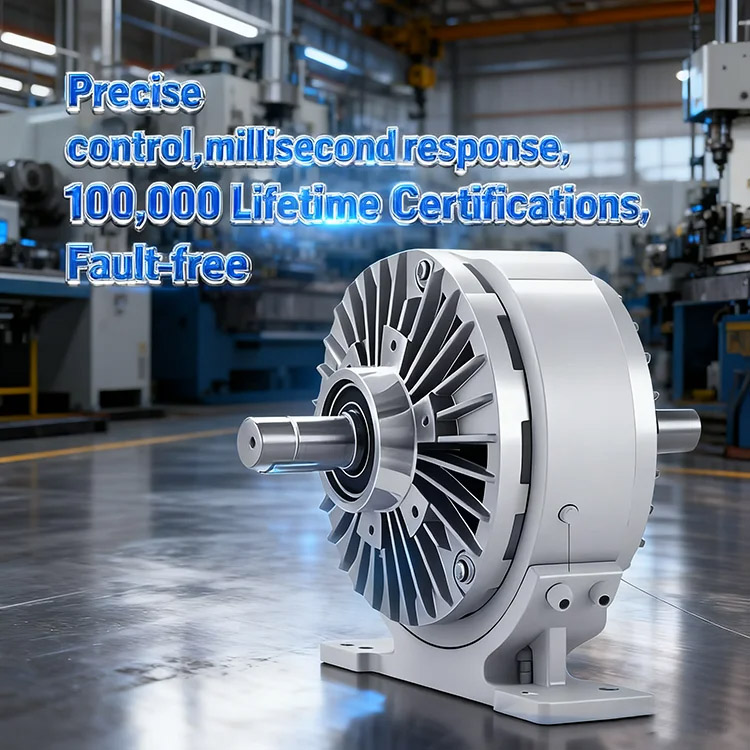
Magnetic particle clutches and brakes deliver exceptionally fast engagement and disengagement response that enables precise machine control in demanding applications requiring split-second timing accuracy. The electromagnetic activation mechanism operates at speeds impossible for mechanical linkages, hydraulic systems, or pneumatic actuators to match. When control current flows through the electromagnetic coil, the magnetic field establishes almost instantaneously, causing particles to align and form torque-transmitting chains within milliseconds. This near-instantaneous response eliminates the lag time that creates positioning errors, material waste, and quality defects in high-speed production environments. The rapid engagement capability proves particularly valuable in cyclic operations where machinery must start and stop repeatedly throughout production processes. Packaging equipment that cuts, folds, or seals products benefits enormously from precise timing control. Magnetic particle brakes can stop moving components at exact positions repeatedly, ensuring that cutting blades contact material at the correct location every cycle. This positioning accuracy reduces scrap rates, improves product consistency, and enables higher production speeds without sacrificing quality. Similarly, fast disengagement allows immediate release when stopping force is no longer needed, preventing the overtravel or bounce-back that can occur with mechanical systems. Testing equipment and dynamometer applications exploit the dynamic response characteristics to simulate real-world load conditions accurately. The ability to vary torque rapidly enables realistic testing scenarios that evaluate product performance under changing conditions. Engine dynamometers use magnetic particle brakes to apply precise, controllable load while measuring power output across the entire RPM range. The smooth torque variation prevents the shock loading that could damage test specimens while providing accurate, repeatable data for engineering analysis and quality verification. The response speed also facilitates sophisticated control strategies that would be impractical with slower-acting systems. Integration with programmable logic controllers and motion control systems enables automated tension profiling, where torque adjusts dynamically throughout production cycles to optimize material handling. Your production equipment can automatically compensate for roll diameter changes, material property variations, or speed adjustments without operator intervention. This automation capability reduces operator workload, improves process consistency, and enables lights-out manufacturing in appropriate applications. Emergency stopping situations benefit from the rapid response capability. When safety systems detect hazardous conditions, magnetic particle brakes can arrest machine motion quickly to prevent injury or equipment damage. The fast engagement time minimizes stopping distance compared to mechanical brakes that require time for linkages to move and friction surfaces to make contact. This enhanced safety performance helps your facility meet regulatory requirements and protects your workforce from potential harm.
email goToTop