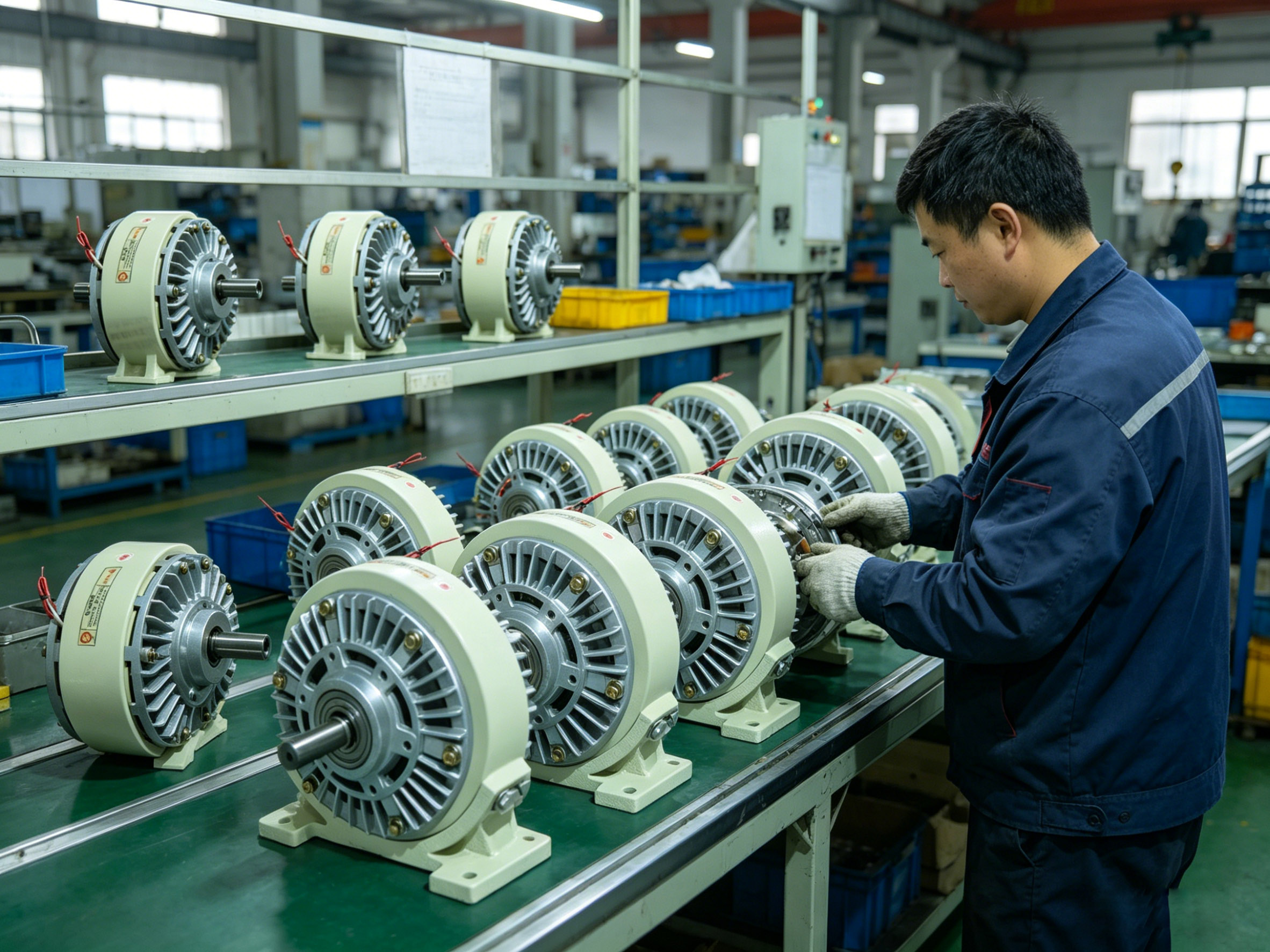
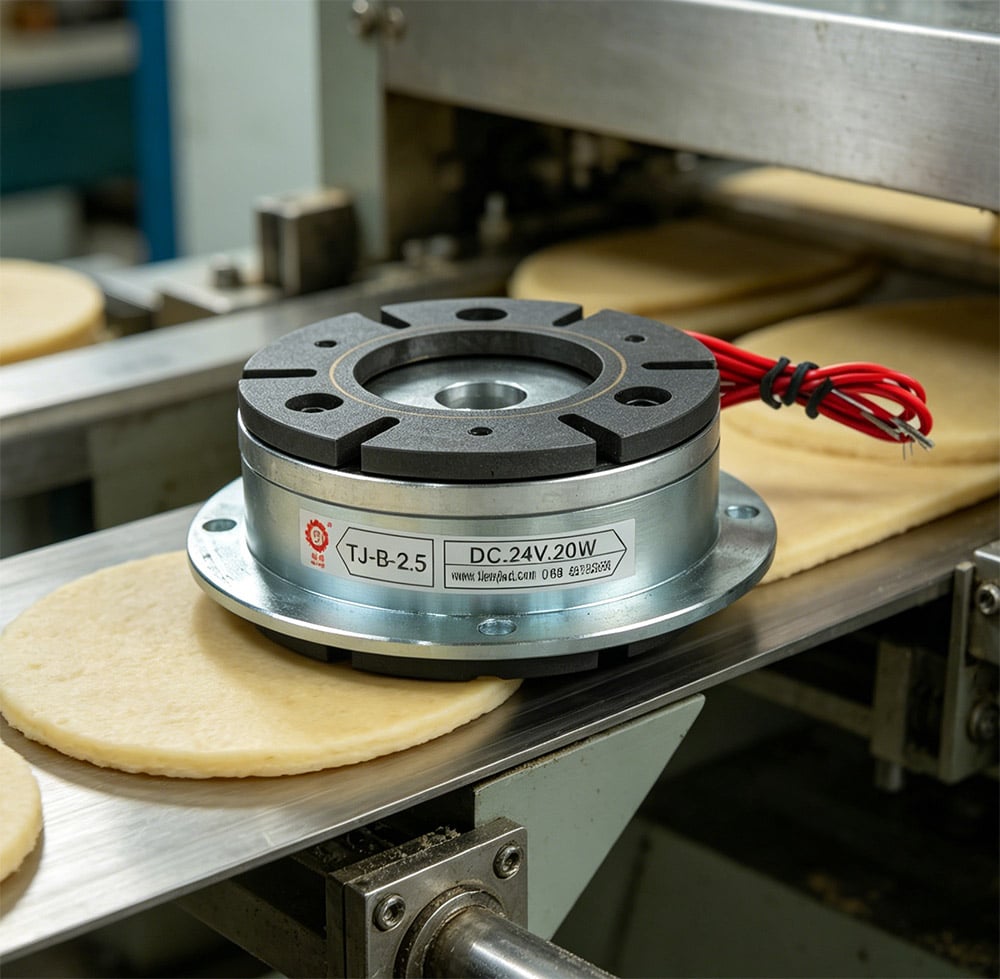
Electro Magnetic Disc Brake Solutions - Precision Industrial Braking Systems

All Categories

electro magnetic disc brake

The electro magnetic disc brake represents a sophisticated braking solution that combines electrical control with mechanical stopping power to deliver precise, reliable performance across numerous industrial applications. This advanced braking system utilizes electromagnetic force to engage and disengage the brake disc, offering operators exceptional control over machinery movement and positioning. Unlike traditional friction brakes that rely solely on mechanical pressure, the electro magnetic disc brake harnesses electromagnetic coils to create the clamping force necessary to halt or hold rotating equipment. When electrical current flows through the coil, it generates a magnetic field that attracts the armature plate toward the brake disc, creating the friction required to stop motion. The main functions of this braking technology include emergency stopping, controlled deceleration, precise positioning, and secure load holding in stationary applications. The electro magnetic disc brake excels in environments where rapid response times and repeatable performance are critical operational requirements. From a technological standpoint, these brakes feature robust construction with heat-resistant friction materials designed to withstand repeated thermal cycling without degradation. The electromagnetic coil design ensures consistent activation force regardless of ambient conditions, while the disc configuration provides excellent heat dissipation characteristics during prolonged or heavy-duty operation. Modern electro magnetic disc brake systems incorporate advanced materials such as high-grade steel alloys for structural components and specialized friction compounds that maintain stable coefficients of friction across wide temperature ranges. Applications for this braking technology span diverse industries including manufacturing automation, material handling equipment, packaging machinery, printing presses, conveyor systems, wind turbines, industrial cranes, and robotics. The versatility of the electro magnetic disc brake makes it suitable for both horizontal and vertical mounting configurations, accommodating various shaft sizes and torque requirements through modular design approaches that simplify integration into existing mechanical systems.

New Product Recommendations

The electro magnetic disc brake delivers numerous practical benefits that directly impact operational efficiency and cost management for businesses across industrial sectors. Response time stands as one of the most significant advantages, with engagement typically occurring within milliseconds of power application, ensuring machinery stops quickly during emergency situations or normal operational cycles. This rapid activation protects both equipment and personnel while minimizing production delays. Maintenance requirements remain minimal compared to hydraulic or pneumatic alternatives because the system contains fewer moving parts and eliminates the need for fluid reservoirs, pumps, or compressed air supplies. Operators appreciate the simplicity of electrical connections that reduce installation complexity and lower initial setup costs. The brake provides consistent performance throughout its service life without the gradual degradation common in purely mechanical systems, as electromagnetic force generation does not depend on spring compression or hydraulic pressure that can diminish over time. Energy efficiency represents another compelling benefit, with power consumption occurring only during brake engagement rather than continuous operation, resulting in lower electrical costs and reduced heat generation within control cabinets. The electro magnetic disc brake operates silently without the hissing of air release or hydraulic pump noise, creating a more pleasant work environment and reducing overall facility sound levels. Adjustment procedures are straightforward, typically requiring only periodic gap measurements and simple mechanical corrections rather than complex hydraulic calibrations or pneumatic pressure settings. The brake demonstrates excellent durability in harsh environments, functioning reliably despite exposure to dust, moisture, temperature variations, and vibration that would compromise alternative braking technologies. Installation flexibility allows mounting in virtually any orientation without concern for fluid leakage or air trap issues inherent in other systems. The electro magnetic disc brake integrates seamlessly with modern control systems through standard electrical interfaces, enabling sophisticated automation strategies including variable deceleration profiles, position-dependent braking force, and integration with safety circuits for comprehensive machine protection. Replacement parts remain readily available and economical, with friction disc renewal representing the primary consumable component that users can replace quickly without specialized tools or extensive mechanical disassembly. The brake generates predictable, controllable torque output that engineers can accurately calculate during machine design phases, eliminating uncertainty in safety factor determinations and ensuring reliable performance specifications.

Latest News

Transmission Pain Points in Printing/Textile/Chemical Machinery: How Electromagnetic Clutches Improve Equipment Stability?

08

Dec

Transmission Pain Points in Printing/Textile/Chemical Machinery: How Electromagnetic Clutches Improve Equipment Stability?

Struggling with transmission instability in printing, textile, or chemical machinery? TJ-A electromagnetic clutches eliminate slip, boost throughput 15–20%, and ensure asbestos-free safety. Discover how top global manufacturers achieve 99.8% reliability—request a spec sheet today.
View More
High-Quality Web Guide Control Systems From a Leading Domestic Manufacturer With 20 Years of Expertise

08

Dec

High-Quality Web Guide Control Systems From a Leading Domestic Manufacturer With 20 Years of Expertise

Discover high-precision web guide control systems from a trusted domestic manufacturer with 20 years of R&D expertise. Reduce waste, boost efficiency, and ensure reliability. Request a quote today.
View More
The Pain of Non-Standard Transmission in Special Working Conditions

09

Apr

The Pain of Non-Standard Transmission in Special Working Conditions

Struggling with standard transmission failures in extreme temps, dust, or tight spaces? TianJi’s 20-year R&D delivers reliable custom clutches & brakes—engineered for your exact specs. Get a free technical consultation today.
View More

Get Your Custom Quote

Tell us your requirements and get a tailored solution for your project.
Name
Mobile
Email
Please include
Message
0/1000

electro magnetic disc brake

Instantaneous Response and Precision Control

Instantaneous Response and Precision Control

The instantaneous response capability of the electro magnetic disc brake transforms how machinery operators manage equipment movement and positioning with unprecedented accuracy. When electrical current energizes the electromagnetic coil, the magnetic field builds to full strength within mere milliseconds, causing the armature to engage the friction disc almost instantaneously. This lightning-fast reaction time proves invaluable in applications requiring emergency stops, where every fraction of a second determines whether potential damage or safety incidents can be prevented. Manufacturing environments benefit tremendously from this rapid response, as production lines can halt immediately when sensors detect product defects, jams, or unsafe conditions, preventing cascading failures that would result in extensive downtime and costly repairs. The precision control afforded by the electro magnetic disc brake extends beyond emergency situations into normal operational parameters where exact positioning determines product quality. In packaging machinery, for instance, the brake enables precise registration of printed materials by stopping conveyor movement at exact predetermined locations, ensuring graphics align perfectly with product containers. Robotics applications leverage this precision to achieve repeatable end-effector positioning with tolerances measured in fractions of millimeters, critical for assembly operations involving tight-fitting components. The electromagnetic activation principle provides proportional control possibilities unavailable with purely mechanical brake systems, allowing variable braking force through modulated current supply that creates gentle deceleration for delicate products or aggressive stopping for heavy loads. Operators can program sophisticated motion profiles that incorporate the electro magnetic disc brake as an integral control element rather than merely a binary stop mechanism. The absence of mechanical linkages between control input and brake engagement eliminates backlash and compliance that introduce positioning errors in traditional systems. Furthermore, the electromagnetic operating principle maintains consistent performance regardless of ambient temperature fluctuations, unlike friction-only systems where material properties vary with thermal conditions. This temperature stability ensures the brake delivers identical response characteristics during cold morning startups and after hours of continuous operation generating substantial heat. The combination of speed, precision, and consistency makes the electro magnetic disc brake an essential component for modern automated manufacturing where productivity demands maximum machine utilization with minimal tolerance for variability or unpredictable behavior.
Minimal Maintenance and Extended Service Life

Minimal Maintenance and Extended Service Life

The electro magnetic disc brake achieves remarkably low maintenance requirements through intelligent design that minimizes wear mechanisms and eliminates common failure points found in alternative braking technologies. Traditional brake systems utilizing hydraulic actuation require periodic inspection of seals, fluid levels, and pressure lines, with any leakage leading to performance degradation and potential environmental contamination. Pneumatic brakes similarly demand attention to air supply quality, filter replacement, and seal integrity throughout extensive tubing networks. The electro magnetic disc brake eliminates these concerns entirely by operating through direct electromagnetic attraction without intermediate transfer media. The simple electrical connection requires only basic continuity verification during routine inspections, dramatically reducing maintenance labor hours and associated production interruptions. Friction disc wear represents the primary consumable element in the system, occurring gradually and predictably based on the number of engagement cycles and energy dissipation requirements. Modern friction materials engineered specifically for electromagnetic brake applications exhibit exceptional longevity, often providing years of service even in demanding high-cycle operations. When replacement becomes necessary, the procedure involves straightforward mechanical steps that maintenance personnel can complete rapidly without specialized training or exotic tools. The electromagnetic coil itself proves extraordinarily durable, with properly designed units providing decades of reliable service without requiring attention. Encapsulation techniques protect the coil windings from environmental contamination while allowing adequate heat dissipation during normal operation. The absence of springs, which commonly fatigue in mechanical brake designs, removes another potential failure mode from the system. Bearing surfaces within the electro magnetic disc brake utilize sealed units that eliminate external lubrication requirements and prevent contaminant ingress that would accelerate wear. The modular construction philosophy adopted by quality manufacturers enables targeted component replacement if service becomes necessary, avoiding complete assembly disposal and reducing lifecycle costs substantially. Self-adjustment features incorporated into advanced designs compensate automatically for friction material wear, maintaining consistent air gap dimensions without manual intervention throughout the service interval. This automatic compensation ensures braking torque remains stable from installation through friction disc replacement, eliminating the performance drift typical of manually adjusted systems. The electrical nature of the control interface simplifies diagnostic procedures, as technicians can verify proper operation through simple voltage and current measurements rather than requiring pressure gauges, flow meters, or other specialized instrumentation. Long-term cost analysis consistently demonstrates that the electro magnetic disc brake delivers superior total ownership economics through reduced maintenance labor, fewer replacement parts, extended service intervals, and enhanced reliability that minimizes unplanned downtime expenses.
Versatile Integration Across Diverse Industrial Applications

Versatile Integration Across Diverse Industrial Applications

The remarkable versatility of the electro magnetic disc brake enables seamless integration across an extraordinarily diverse range of industrial applications, from precision laboratory equipment to heavy-duty manufacturing machinery. This adaptability stems from fundamental design characteristics that accommodate varying torque requirements, mounting configurations, environmental conditions, and control system architectures without requiring extensive customization or engineering adaptation. Manufacturers produce these brakes in comprehensive size ranges spanning small units generating mere newton-meters of holding torque for delicate instrumentation to massive assemblies capable of controlling multi-ton loads in mining and materials processing operations. The modular design approach allows engineers to select appropriate capacity models based on calculated load requirements and safety factors, confident that mechanical interfaces will conform to industry-standard dimensions for straightforward retrofitting or new machine design integration. Mounting flexibility represents another crucial versatility aspect, with the electro magnetic disc brake functioning equally well in horizontal, vertical, or angular orientations without performance compromise. This orientation independence contrasts sharply with hydraulic systems where fluid behavior varies with mounting angle or pneumatic designs where moisture accumulation creates reliability concerns in certain positions. Industrial environments present widely varying operational challenges including extreme temperatures, corrosive atmospheres, explosive hazard zones, and high-vibration conditions that would disable less robust braking technologies. Specialized versions of the electro magnetic disc brake address these demanding applications through enhanced sealing, temperature-resistant materials, hazardous location electrical certifications, and reinforced mechanical structures that maintain functionality where alternatives fail. The electrical control interface provides inherent compatibility with modern automation systems including programmable logic controllers, distributed control systems, industrial Ethernet networks, and safety-rated circuits that form the backbone of contemporary manufacturing facilities. Standard voltage options accommodate global electrical infrastructure variations, while current requirements remain modest enough to avoid expensive power supply provisions. Integration with motion control systems enables sophisticated operational strategies where the brake functions as an active system element rather than passive safety device, participating in coordinated multi-axis movements and complex positioning sequences. Conveyor systems utilize the electro magnetic disc brake for zone control, holding product in specific locations while downstream processes complete. Printing presses rely on this technology for precise web tension maintenance and registration control that determines final product quality. Wind turbines incorporate these brakes as critical safety elements that secure rotor position during maintenance while withstanding enormous aerodynamic loads. Medical equipment manufacturers specify electromagnetic disc brakes for patient positioning systems where safety, reliability, and silent operation are non-negotiable requirements. The food processing industry values stainless steel construction options that withstand aggressive washdown procedures and resist corrosion from organic acids and sanitizing chemicals. This breadth of application demonstrates how the fundamental electromagnetic braking principle adapts effectively to virtually any industrial challenge requiring controlled motion arrest or secure load holding.
email goToTop