Adjusting Disc Brakes: Advanced Self-Adjusting Braking Systems for Industrial and Automotive Applications

All Categories

adjusting disc brakes

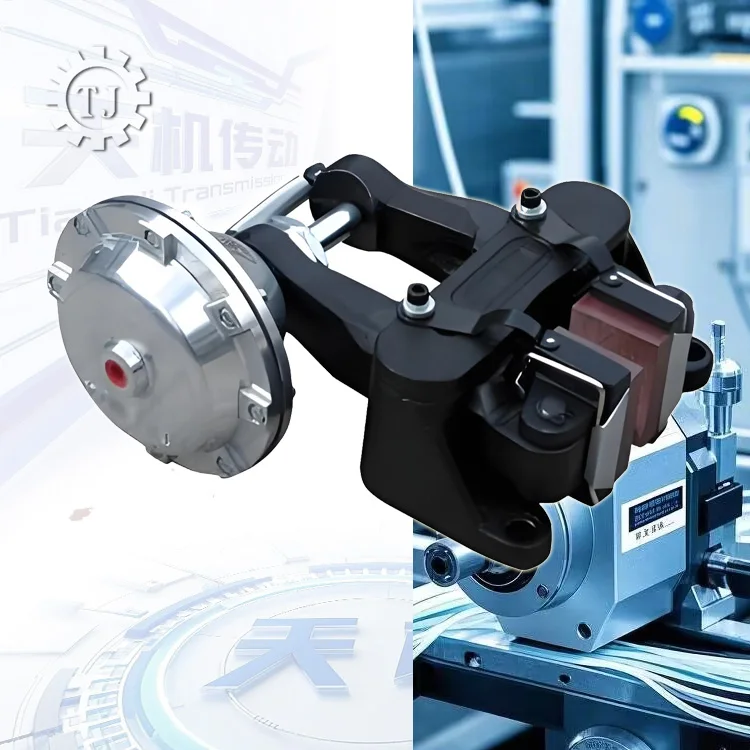
Adjusting disc brakes represent a critical advancement in braking technology, offering superior stopping power and reliability across numerous industrial and automotive applications. These sophisticated braking systems incorporate self-adjusting mechanisms that automatically compensate for wear on brake pads and discs, ensuring consistent performance throughout their operational lifespan. The primary function of adjusting disc brakes centers on providing dependable deceleration and stopping force while minimizing maintenance requirements and maximizing safety standards. Unlike conventional fixed braking systems, adjusting disc brakes feature intelligent compensation technology that maintains optimal clearance between friction materials and rotating surfaces, eliminating the need for frequent manual adjustments. The technological architecture of these braking systems includes precision-engineered components such as hydraulic or mechanical actuators, high-quality friction pads, ventilated or solid disc rotors, and automatic wear compensation mechanisms that work seamlessly together. Modern adjusting disc brakes employ advanced materials including ceramic composites, carbon-infused friction materials, and heat-treated steel alloys that deliver exceptional durability under extreme operating conditions. These systems find extensive applications across diverse sectors including commercial vehicles, heavy machinery, material handling equipment, industrial cranes, elevator systems, wind turbines, and high-performance automotive platforms. The versatility of adjusting disc brakes makes them indispensable in environments demanding reliable stopping power, precise control, and minimal downtime. Industries such as mining, construction, transportation, manufacturing, and renewable energy rely heavily on these braking solutions to maintain operational efficiency and worker safety. The integration of adjusting disc brakes into equipment designs reflects a commitment to engineering excellence, as these systems provide consistent brake torque, reduced operating temperatures, enhanced fade resistance, and prolonged service intervals compared to traditional braking alternatives.

New Product Releases

Choosing adjusting disc brakes delivers tangible benefits that directly impact your operational efficiency and bottom line. The most immediate advantage you will experience is the dramatic reduction in maintenance time and costs. Because these brakes automatically compensate for pad wear, your maintenance teams spend far less time performing manual adjustments, allowing them to focus on other critical tasks. This self-adjusting capability translates into fewer service interruptions and increased equipment availability, which means your operations run smoother with less unexpected downtime. You gain consistent braking performance throughout the entire service life of the pads, eliminating the gradual degradation that occurs with conventional systems requiring periodic manual adjustment. The superior heat dissipation characteristics of adjusting disc brakes protect your equipment from brake fade during intensive use, ensuring reliable stopping power even during repeated heavy braking cycles. This thermal management capability proves especially valuable in demanding applications where equipment operates continuously under challenging conditions. Your operators benefit from improved safety thanks to the predictable and responsive braking behavior these systems deliver. The enhanced modulation allows for precise control during deceleration, reducing the risk of skidding or loss of control that can lead to accidents and damage. You will notice extended component lifespan because the automatic adjustment maintains optimal contact between pads and discs, promoting even wear patterns and preventing accelerated deterioration. This even wear distribution maximizes the usable life of friction materials, reducing replacement frequency and associated parts costs. The enclosed design of most adjusting disc brakes provides better protection against environmental contamination compared to open brake systems, maintaining performance consistency in dusty, wet, or corrosive conditions. Installation flexibility represents another practical advantage, as these braking systems adapt to various mounting configurations and integrate seamlessly with existing equipment architectures. You gain peace of mind knowing that modern adjusting disc brakes incorporate proven safety features including fail-safe mechanisms and redundant systems that maintain functionality even if individual components experience wear or failure. The reduced brake dust generation associated with properly maintained adjusting disc brakes creates cleaner working environments and minimizes cleanup requirements around equipment. Overall, investing in adjusting disc brakes means you receive a comprehensive solution that enhances safety, reduces operational costs, improves productivity, and delivers reliable performance day after day.

Practical Tips

Transmission Pain Points in Printing/Textile/Chemical Machinery: How Electromagnetic Clutches Improve Equipment Stability?

08

Dec

Transmission Pain Points in Printing/Textile/Chemical Machinery: How Electromagnetic Clutches Improve Equipment Stability?

Struggling with transmission instability in printing, textile, or chemical machinery? TJ-A electromagnetic clutches eliminate slip, boost throughput 15–20%, and ensure asbestos-free safety. Discover how top global manufacturers achieve 99.8% reliability—request a spec sheet today.
View More
High-Quality Web Guide Control Systems From a Leading Domestic Manufacturer With 20 Years of Expertise

08

Dec

High-Quality Web Guide Control Systems From a Leading Domestic Manufacturer With 20 Years of Expertise

Discover high-precision web guide control systems from a trusted domestic manufacturer with 20 years of R&D expertise. Reduce waste, boost efficiency, and ensure reliability. Request a quote today.
View More
The Pain of Non-Standard Transmission in Special Working Conditions

09

Apr

The Pain of Non-Standard Transmission in Special Working Conditions

Struggling with standard transmission failures in extreme temps, dust, or tight spaces? TianJi’s 20-year R&D delivers reliable custom clutches & brakes—engineered for your exact specs. Get a free technical consultation today.
View More

Get Your Custom Quote

Tell us your requirements and get a tailored solution for your project.
Name
Mobile
Email
Please include
Message
0/1000

adjusting disc brakes

Automatic Wear Compensation Technology Ensures Consistent Performance

Automatic Wear Compensation Technology Ensures Consistent Performance

The cornerstone feature that distinguishes adjusting disc brakes from conventional braking systems is the integrated automatic wear compensation technology. This sophisticated mechanism continuously monitors and adjusts for the gradual wear that naturally occurs on brake pads and disc surfaces during normal operation. As friction materials wear down over time, the system automatically reduces the clearance gap to maintain optimal contact pressure and braking efficiency without any manual intervention required. This intelligent adjustment happens seamlessly in the background, ensuring that your equipment delivers the same reliable stopping power on day one as it does months later. The automatic compensation mechanism operates through precisely calibrated mechanical or hydraulic actuators that detect changes in pad thickness and instantly recalibrate the engagement distance. This technology eliminates the performance inconsistencies that plague traditional brake systems, where gradual wear leads to increased pedal travel, reduced responsiveness, and eventually necessitates manual adjustment to restore proper function. For equipment operators, this means predictable brake behavior every single time, which significantly enhances safety and operational confidence. Maintenance personnel appreciate this feature because it dramatically extends the intervals between required service visits, reducing labor costs and minimizing equipment downtime. The automatic nature of the adjustment process also eliminates human error from the maintenance equation, as there are no manual settings to miscalculate or improperly configure. This wear compensation technology proves particularly valuable in high-utilization environments where equipment operates multiple shifts or in continuous production scenarios. The system intelligence extends component lifespan by ensuring even wear distribution across the entire friction surface rather than creating localized hot spots or uneven contact patterns that accelerate degradation. By maintaining consistent clearance throughout the service life, adjusting disc brakes also minimize the energy consumption associated with brake drag that occurs when clearances become too tight in manually adjusted systems. This feature represents a significant advancement in braking technology that delivers measurable returns through reduced maintenance costs, improved safety outcomes, enhanced equipment reliability, and optimized operational efficiency across your entire fleet or facility.
Superior Heat Management Prevents Brake Fade and Ensures Reliability

Superior Heat Management Prevents Brake Fade and Ensures Reliability

Adjusting disc brakes incorporate advanced heat management engineering that addresses one of the most critical challenges in braking technology: thermal buildup during intensive use. The design architecture of these systems prioritizes effective heat dissipation through strategically engineered ventilation channels, optimized disc geometry, and carefully selected materials with exceptional thermal conductivity properties. This comprehensive approach to thermal management prevents the dangerous condition known as brake fade, where excessive heat causes friction materials to lose their stopping effectiveness precisely when you need it most. The ventilated disc designs commonly employed in adjusting disc brakes feature internal cooling passages that promote airflow through the rotor assembly, rapidly carrying away the heat generated during braking events. This continuous cooling process maintains friction material temperatures within optimal operating ranges, preserving consistent coefficient of friction values and ensuring predictable brake response. For operators working in demanding conditions such as steep grade descents, frequent stop-and-go cycles, or heavy load handling, this superior heat management capability provides critical safety assurance. The thermal stability of adjusting disc brakes means you can rely on consistent stopping power regardless of how intensively the equipment has been used. Material selection plays a crucial role in this thermal performance, with modern adjusting disc brakes utilizing advanced composites and alloys engineered specifically for high-temperature resilience. These materials resist thermal deformation, maintain dimensional stability under heat stress, and recover quickly between braking cycles. The heat management advantages extend beyond immediate performance to impact long-term durability as well. By controlling operating temperatures, these systems reduce thermal stress on all brake components, minimizing cracking, warping, and premature wear that commonly afflict braking systems subjected to thermal cycling. The reduced operating temperatures also protect adjacent components and systems from heat damage, extending the service life of wheel bearings, seals, hydraulic lines, and mounting hardware. This comprehensive thermal management translates directly into lower total cost of ownership through extended component life, reduced failure rates, and maintained performance consistency. Equipment owners gain confidence knowing their braking systems will deliver reliable stopping power throughout demanding work cycles without the performance degradation associated with thermal overload.
Reduced Maintenance Requirements Lower Total Ownership Costs

Reduced Maintenance Requirements Lower Total Ownership Costs

The economic advantages of adjusting disc brakes become immediately apparent when analyzing total cost of ownership over the equipment lifecycle. These advanced braking systems fundamentally transform the maintenance equation by reducing both the frequency and complexity of required service interventions. Traditional brake systems demand regular manual adjustments to compensate for wear, requiring skilled technicians to periodically inspect, measure, and recalibrate brake clearances to maintain proper function. This labor-intensive process consumes valuable maintenance hours and necessitates equipment downtime that interrupts productive operations. Adjusting disc brakes eliminate these recurring adjustment requirements through their self-compensating mechanisms, freeing maintenance resources for other priorities. The reduction in hands-on maintenance time translates directly into lower labor costs, as technicians spend significantly fewer hours servicing brake systems across your equipment fleet. Beyond labor savings, the extended service intervals enabled by adjusting disc brakes reduce the frequency of parts replacement, lowering material costs throughout the ownership period. The even wear patterns promoted by automatic adjustment maximize the usable life of friction materials, ensuring you extract full value from each set of brake pads before replacement becomes necessary. This optimized wear also means that when replacement does occur, you typically need to change fewer components compared to conventional systems where uneven wear may necessitate disc resurfacing or replacement alongside pad changes. The reduced maintenance burden particularly benefits operations with large equipment fleets, where the cumulative time savings across multiple units creates substantial cost reductions. Equipment availability improves markedly because units spend less time in maintenance bays and more time generating productive output. The simplified maintenance requirements also reduce the specialized knowledge needed for brake service, allowing more maintenance personnel to competently perform basic brake inspections without extensive specialized training. Downtime reduction represents perhaps the most significant economic benefit, as each hour of equipment operation lost to maintenance directly impacts revenue generation and project schedules. Adjusting disc brakes minimize both planned maintenance downtime and unexpected failures that cause emergency service interruptions. The reliability engineered into these systems reduces the risk of brake-related breakdowns that strand equipment, delay operations, and generate costly emergency repair situations. For fleet managers and operations directors, these maintenance advantages translate into improved budget predictability, enhanced asset utilization rates, and stronger return on equipment investment throughout the ownership lifecycle.
email goToTop