Versatile Application Flexibility Across Diverse Industries
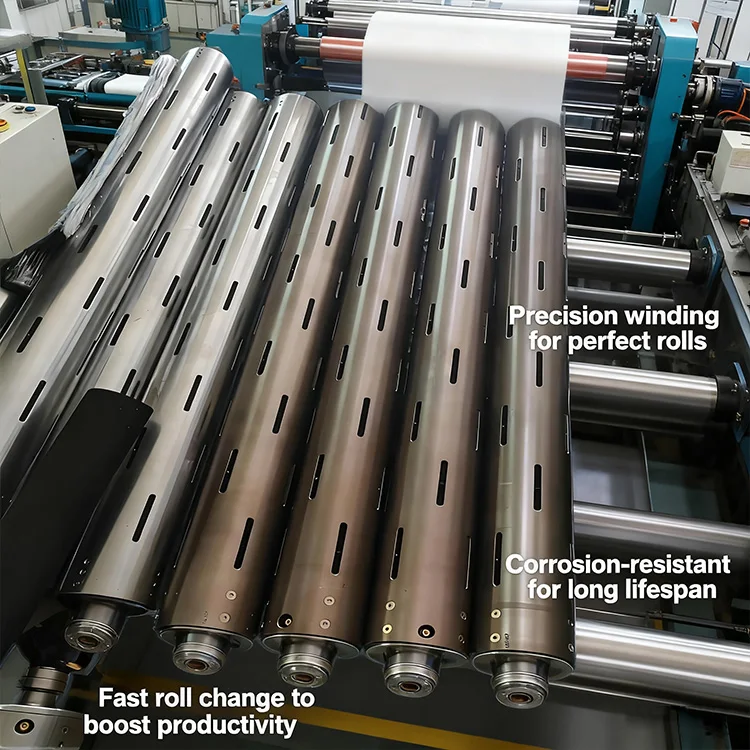
The remarkable versatility and application flexibility of modern tension controller systems make them indispensable across an extraordinarily diverse range of industries and processes, each with unique requirements and challenges that these adaptable devices address with precision and reliability. In printing and packaging operations, tension controllers ensure perfect registration between colors and layers by maintaining consistent web tension throughout multi-station presses, preventing the misalignment that creates costly waste and customer rejections while enabling high-speed operation that maximizes productivity. The flexible film industry relies on tension controllers to handle delicate materials during extrusion, orientation, coating, and converting processes, where even slight tension variations cause gauge bands, wrinkles, or optical defects that render products unusable for demanding applications such as food packaging or electronic component protection. Textile manufacturers utilize tension controllers throughout their production chains, from fiber processing through weaving, knitting, dyeing, and finishing operations, where consistent tension ensures dimensional stability, uniform appearance, and mechanical properties that meet stringent quality specifications for apparel, technical fabrics, and home furnishings. Wire and cable production facilities depend on tension controllers to apply precise tension during conductor drawing, insulation extrusion, and cable assembly operations, where incorrect tension creates diameter variations, insulation defects, or mechanical weaknesses that compromise electrical performance and safety compliance. The paper industry employs tension controllers in coating, calendering, and converting operations, where maintaining optimal tension prevents breaks, wrinkles, and caliper variations that affect printability and end-use performance. Metal foil processing operations utilize tension controllers to handle materials ranging from delicate aluminum foil for food packaging to robust copper and steel foils for electronic and industrial applications, where tension control prevents stretching, work hardening, or surface damage. Label and tape manufacturers rely on tension controllers during coating, laminating, and die-cutting operations, where precision tension ensures accurate placement of adhesives, uniform bond strength, and clean cutting without material distortion. The nonwovens industry uses tension controllers in production processes that bond fibers through mechanical, thermal, or chemical means, where consistent tension ensures uniform basis weight, strength properties, and appearance characteristics. Medical device manufacturers employ tension controllers when producing wound dressings, surgical drapes, and diagnostic test strips, where stringent quality requirements demand perfect tension control to ensure product reliability and regulatory compliance. Battery electrode production facilities utilize tension controllers during coating and calendering operations, where precise tension control affects electrode uniformity, which directly impacts battery capacity, charge rates, and cycle life. This versatility extends to emerging applications in advanced materials processing, including carbon fiber production, where tension control influences fiber strength and modulus, and flexible electronics manufacturing, where submicron precision enables production of bendable displays and wearable devices that represent the future of consumer electronics.

 EN
EN