Automatic Tension Controller - Advanced Material Tension Control Systems for Industrial Manufacturing

All Categories

automatic tension controller

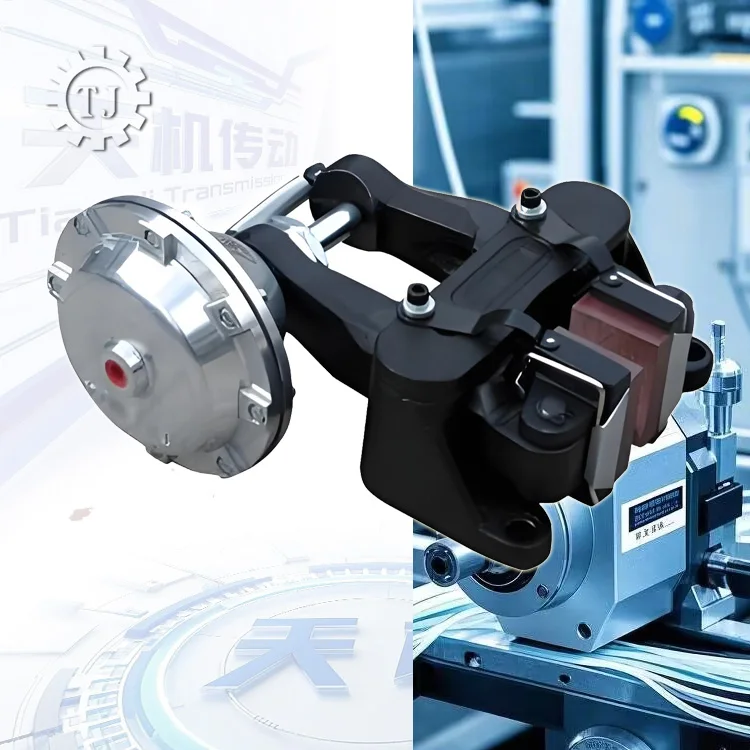
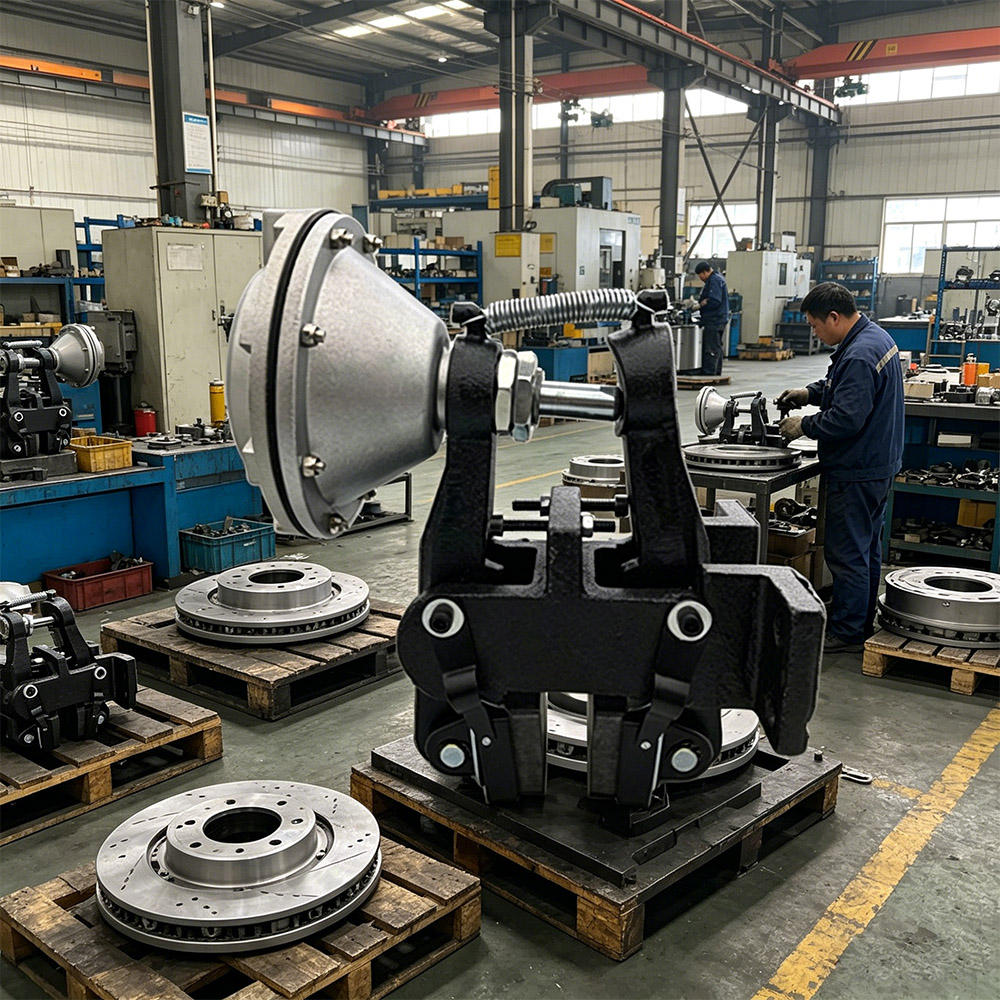
An automatic tension controller represents a sophisticated control system designed to maintain consistent tension levels in materials during manufacturing and processing operations. This advanced device monitors and adjusts tension in real-time, ensuring optimal material handling across various industrial applications. The automatic tension controller uses precision sensors to detect tension variations and responds instantly by adjusting motor speed, brake pressure, or other mechanical parameters to maintain the desired tension setpoint. Modern automatic tension controller systems integrate seamlessly with existing production equipment, offering both standalone functionality and network connectivity for centralized monitoring. The core function of an automatic tension controller involves continuous measurement of material tension through load cells or dancer rollers, processing this data through advanced algorithms, and executing corrective actions within milliseconds. These controllers feature programmable logic that allows operators to set specific tension profiles for different materials, production speeds, and operational conditions. Technological features include digital displays for real-time monitoring, multiple input and output channels for controlling various tension zones simultaneously, and data logging capabilities for quality assurance and process optimization. The automatic tension controller typically incorporates PID control algorithms that calculate the precise adjustments needed to eliminate tension fluctuations, ensuring smooth material flow throughout the production process. Applications span numerous industries including printing, packaging, textile manufacturing, paper processing, film extrusion, wire drawing, and converting operations. In printing applications, the automatic tension controller prevents web breaks and registration errors by maintaining consistent substrate tension from unwinding through printing stations to rewinding. Packaging operations benefit from precise tension control that prevents material distortion, ensures accurate cutting and folding, and maintains seal integrity. Textile manufacturers rely on automatic tension controller technology to prevent yarn breakage, maintain fabric quality, and achieve uniform dyeing results. The versatility of these systems allows customization for specific material characteristics, whether handling delicate films, robust metal strips, or elastic fabrics, making the automatic tension controller an indispensable component in modern manufacturing environments where precision and consistency determine product quality and operational efficiency.

Popular Products

The automatic tension controller delivers substantial operational improvements that directly impact your production efficiency and bottom line. First and foremost, this technology eliminates material waste by preventing common problems like stretching, tearing, wrinkling, and breaking that occur when tension varies during processing. By maintaining precise control, you reduce scrap rates significantly, often by 30 to 50 percent compared to manual tension adjustment methods. Your production speed increases because the automatic tension controller allows machinery to operate at optimal rates without the constant slowdowns required for manual adjustments or recovery from tension-related defects. This speed optimization translates to higher throughput and increased production capacity without additional capital investment in new equipment. Product quality improves dramatically as consistent tension ensures uniform thickness, accurate registration in multi-color printing, proper coating application, and reliable lamination bonding. Your customers receive products with fewer defects, leading to reduced returns, stronger business relationships, and enhanced brand reputation. Labor costs decrease substantially because operators no longer need to constantly monitor and manually adjust tension settings throughout production runs. Workers can focus on higher-value tasks like quality inspection, maintenance scheduling, and process improvement rather than repetitive tension adjustments. The automatic tension controller also protects your expensive machinery from damage caused by excessive tension that can strain motors, bearings, and drive components, or insufficient tension that causes material accumulation and jamming. This protection extends equipment lifespan and reduces maintenance expenses. Energy consumption drops because the system optimizes motor performance, applying only the necessary power to maintain proper tension rather than running continuously at maximum capacity as a safety margin against tension variations. Setup time for new jobs reduces dramatically since operators simply input material specifications and desired tension parameters rather than conducting lengthy trial runs to determine proper manual settings. The data collection capabilities provide valuable insights into production trends, helping you identify opportunities for further optimization and providing documentation for quality certifications and customer audits. Operator training becomes simpler and faster because the automatic tension controller handles complex calculations and adjustments automatically, reducing the skill level required for consistent operation. New employees become productive quickly, and your operation becomes less dependent on a few highly experienced workers. The system adaptability means you can process a wider variety of materials and switch between products rapidly without extensive reconfiguration, enhancing your operational flexibility and ability to serve diverse customer needs. Safety improves as automated control reduces the need for workers to make adjustments near moving machinery during operation, minimizing injury risks. Overall, the automatic tension controller transforms your operation from reactive troubleshooting to proactive precision control, delivering measurable improvements across quality, efficiency, cost, and safety metrics.

Latest News

Transmission Pain Points in Printing/Textile/Chemical Machinery: How Electromagnetic Clutches Improve Equipment Stability?

08

Dec

Transmission Pain Points in Printing/Textile/Chemical Machinery: How Electromagnetic Clutches Improve Equipment Stability?

Struggling with transmission instability in printing, textile, or chemical machinery? TJ-A electromagnetic clutches eliminate slip, boost throughput 15–20%, and ensure asbestos-free safety. Discover how top global manufacturers achieve 99.8% reliability—request a spec sheet today.
View More
High-Quality Web Guide Control Systems From a Leading Domestic Manufacturer With 20 Years of Expertise

08

Dec

High-Quality Web Guide Control Systems From a Leading Domestic Manufacturer With 20 Years of Expertise

Discover high-precision web guide control systems from a trusted domestic manufacturer with 20 years of R&D expertise. Reduce waste, boost efficiency, and ensure reliability. Request a quote today.
View More
The Pain of Non-Standard Transmission in Special Working Conditions

09

Apr

The Pain of Non-Standard Transmission in Special Working Conditions

Struggling with standard transmission failures in extreme temps, dust, or tight spaces? TianJi’s 20-year R&D delivers reliable custom clutches & brakes—engineered for your exact specs. Get a free technical consultation today.
View More

Get Your Custom Quote

Tell us your requirements and get a tailored solution for your project.
Name
Mobile
Email
Please include
Message
0/1000

automatic tension controller

Real-Time Precision Control for Consistent Product Quality

Real-Time Precision Control for Consistent Product Quality

The automatic tension controller excels at delivering real-time precision control that forms the foundation of consistent product quality across your entire production run. Unlike manual systems that rely on periodic operator adjustments and experience-based estimates, the automatic tension controller continuously monitors tension levels hundreds or thousands of times per second, detecting even minor variations before they affect product quality. This constant vigilance means that changes in material properties due to temperature fluctuations, humidity variations, or inherent material inconsistencies are immediately compensated, maintaining the exact tension required for your specific application. The precision offered by an automatic tension controller typically achieves accuracy within one to two percent of the setpoint, a level of consistency impossible to achieve through manual control methods. This precision proves especially critical when processing sensitive materials like thin films, delicate fabrics, or precisely engineered technical textiles where even small tension variations cause permanent damage or dimensional changes. The real-time response capability addresses dynamic conditions that occur during acceleration and deceleration phases of production, splice points where material characteristics change, and transitions between different process zones. Advanced automatic tension controller systems employ sophisticated algorithms that predict tension changes based on machine behavior patterns and material characteristics, making preemptive adjustments that prevent variations rather than simply reacting after they occur. This predictive capability is particularly valuable in high-speed operations where the time lag between detecting a problem and correcting it can result in significant material waste. The consistent tension control provided by an automatic tension controller ensures that downstream processes receive material in optimal condition, whether that involves printing with precise registration, applying coatings with uniform thickness, or laminating multiple layers with complete adhesion. Quality control becomes more predictable and reliable because the automatic tension controller eliminates tension as a variable in your process equation, allowing you to focus optimization efforts on other parameters. Documentation and traceability improve substantially as the automatic tension controller records actual tension values throughout production, providing concrete evidence of process control for quality audits, customer requirements, and continuous improvement initiatives. The system helps establish true process capability by removing operator skill variations and manual inconsistencies, revealing the actual performance potential of your equipment and materials. This clarity enables more effective troubleshooting when quality issues do arise, as tension can be ruled out or confirmed as a contributing factor through recorded data rather than speculation.
Seamless Integration and User-Friendly Operation

Seamless Integration and User-Friendly Operation

Modern automatic tension controller systems are engineered with seamless integration capabilities and user-friendly operation that minimize implementation challenges and accelerate return on investment. The automatic tension controller connects easily with existing production equipment through industry-standard communication protocols including analog signals, digital inputs and outputs, fieldbus networks like Profibus and Modbus, and industrial Ethernet standards. This connectivity flexibility means you can retrofit an automatic tension controller into older machinery without extensive rewiring or equipment replacement, protecting your capital investment while gaining modern control capabilities. The integration extends beyond simple connection to include coordination with your overall machine control system, allowing the automatic tension controller to receive production parameters automatically when job changes occur, synchronize with line speed variations, and participate in emergency stop sequences for safe shutdown. User interface design prioritizes operator accessibility with intuitive touchscreen displays that present information clearly through graphical representations of tension zones, trend graphs showing tension history, and color-coded status indicators that communicate system health at a glance. Operators appreciate the straightforward setup procedures where they select material type from predefined libraries, input basic parameters like roll diameter and material width, and let the automatic tension controller calculate optimal control parameters automatically. Advanced users can access detailed tuning options when processing unusual materials or optimizing for specific quality requirements, but typical operation requires minimal technical expertise. The automatic tension controller includes comprehensive diagnostic features that identify sensor problems, communication errors, or mechanical issues with clear messages explaining the problem and suggesting corrective actions, reducing downtime and simplifying maintenance. Remote access capabilities enable technical support specialists to connect to your automatic tension controller from off-site locations, reviewing system performance, adjusting parameters, and troubleshooting issues without travel delays or on-site visit costs. This remote capability also facilitates multi-site operations where tension control expertise can be centralized and shared across facilities through network connections. Training requirements diminish substantially because the automatic tension controller automates complex decisions and calculations that previously required years of experience to master, allowing new operators to achieve competent performance within days rather than months. The system stores multiple recipes for different products, enabling rapid changeover between jobs with a simple recipe selection rather than manual parameter entry, reducing setup errors and transition time. Alarm management features alert operators to conditions requiring attention while filtering out nuisance alarms that create distraction and alarm fatigue, ensuring that notifications receive appropriate response. The automatic tension controller supports continuous improvement initiatives by providing data export capabilities that feed information to statistical process control systems, overall equipment effectiveness tracking, and enterprise resource planning systems for comprehensive production analysis.
Versatile Applications Across Multiple Industries

Versatile Applications Across Multiple Industries

The automatic tension controller demonstrates remarkable versatility across multiple industries and applications, adapting to diverse material characteristics, process requirements, and operational environments. In the printing industry, automatic tension controller technology ensures registration accuracy essential for multi-color printing by maintaining consistent web tension from unwind through each print station to rewind, preventing the material elongation or contraction that causes color misalignment and print defects. Packaging operations depend on automatic tension controller systems to handle the wide variety of substrates used in modern packaging, from delicate films requiring gentle tension to robust corrugated materials demanding firm control, with quick changeover between materials throughout the production day. Converting processes that slit wide master rolls into multiple narrow rolls rely on automatic tension controller capabilities to maintain independent tension control for each resulting roll, preventing edge problems and ensuring uniform winding density across all output positions. Textile manufacturing represents a demanding application where the automatic tension controller must accommodate materials with elastic properties, moisture-related dimensional changes, and varying construction from loose weaves to dense knits, adjusting control strategies to match material behavior. The automatic tension controller proves equally capable in metal processing applications including wire drawing, foil rolling, and strip coating where material properties differ dramatically from flexible substrates but tension control remains critical for dimensional accuracy and surface quality. Paper production and converting operations utilize automatic tension controller systems throughout the manufacturing process from initial formation through coating, calendaring, and final winding, with each stage requiring different tension profiles optimized for paper grade and basis weight. Film extrusion lines depend on automatic tension controller technology to manage tension during orientation processes that determine final film properties, cooling sequences that affect crystallinity, and winding operations that influence roll quality and downstream processability. The medical device industry benefits from automatic tension controller precision when manufacturing products like wound dressings, surgical drapes, and diagnostic test strips where material consistency directly impacts product performance and regulatory compliance. Electronics manufacturing employs automatic tension controller systems when processing flexible circuit materials, battery separator films, and display components where tension variations cause dimensional errors that prevent proper device assembly or function. Label production requires automatic tension controller capabilities to handle the combination of face stock, adhesive, and liner materials that each respond differently to tension, maintaining proper lamination and die-cutting performance. Non-woven fabric production uses automatic tension controller technology to manage tension during fiber deposition, bonding processes, and final winding, affecting fabric uniformity and physical properties. Carpet manufacturing relies on automatic tension controller precision to maintain consistent tension during tufting operations that determine pile height uniformity and pattern accuracy. The food packaging sector benefits from automatic tension controller capabilities when processing barrier films, vacuum packaging materials, and modified atmosphere packaging films where tension control affects seal integrity and package appearance.
email goToTop