Professional Pneumatic Shaft Solutions - Efficient Roll Handling Systems for Industrial Applications

All Categories

pneumatic shaft

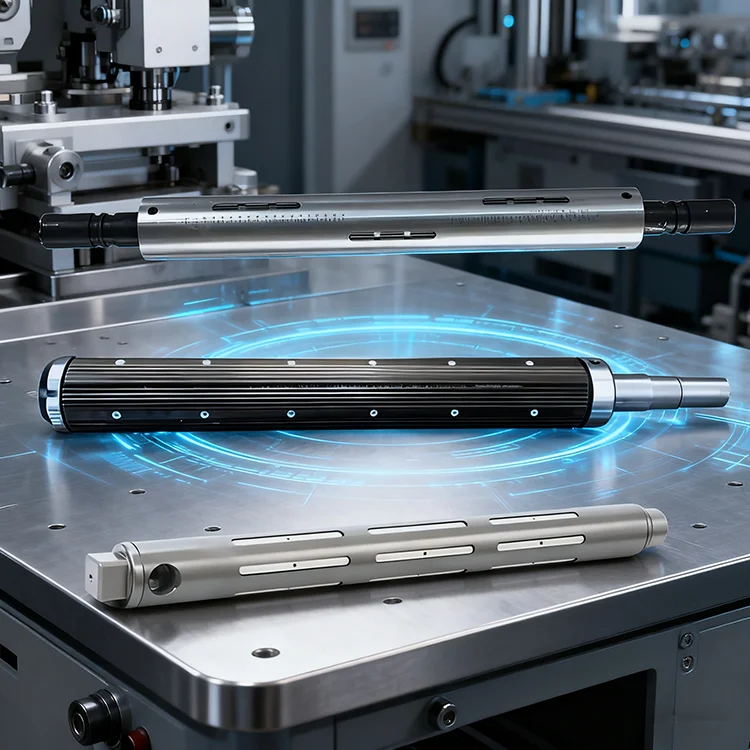
A pneumatic shaft represents an innovative solution in the manufacturing and converting industries, designed to facilitate efficient roll handling operations. This sophisticated device operates through compressed air technology to expand and contract mandrels, enabling quick and secure mounting of rolls such as paper, film, foil, and various other web materials. The pneumatic shaft consists of several key components including an aluminum or steel tube, internal rubber or plastic bladders, and precision-engineered air valves that control expansion. When air pressure is applied, the shaft's bladders expand radially outward, creating a firm grip on the inner diameter of the roll core. This mechanism ensures stable rotation during high-speed processing operations while maintaining consistent tension throughout production runs. The technological features of pneumatic shafts include rapid changeover capabilities, eliminating the need for traditional keying systems or mechanical fasteners. Modern pneumatic shaft designs incorporate advanced materials that provide durability and resistance to wear, even under demanding industrial conditions. The precision manufacturing process ensures uniform expansion around the entire circumference, preventing slippage and maintaining concentricity during operation. These shafts are available in various diameters and lengths to accommodate different roll sizes and industrial applications. The pneumatic shaft technology has revolutionized material handling processes by significantly reducing downtime associated with roll changes. Industries utilizing these systems benefit from improved operational efficiency and enhanced product quality. The versatility of pneumatic shafts makes them suitable for applications ranging from printing and packaging to textile manufacturing and metal processing. Their ability to handle delicate materials without causing damage while providing sufficient grip strength for heavy-duty applications demonstrates their engineering excellence. The integration of pneumatic shaft systems into existing production lines requires minimal modification, making them an accessible upgrade for facilities seeking to improve productivity and reduce labor costs associated with manual roll handling procedures.

New Products

The pneumatic shaft delivers remarkable time-saving benefits that directly impact your bottom line by reducing roll changeover time from several minutes to mere seconds. Your operators can complete roll changes with minimal physical effort, as the pneumatic expansion and contraction eliminate the need for heavy lifting or wrestling with mechanical components. This efficiency translates into increased production uptime, allowing your facility to process more material within the same operational hours. The consistent clamping force provided by pneumatic shafts ensures that rolls remain securely positioned throughout the entire production run, preventing costly web breaks and material waste. You will notice improved product quality as the uniform expansion eliminates vibration and wobble that can occur with traditional shaft systems. The pneumatic shaft reduces the risk of workplace injuries by eliminating the need for hammers, wedges, or other tools traditionally used to secure rolls onto shafts. Your maintenance costs decrease significantly because pneumatic shafts contain fewer moving parts compared to mechanical alternatives, resulting in less wear and longer service life. The precision engineering of these shafts maintains consistent core engagement, which proves especially valuable when working with sensitive materials that require gentle handling. You gain flexibility in your operations as a single pneumatic shaft model can accommodate multiple core sizes by simply adjusting the air pressure, reducing your inventory requirements for different shaft sizes. The quick-release feature allows operators to remove completed rolls effortlessly, improving workflow and reducing bottlenecks in your production process. Energy efficiency represents another compelling advantage, as pneumatic shafts require minimal compressed air to operate and maintain their grip, contributing to lower operational costs. Your facility benefits from cleaner operations since pneumatic systems eliminate the need for lubricants or adhesives that mechanical systems often require. The safety advantages extend beyond injury prevention, as the controlled expansion and contraction prevent sudden releases that could damage equipment or endanger personnel. Investment in pneumatic shaft technology pays dividends through reduced labor requirements, as one operator can manage multiple shaft changes that previously required team effort. The adaptability of pneumatic shafts means they integrate seamlessly with automated production systems, supporting your facility's advancement toward Industry 4.0 standards. Your quality control improves as the consistent tension maintenance prevents telescoping, wrinkling, or other defects that compromise finished product appearance and performance.

Practical Tips

Transmission Pain Points in Printing/Textile/Chemical Machinery: How Electromagnetic Clutches Improve Equipment Stability?

08

Dec

Transmission Pain Points in Printing/Textile/Chemical Machinery: How Electromagnetic Clutches Improve Equipment Stability?

Struggling with transmission instability in printing, textile, or chemical machinery? TJ-A electromagnetic clutches eliminate slip, boost throughput 15–20%, and ensure asbestos-free safety. Discover how top global manufacturers achieve 99.8% reliability—request a spec sheet today.
View More
High-Quality Web Guide Control Systems From a Leading Domestic Manufacturer With 20 Years of Expertise

08

Dec

High-Quality Web Guide Control Systems From a Leading Domestic Manufacturer With 20 Years of Expertise

Discover high-precision web guide control systems from a trusted domestic manufacturer with 20 years of R&D expertise. Reduce waste, boost efficiency, and ensure reliability. Request a quote today.
View More
The Pain of Non-Standard Transmission in Special Working Conditions

09

Apr

The Pain of Non-Standard Transmission in Special Working Conditions

Struggling with standard transmission failures in extreme temps, dust, or tight spaces? TianJi’s 20-year R&D delivers reliable custom clutches & brakes—engineered for your exact specs. Get a free technical consultation today.
View More

Get Your Custom Quote

Tell us your requirements and get a tailored solution for your project.
Name
Mobile
Email
Please include
Message
0/1000

pneumatic shaft

Superior Roll Engagement and Release Mechanism

Superior Roll Engagement and Release Mechanism

The pneumatic shaft employs an ingenious engagement system that sets new standards for roll handling efficiency and reliability in industrial environments. At the heart of this mechanism lies a precisely calibrated inflation system that responds instantaneously to air pressure changes, providing operators with complete control over roll mounting and dismounting processes. When you introduce compressed air into the pneumatic shaft, the internal bladders expand uniformly in all directions, creating contact with the inner diameter of your roll core within milliseconds. This expansion occurs with such precision that it distributes gripping force evenly across the entire contact surface, eliminating the pressure points and stress concentrations that plague traditional mechanical shaft systems. The engineered rubber compounds used in quality pneumatic shafts maintain their elasticity across wide temperature ranges, ensuring consistent performance whether you operate in climate-controlled facilities or environments subject to temperature fluctuations. The release mechanism proves equally impressive, as deflation occurs rapidly when air pressure is reduced, allowing rolls to slide freely off the shaft without binding or requiring forceful removal. This bidirectional efficiency transforms your roll handling operations by reducing the physical demands placed on operators while simultaneously accelerating production cycles. The pneumatic shaft design prevents the scoring and scratching of core interiors that frequently occurs with keyed shafts, extending the reusable life of your cores and reducing material costs. The system's responsiveness means that even heavy rolls weighing hundreds of pounds secure firmly in place within seconds, while remaining easy to remove when production runs complete. Advanced pneumatic shaft models incorporate quick-connect air fittings that enable tool-free setup and connection to your facility's compressed air supply. The pressure requirements remain modest, typically operating effectively within a range of 60 to 90 PSI, making them compatible with standard industrial air systems without requiring specialized compressors or pressure regulation equipment. This engagement technology proves particularly valuable when handling rolls with varying core wall thicknesses, as the pneumatic expansion accommodates dimensional variations that would cause problems with fixed-diameter mechanical shafts.
Exceptional Versatility Across Multiple Industries

Exceptional Versatility Across Multiple Industries

The pneumatic shaft demonstrates remarkable adaptability that makes it an invaluable asset across diverse manufacturing sectors, from delicate tissue paper production to heavy-duty steel coil processing. In the printing industry, pneumatic shafts have become the preferred choice for mounting large format media rolls, where precise alignment directly impacts registration accuracy and print quality. The shaft's ability to maintain perfect concentricity during high-speed rotation prevents the color shifting and misalignment that compromise multi-color printing projects. Packaging operations benefit tremendously from pneumatic shaft technology when converting flexible films and laminates, as the controlled tension prevents stretching or distortion of heat-sensitive materials. Textile manufacturers utilize pneumatic shafts for handling fabric rolls throughout dyeing, finishing, and inspection processes, appreciating how the gentle yet secure grip prevents fabric marking or crushing. The converting industry relies heavily on pneumatic shafts for slitting, rewinding, and laminating operations where multiple rolls must rotate synchronously without slippage. Paper mills have integrated pneumatic shaft systems into their finishing departments, where the technology handles everything from lightweight tissue grades to heavy-duty containerboard with equal competence. The metal processing sector employs specialized heavy-duty pneumatic shafts capable of supporting steel and aluminum coils weighing several tons, demonstrating the scalability of this technology. Pharmaceutical and medical device manufacturers value pneumatic shafts for their cleanliness and ease of sanitization when handling sterile packaging materials. The food packaging industry benefits from the contamination-free operation of pneumatic shafts, as they eliminate the need for lubricants or adhesives that might compromise food safety standards. Label printing operations depend on pneumatic shafts to maintain the precise tension control necessary for die-cutting and matrix stripping processes. The nonwovens industry utilizes these shafts throughout production lines handling disposable hygiene products, filtration media, and industrial fabrics. Photographic film processors, though diminished in number, continue to rely on pneumatic shaft technology for its gentle handling of light-sensitive materials. This cross-industry applicability means that investing in pneumatic shaft technology provides long-term value regardless of market shifts or diversification strategies your business might pursue.
Advanced Engineering for Long-Term Reliability

Advanced Engineering for Long-Term Reliability

The construction and engineering principles underlying pneumatic shaft design reflect decades of refinement aimed at delivering exceptional durability and consistent performance throughout extended service lives. Manufacturers of premium pneumatic shafts employ aerospace-grade aluminum alloys or hardened steel for the main tube construction, materials selected for their optimal strength-to-weight ratios and resistance to flexing under load. The internal bladder system represents a critical engineering achievement, utilizing specially formulated elastomer compounds that resist abrasion, chemical exposure, and the fatigue that results from thousands of inflation and deflation cycles. These bladders undergo rigorous testing protocols to ensure they maintain their sealing integrity and expansion characteristics even after years of continuous use in demanding production environments. The shaft journals and bearings receive precision machining to tolerances measured in thousandths of an inch, ensuring smooth rotation with minimal runout that could otherwise translate into vibration and reduced product quality. Corrosion-resistant coatings and treatments protect pneumatic shaft surfaces from the moisture, chemicals, and environmental factors present in industrial settings, preventing the degradation that compromises performance and necessitates premature replacement. The air valve assemblies incorporate filtration systems that prevent particulate contamination from entering the inflation chambers, protecting the delicate bladder surfaces from abrasive damage. Many advanced pneumatic shaft designs feature modular construction that allows individual components to be serviced or replaced without discarding the entire assembly, significantly extending the useful life of your equipment investment. The engineering excellence extends to the shaft ends, where precisely balanced journal designs minimize vibration even at rotational speeds exceeding 1000 RPM in high-speed converting applications. Quality manufacturers subject their pneumatic shafts to destructive testing protocols that simulate years of operational stress, identifying potential failure modes and refining designs to eliminate weak points before products reach customers. The load distribution characteristics of well-engineered pneumatic shafts prevent the core crushing that can occur when excessive pressure concentrates at specific points, preserving the integrity of expensive roll cores. Temperature compensation features in advanced models automatically adjust expansion characteristics to maintain consistent gripping force as operating conditions change throughout production shifts. The reliability of pneumatic shaft systems translates directly into reduced maintenance schedules and lower total cost of ownership compared to mechanical alternatives that require frequent adjustment and component replacement.
email goToTop