Core Air Shafts: High-Performance Roll Handling Solutions for Industrial Applications

All Categories

core air shafts

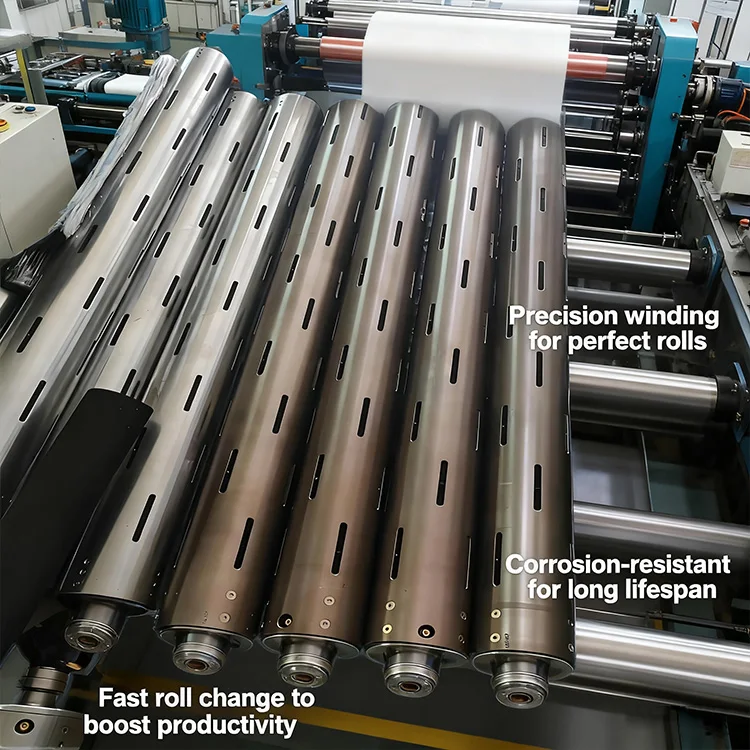
Core air shafts represent essential industrial components designed to hold and support rolls of material during manufacturing, converting, and processing operations. These sophisticated mechanical devices utilize compressed air technology to expand and contract, providing secure grip and release mechanisms for various roll handling applications. Core air shafts have become indispensable tools across multiple industries including printing, packaging, textile manufacturing, paper processing, and film production. The fundamental principle behind core air shafts involves an inflatable bladder or expanding mechanism housed within a rigid shaft body. When air pressure is applied, the shaft expands outward to grip the inner diameter of a roll core firmly. This expansion creates friction between the shaft surface and the core, ensuring the roll remains securely mounted during high-speed rotation or material processing. The design allows operators to load and unload rolls quickly by simply adjusting air pressure, eliminating the need for manual tightening or complex mechanical adjustments. Modern core air shafts incorporate precision-engineered components including durable shaft bodies, high-quality rubber expansion elements, reinforced end journals, and reliable air valve systems. The shaft body typically consists of aluminum, steel, or composite materials selected for their strength-to-weight ratio and resistance to operational stresses. The expansion mechanism features specially formulated rubber compounds that withstand repeated inflation cycles while maintaining consistent gripping force. Core air shafts accommodate various core sizes and roll weights, with capacities ranging from lightweight film rolls to heavy industrial paper rolls exceeding several tons. Their versatility makes them suitable for diverse applications including slitting operations, rewinding processes, laminating systems, coating lines, and printing presses. The technology enhances operational efficiency by reducing changeover times, minimizing material waste, and improving worker safety through automated roll handling capabilities.

New Products

Core air shafts deliver substantial practical benefits that directly impact your operational efficiency and bottom line. These innovative devices reduce downtime significantly by enabling rapid roll changes that take seconds rather than minutes. When you need to switch between different materials or complete production runs, simply release the air pressure, remove the finished roll, load a new core, and re-inflate the shaft. This streamlined process keeps your production line moving and maximizes output. The consistent gripping force provided by core air shafts ensures uniform tension across the entire roll width, which translates to better product quality. You will notice fewer web breaks, reduced wrinkling, and improved material tracking during processing. This reliability means less scrap material, fewer production interruptions, and more sellable product reaching your customers. Your workers will appreciate the ergonomic advantages these shafts provide. Manual keyway systems and mechanical chucks require physical effort for installation and removal, often involving heavy lifting and repetitive motions that lead to fatigue and potential injuries. Core air shafts eliminate these concerns through simple air pressure control, making roll handling accessible to all operators regardless of physical strength. The versatility of core air shafts allows you to handle multiple core sizes and roll types with the same equipment. By adjusting shaft length or using adapter sleeves, you can process different product specifications without investing in entirely new handling systems. This flexibility reduces capital expenditure and simplifies inventory management for replacement parts. Maintenance requirements for core air shafts remain minimal compared to mechanical alternatives. The simple design with fewer moving parts means less wear and tear, reduced lubrication needs, and longer service life. Regular inspection of rubber elements and air valves typically suffices to keep these shafts operating reliably for years. The precision manufacturing of core air shafts ensures balanced rotation even at high speeds, which protects your machinery from vibration damage and extends equipment lifespan. Smooth operation also contributes to better edge quality in slitting applications and more accurate registration in printing processes. Cost savings accumulate through multiple channels when you implement core air shafts. Faster changeovers mean more productive hours per shift. Reduced material waste improves yield rates. Lower maintenance requirements decrease service costs. Fewer workplace injuries reduce insurance premiums and lost time. These combined benefits create compelling return on investment that justifies the initial purchase price.

Latest News

Transmission Pain Points in Printing/Textile/Chemical Machinery: How Electromagnetic Clutches Improve Equipment Stability?

08

Dec

Transmission Pain Points in Printing/Textile/Chemical Machinery: How Electromagnetic Clutches Improve Equipment Stability?

Struggling with transmission instability in printing, textile, or chemical machinery? TJ-A electromagnetic clutches eliminate slip, boost throughput 15–20%, and ensure asbestos-free safety. Discover how top global manufacturers achieve 99.8% reliability—request a spec sheet today.
View More
High-Quality Web Guide Control Systems From a Leading Domestic Manufacturer With 20 Years of Expertise

08

Dec

High-Quality Web Guide Control Systems From a Leading Domestic Manufacturer With 20 Years of Expertise

Discover high-precision web guide control systems from a trusted domestic manufacturer with 20 years of R&D expertise. Reduce waste, boost efficiency, and ensure reliability. Request a quote today.
View More
The Pain of Non-Standard Transmission in Special Working Conditions

09

Apr

The Pain of Non-Standard Transmission in Special Working Conditions

Struggling with standard transmission failures in extreme temps, dust, or tight spaces? TianJi’s 20-year R&D delivers reliable custom clutches & brakes—engineered for your exact specs. Get a free technical consultation today.
View More

Get Your Custom Quote

Tell us your requirements and get a tailored solution for your project.
Name
Mobile
Email
Please include
Message
0/1000

core air shafts

Rapid Engagement and Release System for Maximum Productivity

Rapid Engagement and Release System for Maximum Productivity

The rapid engagement and release capability of core air shafts revolutionizes how manufacturing facilities handle roll changeovers and material processing workflows. Traditional mechanical shaft systems require operators to manually insert keys, tighten screws, or manipulate complex locking mechanisms that consume valuable production time. Core air shafts eliminate these time-consuming procedures through pneumatic activation that expands the gripping surface in mere seconds. When compressed air enters the shaft through a precision-engineered valve system, the internal bladder or segmented expansion elements respond instantly, pushing outward against the inner diameter of the roll core. This expansion occurs uniformly around the entire circumference, creating balanced contact pressure that secures the roll without stress concentrations or uneven loading. The gripping force adjusts automatically based on the air pressure supplied, allowing operators to optimize holding strength for different roll weights and processing speeds. The release process proves equally efficient, requiring only the depression of a release valve to vent the compressed air. As pressure drops, the expansion elements retract to their original diameter, freeing the roll core for removal. This instantaneous release prevents the binding and sticking problems common with mechanical systems where components can become lodged or corroded over time. Operators can complete entire roll changeovers in under thirty seconds, compared to several minutes required by conventional methods. This rapid cycling capability becomes especially valuable in production environments running multiple short batches or frequent material changes. Printing operations switching between different substrate types, packaging lines alternating between various film specifications, and textile facilities processing diverse fabric rolls all benefit from minimized changeover delays. The accumulated time savings translate directly into increased production capacity without requiring additional shifts or overtime expenses. Furthermore, the consistency of the pneumatic engagement system ensures repeatable performance across thousands of cycles, maintaining the same quick response and reliable gripping force throughout the shaft's service life.
Universal Compatibility Across Diverse Core Sizes and Materials

Universal Compatibility Across Diverse Core Sizes and Materials

Core air shafts provide exceptional adaptability that allows single equipment investments to serve multiple production requirements across your facility. Unlike rigid mechanical shafts designed for specific core dimensions, air-actuated systems accommodate a range of internal diameters through adjustable expansion ratios and modular design elements. This universal compatibility eliminates the need to maintain extensive shaft inventories for different product lines, reducing capital tied up in specialized equipment and simplifying your spare parts management. The expansion mechanism of core air shafts can grip cores with varying wall thicknesses and material compositions, from thin-walled paper tubes to heavy-duty industrial cores made from fiberglass or metal. The compliant rubber expansion surface conforms to slight irregularities in core interior dimensions, maintaining secure grip even when cores deviate from perfect circular geometry due to manufacturing tolerances or handling damage. This forgiving nature prevents the slippage and vibration issues that plague rigid mechanical systems when core dimensions fall outside tight specifications. Many core air shaft designs incorporate interchangeable adapter sleeves or journals that enable quick reconfiguration for different core sizes. By simply changing end adapters, you can convert a shaft from handling three-inch cores to six-inch cores in minutes, without specialized tools or technical expertise. Some advanced systems feature telescoping designs or segmented construction that adjust shaft length to match various roll widths, further extending versatility across your product range. The material compatibility extends beyond core dimensions to include diverse roll weights and processing conditions. Core air shafts function effectively with lightweight film rolls requiring delicate handling as well as massive paper rolls weighing thousands of pounds that demand substantial holding force. The adjustable air pressure allows operators to fine-tune gripping strength, applying just enough force to secure light materials without crushing delicate cores, while providing maximum holding power for heavy-duty applications. This adaptability proves particularly valuable for contract manufacturers and converters serving multiple clients with varying specifications, allowing you to accept diverse job requirements without equipment limitations constraining your capabilities.
Enhanced Safety Features and Ergonomic Operation Benefits

Enhanced Safety Features and Ergonomic Operation Benefits

Core air shafts incorporate numerous safety advantages and ergonomic improvements that protect your workforce while streamlining daily operations. The pneumatic actuation system eliminates the manual force requirements associated with traditional mechanical shaft systems, where operators must physically tighten chucks, hammer keys into keyways, or wrestle with threaded lock rings. These repetitive physical demands contribute to cumulative trauma injuries affecting backs, shoulders, and hands, leading to workers' compensation claims and reduced productivity from injured personnel. By contrast, core air shafts require only the simple action of connecting an air supply line and pressing a valve button, tasks that demand minimal physical exertion and can be performed by operators of all physical capabilities. The automated gripping mechanism prevents the pinch points and crush hazards present in mechanical systems with moving jaws, sliding components, or rotating threaded elements. Workers' hands remain clear of dangerous zones during shaft engagement, as the expansion occurs internally without external moving parts that could trap fingers or catch loose clothing. This inherent safety design reduces accident frequency and severity, creating a more secure working environment that complies with occupational safety regulations and demonstrates your commitment to employee welfare. The balanced expansion of core air shafts contributes to operational safety by preventing the eccentric rotation and vibration that can occur when rolls are improperly mounted on mechanical systems. Unbalanced rolls create dangerous conditions where centrifugal forces can cause rolls to shift, materials to tear, or equipment to shake violently. The uniform gripping force applied by air shaft expansion ensures concentric mounting that maintains smooth rotation even at high processing speeds, protecting both machinery and operators from vibration-related hazards. Emergency release capabilities built into quality core air shaft systems provide additional safety advantages during malfunction scenarios. If material jams or equipment malfunctions occur during operation, operators can immediately release the roll by venting air pressure, stopping the dangerous situation quickly without requiring shutdown of entire production lines or physical intervention near moving components. This rapid response capability minimizes damage to materials and equipment while protecting workers from escalating hazardous conditions. The reduction in manual handling requirements also decreases the risk of dropping heavy rolls during installation or removal, preventing foot and leg injuries that occur when operators lose grip on unwieldy cylindrical loads. The secure mounting provided by core air shafts keeps rolls stable throughout processing, eliminating the gradual loosening that sometimes occurs with mechanical systems, which can lead to rolls walking off shafts or rotating independently from the driving shaft, creating unexpected and dangerous situations for nearby personnel.
email goToTop