Magnetic Particle Clutches - Precision Torque Control Solutions for Industrial Automation

All Categories

magnetic particle clutches

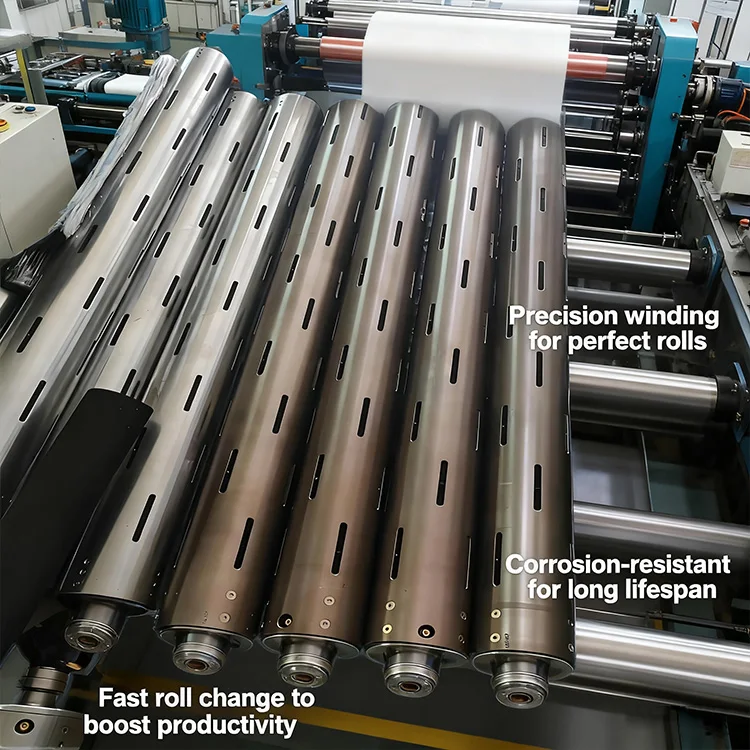
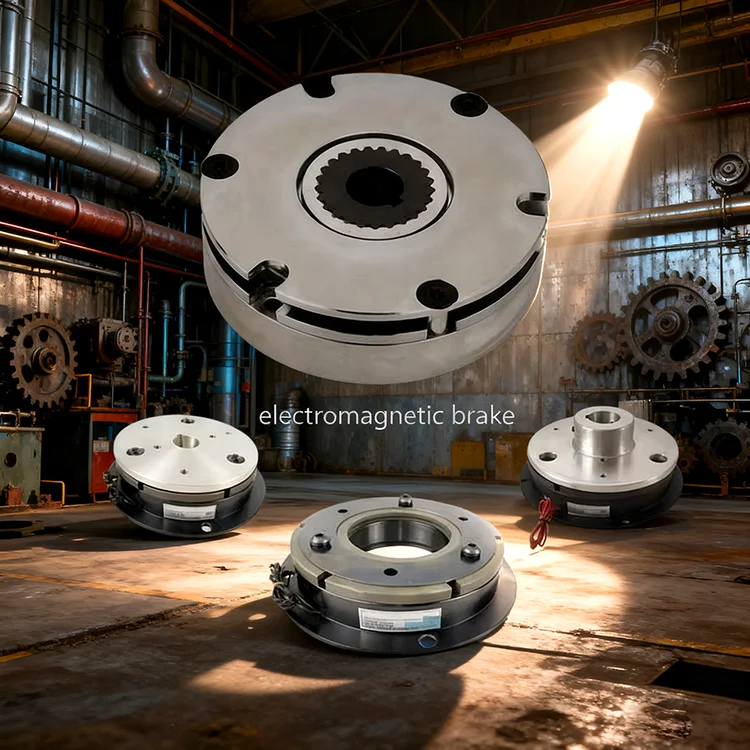
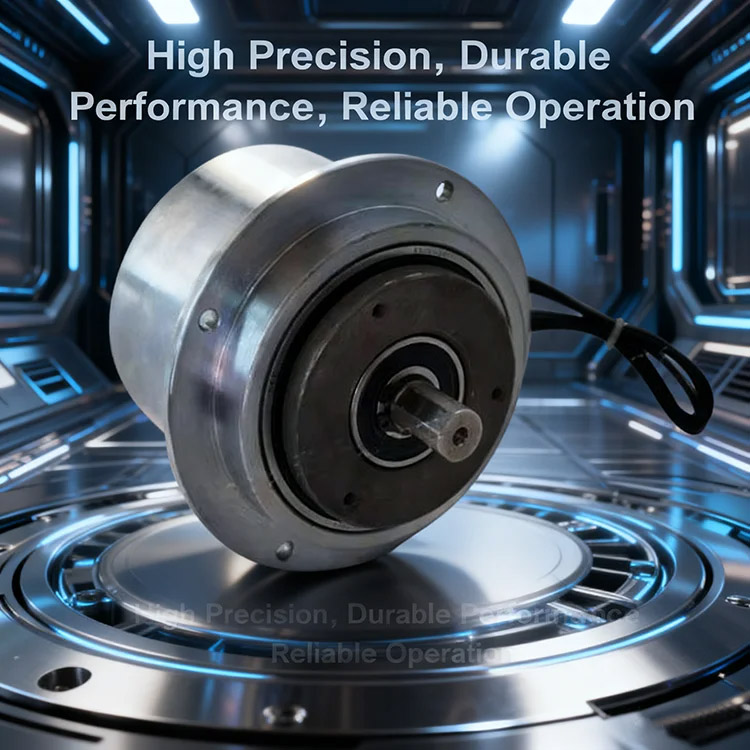
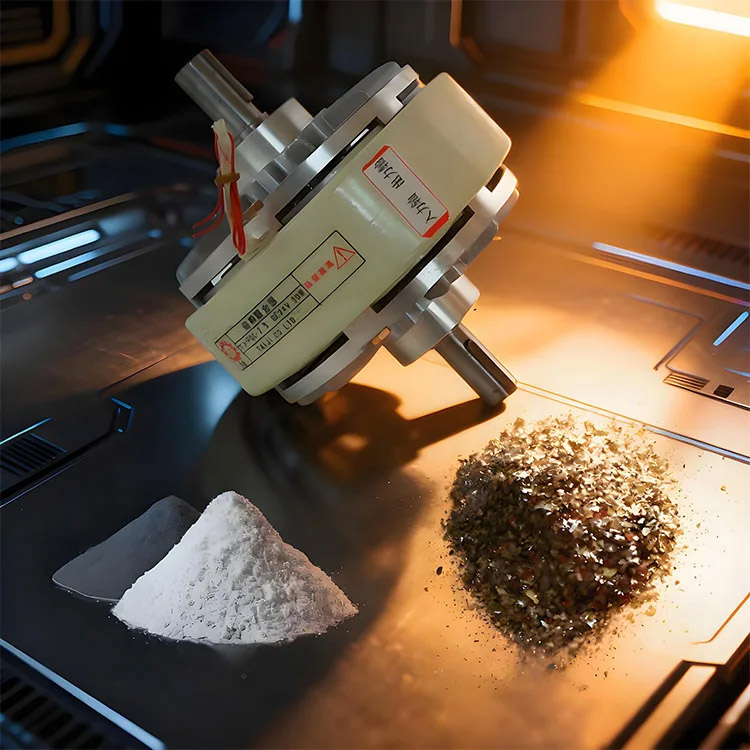
Magnetic particle clutches represent an advanced electromagnetic transmission technology that delivers precise torque control in industrial automation and manufacturing systems. These sophisticated devices operate through the principle of magnetic field modulation, utilizing fine magnetic particles suspended in a specialized medium between input and output rotors. When an electromagnetic coil receives electrical current, it generates a magnetic field that causes the magnetic particles to align and form chains, creating a controlled coupling between the driving and driven shafts. This mechanism enables smooth, stepless torque transmission with exceptional accuracy and reliability. The main functions of magnetic particle clutches include precise tension control, adjustable torque limiting, and continuous slip operation without wear. Unlike conventional mechanical clutches, these devices can maintain constant tension regardless of speed variations, making them ideal for applications requiring consistent material handling. The technological features encompass rapid response times typically under 50 milliseconds, linear torque-to-current characteristics that simplify control system integration, and the ability to operate continuously in slip mode without degradation. Magnetic particle clutches find extensive applications across diverse industries including printing and packaging machinery where web tension control is critical, wire drawing equipment requiring precise pull force regulation, textile manufacturing for maintaining consistent yarn tension, and food processing lines demanding accurate material handling. These clutches excel in roll-to-roll processes, automated testing equipment, and precision winding applications. The robust construction ensures long operational life with minimal maintenance requirements, while the heat dissipation design allows sustained operation even under demanding conditions. Modern magnetic particle clutches incorporate advanced cooling systems and refined particle formulations that enhance performance stability across varying environmental conditions and temperature ranges.

New Products

Magnetic particle clutches offer numerous practical benefits that directly impact operational efficiency and cost-effectiveness for businesses across manufacturing sectors. First and foremost, these devices provide exceptional precision in torque control, allowing operators to achieve exact tension settings that remain stable throughout production runs. This precision translates to reduced material waste, fewer defects, and higher product quality, ultimately improving your bottom line through decreased scrap rates and enhanced customer satisfaction. The stepless adjustment capability means you can fine-tune torque settings without interrupting production, enabling quick changeovers between different materials or product specifications. This flexibility significantly reduces downtime and increases overall equipment effectiveness. Another substantial advantage is the elimination of mechanical wear components found in traditional friction clutches. Since torque transmission occurs through magnetic particle interaction rather than physical contact surfaces, there are no brake pads, friction discs, or pressure plates to replace periodically. This design feature dramatically reduces maintenance costs and extends equipment lifespan, providing excellent return on investment over time. The continuous slip capability allows magnetic particle clutches to operate smoothly even when input and output speeds differ, preventing sudden jerks or tension spikes that could damage sensitive materials or finished products. This smooth operation protects your valuable inventory and reduces the risk of production stoppages caused by material breaks or equipment damage. Energy efficiency represents another compelling benefit, as these clutches consume power only proportional to the required torque level. When idling or operating at low torque settings, power consumption drops accordingly, reducing operational costs and supporting sustainability initiatives. The rapid response time of magnetic particle clutches enables dynamic tension control that automatically compensates for speed changes, diameter variations in roll applications, and material property differences. This automatic adjustment capability simplifies operator training requirements and reduces the skill level needed to achieve consistent results. Installation and integration advantages include compact designs that fit into existing machinery footprints, straightforward electrical connections compatible with standard control systems, and linear control characteristics that simplify programming and calibration procedures. The reliable performance across wide temperature ranges ensures consistent operation in diverse industrial environments, from climate-controlled facilities to warehouses with ambient temperature fluctuations. These clutches also operate quietly compared to mechanical alternatives, improving workplace conditions and reducing noise pollution. The absence of adjustment mechanisms and wearing parts means operators spend less time on maintenance tasks and more time on productive activities, directly enhancing labor efficiency and operational throughput.

Practical Tips

Transmission Pain Points in Printing/Textile/Chemical Machinery: How Electromagnetic Clutches Improve Equipment Stability?

08

Dec

Transmission Pain Points in Printing/Textile/Chemical Machinery: How Electromagnetic Clutches Improve Equipment Stability?

Struggling with transmission instability in printing, textile, or chemical machinery? TJ-A electromagnetic clutches eliminate slip, boost throughput 15–20%, and ensure asbestos-free safety. Discover how top global manufacturers achieve 99.8% reliability—request a spec sheet today.
View More
High-Quality Web Guide Control Systems From a Leading Domestic Manufacturer With 20 Years of Expertise

08

Dec

High-Quality Web Guide Control Systems From a Leading Domestic Manufacturer With 20 Years of Expertise

Discover high-precision web guide control systems from a trusted domestic manufacturer with 20 years of R&D expertise. Reduce waste, boost efficiency, and ensure reliability. Request a quote today.
View More
The Pain of Non-Standard Transmission in Special Working Conditions

09

Apr

The Pain of Non-Standard Transmission in Special Working Conditions

Struggling with standard transmission failures in extreme temps, dust, or tight spaces? TianJi’s 20-year R&D delivers reliable custom clutches & brakes—engineered for your exact specs. Get a free technical consultation today.
View More

Get Your Custom Quote

Tell us your requirements and get a tailored solution for your project.
Name
Mobile
Email
Please include
Message
0/1000

magnetic particle clutches

Unmatched Precision for Superior Product Quality

Unmatched Precision for Superior Product Quality

The precision torque control capability of magnetic particle clutches stands as their most distinguished feature, delivering measurable improvements in product consistency and manufacturing excellence. This precision stems from the fundamental operating principle where electromagnetic force directly controls the degree of particle alignment, creating a linear relationship between input current and output torque. This linear characteristic means that every incremental adjustment in electrical current produces a proportional and predictable change in transmitted torque, enabling control accuracy typically within one percent of the set point. For manufacturers dealing with delicate materials such as thin films, specialized papers, or sensitive textiles, this level of precision prevents common problems like material stretching, tearing, or wrinkling that occur with less accurate tension control systems. The ability to maintain consistent tension regardless of roll diameter changes proves particularly valuable in winding and unwinding applications. As material accumulates on a winding roll or depletes from an unwinding roll, the diameter constantly changes, which would normally require continuous manual adjustment with conventional systems. Magnetic particle clutches automatically compensate for these diameter variations through their controller feedback systems, maintaining perfect tension from the start to the end of each roll. This consistency eliminates the quality variations that typically occur at different points in a production run, ensuring that the first meter of material meets the same specifications as the last meter. The rapid response time, often under 50 milliseconds, allows these clutches to react instantly to disturbances such as acceleration, deceleration, or momentary obstructions in the material path. This quick response prevents tension spikes that could damage products or cause production interruptions. In high-speed printing operations, for example, maintaining precise web tension ensures perfect registration between colors and prevents defects like misprints or smearing. The result is higher first-pass yield rates, reduced waste, and improved customer satisfaction. Beyond immediate quality benefits, the precision control enables manufacturers to work with tighter tolerances and more challenging materials, opening opportunities for premium product offerings and market differentiation. The consistent performance also simplifies quality control procedures, as operators can trust that tension settings will remain stable throughout shifts and production campaigns, reducing the need for frequent inspections and adjustments that consume valuable time and labor resources.
Exceptional Durability Reducing Total Ownership Costs

Exceptional Durability Reducing Total Ownership Costs

Magnetic particle clutches deliver outstanding durability that fundamentally transforms maintenance economics and operational reliability compared to conventional mechanical clutch systems. The wear-free operating principle represents a paradigm shift in power transmission technology, eliminating the gradual degradation that plagues friction-based clutches. Traditional mechanical clutches rely on physical contact between surfaces, which inevitably leads to material wear, heat generation, and performance deterioration over time. These wear mechanisms necessitate regular inspections, periodic adjustments, and eventual replacement of friction materials, imposing recurring costs and scheduled downtime that disrupt production schedules. In contrast, magnetic particle clutches transmit torque through electromagnetic interaction with suspended particles, involving no rubbing surfaces or mechanical contact points that could wear down. This fundamental design advantage means the clutch maintains its original performance characteristics year after year, with torque accuracy and response time remaining consistent throughout its operational life. The magnetic particles themselves are formulated from specialized alloys designed for long-term stability, resistant to oxidation, clumping, or degradation even after millions of operating cycles. The sealed construction protects these particles from contamination by dust, moisture, or other environmental contaminants that could affect performance. This protection ensures reliable operation in challenging industrial environments where conventional clutches might fail prematurely due to contamination-induced wear. The absence of wear also eliminates performance drift, meaning that calibration settings established during installation remain accurate indefinitely without requiring periodic recalibration. This stability simplifies maintenance planning and reduces the technical expertise required for ongoing operation. From a financial perspective, the extended service life translates directly to lower total cost of ownership. While magnetic particle clutches may carry higher initial purchase prices compared to basic mechanical alternatives, the elimination of replacement parts, reduction in maintenance labor, and avoidance of unplanned downtime typically result in payback periods of less than two years in most industrial applications. The reliability advantage becomes even more pronounced in continuous process operations running multiple shifts, where equipment availability directly impacts production capacity and revenue generation. Companies operating 24/7 production schedules particularly benefit from the ability to run magnetic particle clutches continuously without degradation, maximizing asset utilization and minimizing the costly production interruptions associated with clutch maintenance or failure. The predictable, maintenance-free operation also simplifies spare parts inventory management, as facilities need not stock replacement friction materials or maintain expertise in clutch rebuilding procedures.
Intelligent Control Integration for Modern Automation

Intelligent Control Integration for Modern Automation

The seamless integration capability of magnetic particle clutches with contemporary automation systems represents a critical advantage for manufacturers pursuing Industry 4.0 initiatives and advanced process control strategies. These clutches function as intelligent actuators within broader control architectures, accepting standard analog or digital signals from programmable logic controllers, distributed control systems, or dedicated tension controllers. The linear torque-to-current relationship simplifies control algorithm development, as engineers can implement straightforward proportional control strategies without complex compensation for non-linear characteristics common in mechanical systems. This linearity means that doubling the control signal precisely doubles the transmitted torque, enabling intuitive programming and predictable system behavior that accelerates commissioning and reduces debugging time. Advanced magnetic particle clutches incorporate built-in sensors and feedback mechanisms that provide real-time operational data to control systems, enabling closed-loop control strategies that automatically optimize performance based on actual conditions. These feedback signals can include torque output, temperature, operating current, and diagnostic parameters that support predictive maintenance initiatives. By monitoring trends in these parameters, maintenance teams can identify potential issues before they impact production, scheduling interventions during planned downtime rather than responding to unexpected failures. The digital communication capabilities found in modern units support industrial protocols such as EtherNet/IP, Profibus, Modbus, and CANopen, facilitating integration into networked factory environments where equipment coordination and data exchange enhance overall system efficiency. This connectivity enables centralized monitoring of multiple clutches across a facility, providing operations managers with comprehensive visibility into tension control performance and equipment health. The fast response characteristics of magnetic particle clutches complement high-speed automated processes where rapid adjustments are necessary to maintain quality during acceleration, deceleration, or product changeovers. In automated packaging lines, for example, the clutch can instantly adjust tension when the line speed changes to accommodate different product sizes or when starting and stopping for loading operations. The ability to program complex torque profiles allows manufacturers to implement sophisticated process recipes that optimize material handling for specific products or production phases. A printing operation might program different tension profiles for threading, acceleration, steady-state running, and deceleration phases, with the clutch automatically executing these profiles without operator intervention. This automation reduces reliance on operator skill and judgment, improving consistency across shifts and minimizing the training required for new personnel. The integration capabilities also support remote operation and adjustment, allowing engineers to modify tension settings or troubleshoot issues from central control rooms rather than requiring physical presence at each machine. This remote capability proves particularly valuable in large facilities or when managing multiple production sites from a centralized engineering team.
email goToTop