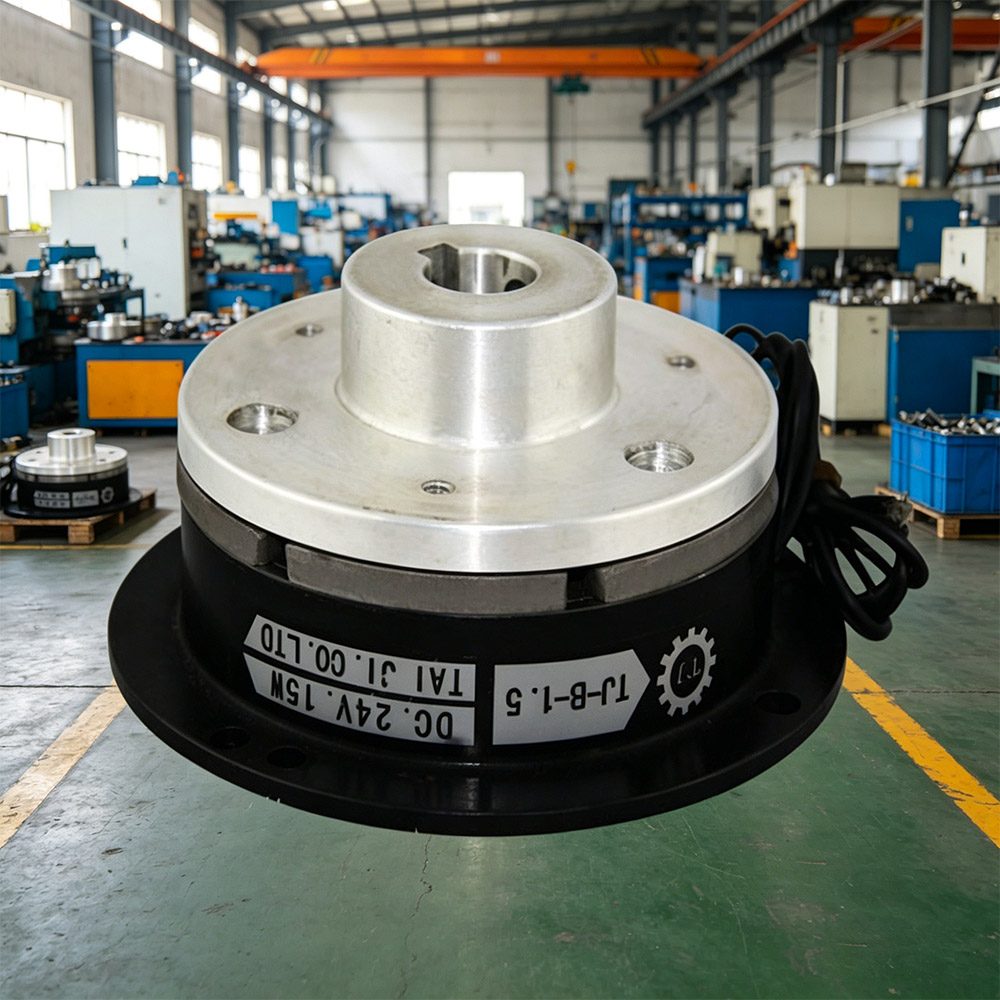
Magnetic Brake Systems: Advanced Braking Technology for Superior Performance and Reliability

All Categories

magnetic brake

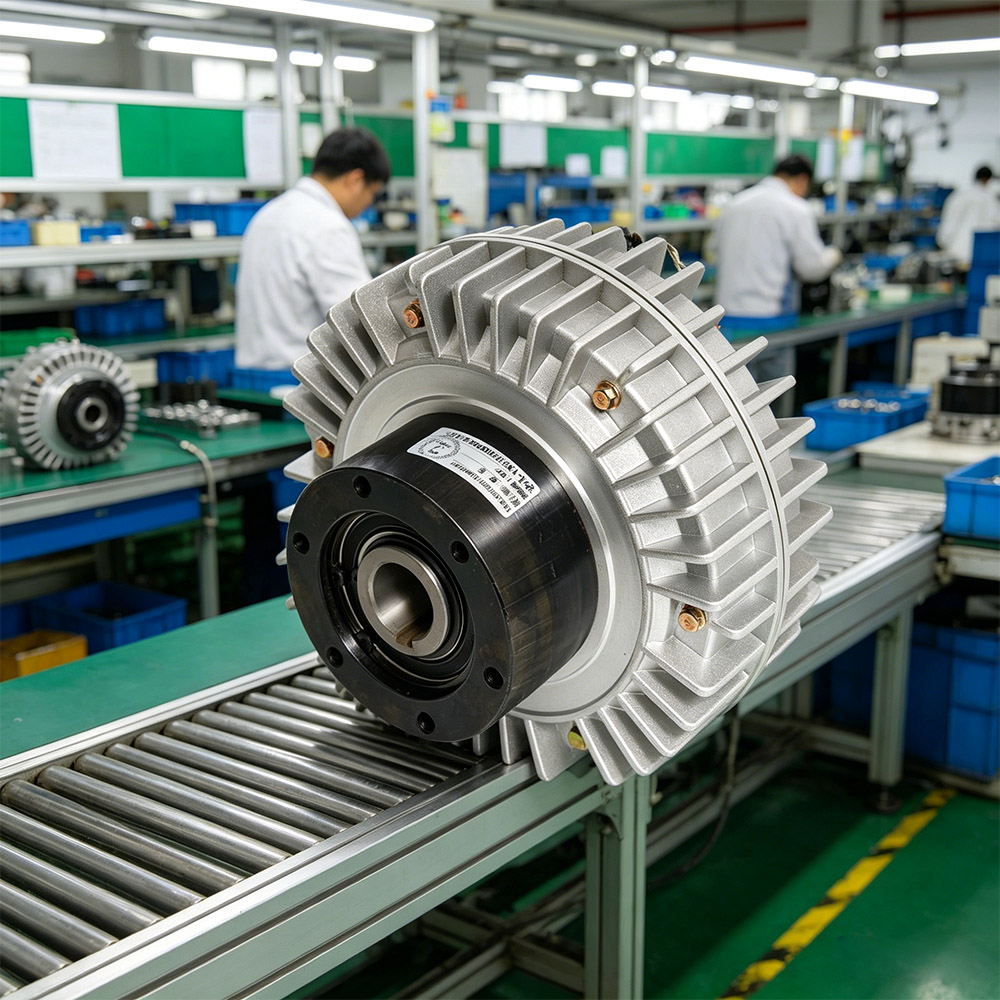
A magnetic brake represents an innovative braking technology that utilizes electromagnetic forces to create stopping power without relying on traditional friction-based mechanisms. This sophisticated system operates by generating magnetic fields that interact with conductive materials, producing eddy currents that naturally oppose motion and deliver smooth, controlled deceleration. The fundamental principle behind this technology involves electromagnetic induction, where moving conductive elements pass through magnetic fields, creating resistance that converts kinetic energy into heat energy efficiently. Modern magnetic brake systems find widespread implementation across numerous industries, from high-speed trains and roller coasters to industrial machinery and precision testing equipment. The primary function of these systems centers on delivering reliable, consistent braking performance while minimizing wear and maintenance requirements. Unlike conventional friction brakes that depend on physical contact between surfaces, magnetic braking technology operates through contactless interaction, significantly extending service life and reducing operational costs. The technological features of magnetic brakes include adjustable braking force, rapid response times, and exceptional durability under demanding conditions. These systems can be designed as permanent magnet configurations or electromagnetic variants, each offering distinct advantages for specific applications. In transportation applications, magnetic brakes provide supplementary stopping power for vehicles, enhancing safety and reducing thermal stress on primary brake systems. Industrial applications benefit from the precise control characteristics, enabling accurate speed regulation for machinery, conveyors, and automated production lines. The versatility of magnetic brake technology extends to renewable energy sectors, where these systems regulate turbine speeds in wind power generation. The absence of mechanical wear components translates to reduced maintenance intervals, lower replacement costs, and improved operational reliability. As industries continue prioritizing efficiency and sustainability, magnetic brake technology emerges as a compelling solution that addresses modern performance demands while delivering long-term economic benefits through reduced lifecycle costs and enhanced operational capabilities.

New Product Releases

Choosing a magnetic brake system delivers substantial practical benefits that directly impact your operational efficiency and bottom line. The most immediate advantage you will notice is the dramatic reduction in maintenance requirements compared to traditional braking systems. Since these systems operate without physical contact between braking surfaces, you eliminate the constant need to replace worn brake pads, shoes, or drums. This contactless operation means your equipment experiences virtually no mechanical wear during normal braking operations, translating to fewer service interruptions and lower parts expenses over the equipment lifetime. Your maintenance teams can redirect their time and resources toward other critical tasks instead of performing frequent brake inspections and replacements. The smooth, progressive braking action provides superior control that enhances both safety and performance in your operations. You gain the ability to fine-tune braking force with precision, allowing operators to achieve exact speed control that improves product quality and process consistency. This level of control proves especially valuable in applications requiring gentle deceleration or precise positioning. The heat dissipation characteristics of magnetic brakes offer another significant advantage, as the braking energy disperses across larger surface areas compared to friction brakes. This efficient thermal management prevents the brake fade problems that plague conventional systems under heavy use, ensuring consistent performance even during extended operating periods or repeated braking cycles. Your operations benefit from improved reliability since magnetic brakes continue functioning effectively across wide temperature ranges without performance degradation. The quiet operation of these systems creates a more pleasant work environment, reducing noise pollution in facilities and surrounding areas. You will appreciate the environmental benefits as well, since magnetic brakes eliminate the brake dust and particulate emissions associated with friction-based systems. This cleaner operation supports your sustainability initiatives while maintaining compliance with increasingly stringent environmental regulations. The installation flexibility of magnetic brake technology allows integration into existing equipment with minimal modifications, protecting your capital investment in current machinery. The long service life of these components provides predictable operating costs, helping you budget more accurately and avoid unexpected expenses from premature component failures. Energy efficiency represents another compelling advantage, as modern magnetic brake designs minimize parasitic power consumption while delivering maximum braking effectiveness. Your electrical costs remain low while you enjoy superior performance compared to alternative braking technologies. The scalability of magnetic brake systems means you can implement solutions ranging from small precision applications to massive industrial installations, all benefiting from the same fundamental advantages. These systems respond instantly to control inputs, providing the quick reaction times necessary for emergency stopping situations and enhancing overall workplace safety for your personnel.

Latest News

Transmission Pain Points in Printing/Textile/Chemical Machinery: How Electromagnetic Clutches Improve Equipment Stability?

08

Dec

Transmission Pain Points in Printing/Textile/Chemical Machinery: How Electromagnetic Clutches Improve Equipment Stability?

Struggling with transmission instability in printing, textile, or chemical machinery? TJ-A electromagnetic clutches eliminate slip, boost throughput 15–20%, and ensure asbestos-free safety. Discover how top global manufacturers achieve 99.8% reliability—request a spec sheet today.
View More
High-Quality Web Guide Control Systems From a Leading Domestic Manufacturer With 20 Years of Expertise

08

Dec

High-Quality Web Guide Control Systems From a Leading Domestic Manufacturer With 20 Years of Expertise

Discover high-precision web guide control systems from a trusted domestic manufacturer with 20 years of R&D expertise. Reduce waste, boost efficiency, and ensure reliability. Request a quote today.
View More
The Pain of Non-Standard Transmission in Special Working Conditions

09

Apr

The Pain of Non-Standard Transmission in Special Working Conditions

Struggling with standard transmission failures in extreme temps, dust, or tight spaces? TianJi’s 20-year R&D delivers reliable custom clutches & brakes—engineered for your exact specs. Get a free technical consultation today.
View More

Get Your Custom Quote

Tell us your requirements and get a tailored solution for your project.
Name
Mobile
Email
Please include
Message
0/1000

magnetic brake

Exceptional Durability and Extended Service Life

Exceptional Durability and Extended Service Life

The durability advantage of magnetic brake technology fundamentally transforms equipment lifecycle economics by eliminating the primary wear mechanism that limits conventional brake performance. Traditional friction-based braking systems rely on direct physical contact between moving surfaces, inevitably causing material degradation with each application. This continuous abrasion requires periodic replacement of consumable components, generating ongoing expenses and operational downtime. Magnetic brake systems revolutionize this paradigm through contactless operation that preserves component integrity throughout extended service periods. The electromagnetic interaction that generates braking force occurs across an air gap, preventing surface-to-surface contact that causes wear in conventional systems. This design principle means the critical braking components maintain their original specifications and performance characteristics even after millions of operating cycles. The practical implications for your operations include dramatically extended intervals between major maintenance events, reducing both direct parts costs and indirect expenses associated with equipment downtime. Manufacturing facilities particularly benefit from this reliability, as production schedules remain uninterrupted by brake-related maintenance requirements that typically necessitate line shutdowns. The robust construction of magnetic brake assemblies incorporates materials selected specifically for their resistance to environmental factors including moisture, temperature extremes, and chemical exposure. The sealed configurations available in premium magnetic brake designs protect internal components from contamination that degrades performance in harsh operating environments. This environmental resilience ensures consistent braking performance across diverse applications, from outdoor installations exposed to weather elements to industrial settings with airborne particulates or corrosive atmospheres. The absence of hydraulic fluids or compressed air requirements eliminates potential leak points that compromise conventional brake systems, further enhancing reliability and reducing maintenance complexity. Your personnel appreciate the straightforward inspection procedures, as magnetic brake condition assessment typically involves simple visual examination and electrical measurements rather than dimensional checks of worn friction materials. The predictable performance degradation curve allows you to implement condition-based maintenance strategies rather than relying on conservative time-based replacement schedules that waste serviceable component life. The long-term cost savings accumulate substantially over equipment lifetimes, with many magnetic brake installations delivering return on investment within the first few years of operation through reduced maintenance labor, eliminated consumable parts purchases, and avoided production losses from unplanned downtime. This economic advantage becomes increasingly significant in applications with difficult access for maintenance, where service interventions require extensive equipment disassembly or specialized lifting equipment.
Superior Heat Management and Consistent Performance

Superior Heat Management and Consistent Performance

The thermal characteristics of magnetic brake technology deliver performance consistency that conventional friction brakes simply cannot match under demanding operating conditions. Traditional braking systems concentrate thermal energy at the friction interface, creating localized hot spots that compromise braking effectiveness and accelerate component degradation. This phenomenon, known as brake fade, reduces stopping power precisely when operators need maximum performance during extended braking periods or repeated applications. Magnetic brake systems dissipate thermal energy across substantially larger surface areas through their fundamental operating principle. The eddy currents generated during braking distribute throughout the conductive braking element rather than concentrating at contact points, spreading thermal loads that conventional systems must absorb in much smaller regions. This distributed heat generation allows the entire brake assembly to function as a heat sink, leveraging natural convection and radiation to transfer energy to the surrounding environment efficiently. The result is sustained braking performance that remains consistent regardless of duty cycle severity or ambient temperature conditions. Applications involving continuous speed regulation particularly benefit from this thermal advantage, as the magnetic brake maintains precise control authority throughout extended operating periods without the performance variations that plague friction systems as temperatures rise. Your operators gain confidence knowing that braking response remains predictable and reliable under all operating conditions, enhancing safety and enabling more aggressive production schedules. The design flexibility of magnetic brake systems allows engineers to optimize cooling effectiveness for specific applications through strategic placement of heat dissipation surfaces and integration with forced cooling systems when maximum thermal capacity is required. Advanced implementations incorporate temperature monitoring to provide early warning of abnormal operating conditions while maintaining full braking capability. The absence of organic friction materials eliminates the outgassing and material decomposition that occurs when conventional brakes reach elevated temperatures, preserving component integrity and preventing the contamination issues that affect nearby equipment and products. Your quality control processes benefit from the stable, repeatable braking characteristics that support consistent process parameters and product specifications. The extended thermal endurance of magnetic brake components withstands temperature excursions that would permanently damage friction-based systems, providing an additional safety margin for unexpected operating conditions or emergency situations requiring maximum braking effort. This thermal robustness proves particularly valuable in transportation applications where descending grades demand sustained braking that would quickly overwhelm conventional systems. The elimination of thermal cycling stress that cracks and warps traditional brake components further contributes to the exceptional service life that makes magnetic brake technology economically attractive across diverse industries.
Precise Control and Operational Flexibility

Precise Control and Operational Flexibility

The control characteristics inherent to magnetic brake technology enable operational precision that opens new possibilities for equipment performance optimization and process refinement. Conventional friction brakes operate essentially as binary devices, transitioning between applied and released states with limited modulation capability. The inherent variability of friction coefficients introduces unpredictability that complicates accurate speed control and smooth deceleration profiles. Magnetic brake systems provide infinitely variable braking force adjustment through simple electrical current regulation, allowing operators or automated control systems to dial in exactly the braking effort required for each specific situation. This proportional control capability transforms the brake from a simple stopping device into a sophisticated speed regulation tool that enhances overall system performance. Manufacturing processes requiring precise material tensioning benefit tremendously from the accurate torque control that magnetic brakes deliver, maintaining consistent web tension in printing, coating, and laminating applications that directly impact product quality. The rapid response time of electromagnetic systems enables control loop frequencies impossible with mechanical brake actuation, supporting advanced automation strategies that optimize production throughput while minimizing defects. Your engineering teams gain powerful tools for fine-tuning equipment behavior, adjusting braking characteristics to match specific product requirements or operating conditions without mechanical modifications. The programmability of modern magnetic brake controllers allows storage of multiple braking profiles that operators can select based on current production needs, adapting quickly to product changeovers or varying operational demands. This flexibility reduces setup time and eliminates the trial-and-error adjustments typically required when configuring mechanical braking systems for new applications. The integration capabilities of magnetic brake technology with existing control networks simplify implementation in automated facilities, accepting standard industrial communication protocols and sensor inputs that enable sophisticated control strategies. Your maintenance personnel appreciate the diagnostic capabilities built into intelligent magnetic brake systems, which provide detailed operating data that supports predictive maintenance initiatives and rapid troubleshooting when issues arise. The absence of mechanical linkages and adjustment mechanisms eliminates the calibration drift that gradually degrades conventional brake performance between maintenance interventions, ensuring the braking characteristics remain precisely as configured throughout service intervals. Testing and quality assurance applications particularly value the repeatable, documented braking profiles that magnetic systems provide, enabling consistent evaluation procedures and traceable test results. The gentleness of magnetic braking action reduces mechanical stress on equipment structures and drive components, extending the service life of associated machinery while enabling operation at higher performance levels without sacrificing reliability or component longevity that aggressive friction braking would compromise.
email goToTop