Magnetic Particle Brake Systems: Precision Torque Control Solutions for Industrial Applications

All Categories

magnetic particle brake

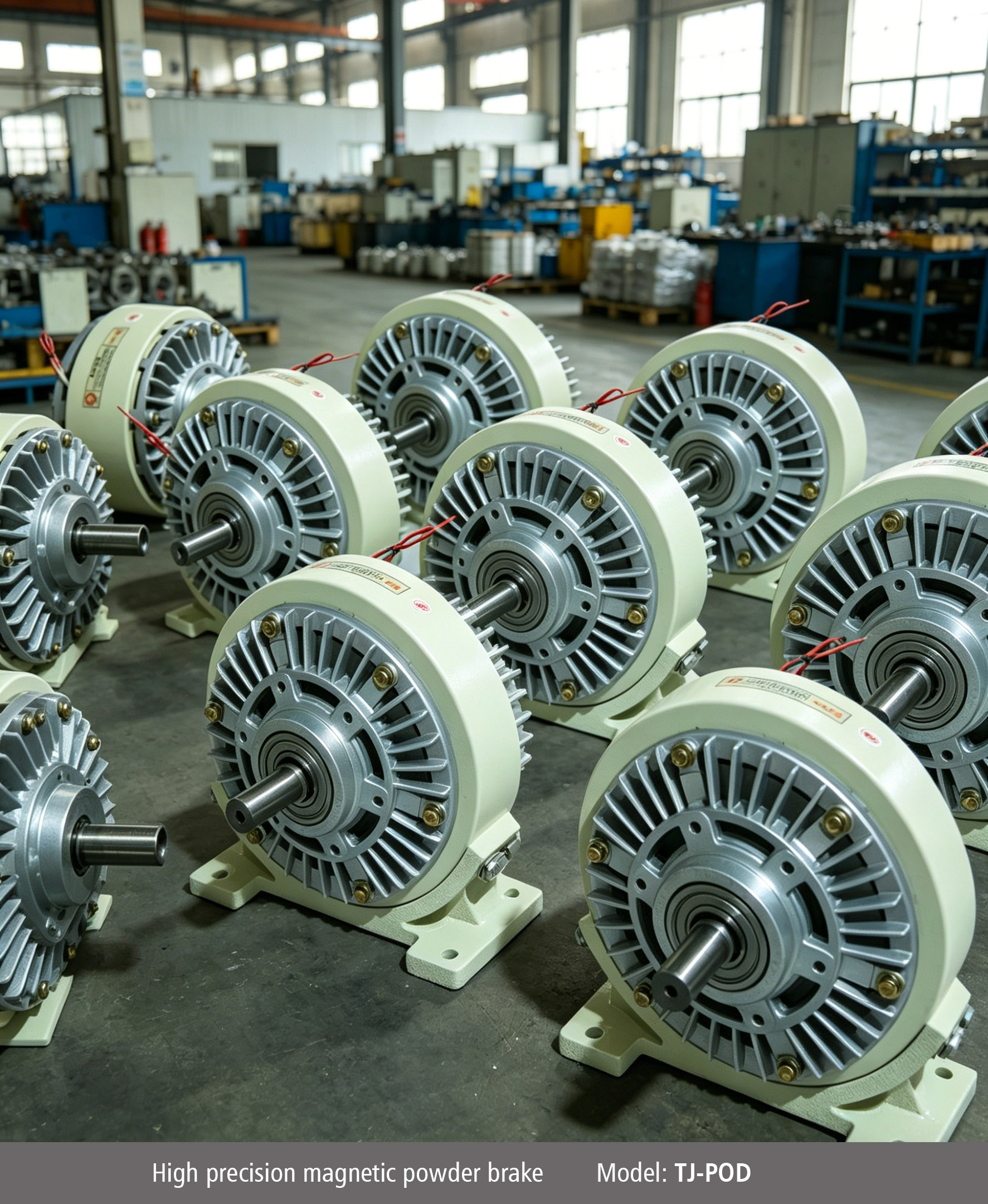
A magnetic particle brake represents an innovative electromagnetic braking technology that delivers precise torque control across numerous industrial applications. This sophisticated device operates by utilizing magnetic particles suspended in a specialized medium, which respond instantly to electromagnetic fields to generate controlled resistance. The magnetic particle brake functions as a torque control mechanism that transfers rotational force through a contained magnetic particle matrix, enabling exceptional precision in tension control, load simulation, and dynamic braking scenarios. The core technology behind this braking system involves a rotating disc assembly surrounded by stationary electromagnets, with microscopic magnetic particles filling the gap between these components. When electrical current energizes the electromagnetic coils, the magnetic particles align themselves to create chains that bridge the gap between moving and stationary surfaces, generating precise and adjustable braking torque. The magnetic particle brake excels in applications requiring smooth, stepless torque adjustment, making it indispensable for modern manufacturing processes. These devices offer remarkable versatility in controlling tension during material processing operations, including printing, coating, laminating, and winding applications. The technology provides consistent performance across varying speeds, from complete standstill to maximum operational velocities, ensuring reliable torque transmission regardless of rotational speed. Modern magnetic particle brake designs incorporate advanced heat dissipation features to maintain optimal operating temperatures during extended use, preventing performance degradation and extending service life. The compact construction of these braking systems allows for seamless integration into existing machinery configurations without requiring extensive modifications. Industries ranging from packaging and textiles to automotive testing and medical equipment manufacturing rely on magnetic particle brake technology to achieve precise control over material handling and testing procedures, demonstrating the widespread applicability and importance of this electromagnetic control solution in contemporary industrial environments.

New Product Recommendations

Implementing a magnetic particle brake system delivers numerous practical benefits that directly impact operational efficiency and production quality. These electromagnetic control devices provide instantaneous torque response, allowing operators to make real-time adjustments without delays or mechanical lag, which translates to improved process control and reduced material waste. The smooth torque transmission characteristic ensures gentle handling of delicate materials, preventing damage that commonly occurs with jerky or inconsistent tension control methods. Users appreciate the simple electrical control interface that eliminates complex mechanical linkages, reducing maintenance requirements and minimizing downtime associated with worn components. The stepless torque adjustment capability means operators can fine-tune resistance levels to match specific application requirements precisely, accommodating different material types and processing conditions without equipment changes. Heat generation during operation remains manageable through efficient design, enabling continuous duty cycles without performance degradation or safety concerns. The absence of friction-based wear components means extended service intervals and lower replacement part costs compared to traditional mechanical braking systems. Installation procedures are straightforward, requiring only basic electrical connections and simple mounting arrangements, which reduces initial setup time and allows faster integration into production lines. The compact footprint of these devices conserves valuable floor space while delivering powerful torque control capabilities that match or exceed larger conventional systems. Operational noise levels remain minimal, contributing to improved working environments and compliance with workplace safety standards. Energy efficiency stands out as a significant advantage, as these systems consume power only when active braking torque is required, unlike mechanical systems that may generate continuous friction losses. The linear relationship between input current and output torque simplifies automation integration, allowing precise computer control through standard industrial controllers. Users benefit from consistent performance across temperature variations, maintaining accurate torque delivery despite environmental changes. The sealed construction protects internal components from contamination, enabling reliable operation in dusty or humid industrial settings where exposed mechanical systems would fail. Maintenance staff appreciate the diagnostic simplicity, as performance issues typically trace to straightforward electrical or cooling system factors rather than complex mechanical wear patterns. The ability to achieve zero-speed torque makes these devices ideal for holding applications, preventing unwinding or material slippage during production stops. Quick response times support dynamic applications where torque requirements change rapidly, such as dancer arm control systems in web processing equipment. The proven reliability of magnetic particle brake technology reduces unexpected production interruptions, supporting lean manufacturing initiatives and just-in-time production schedules that demand consistent equipment performance.

Tips And Tricks

Transmission Pain Points in Printing/Textile/Chemical Machinery: How Electromagnetic Clutches Improve Equipment Stability?

08

Dec

Transmission Pain Points in Printing/Textile/Chemical Machinery: How Electromagnetic Clutches Improve Equipment Stability?

Struggling with transmission instability in printing, textile, or chemical machinery? TJ-A electromagnetic clutches eliminate slip, boost throughput 15–20%, and ensure asbestos-free safety. Discover how top global manufacturers achieve 99.8% reliability—request a spec sheet today.
View More
High-Quality Web Guide Control Systems From a Leading Domestic Manufacturer With 20 Years of Expertise

08

Dec

High-Quality Web Guide Control Systems From a Leading Domestic Manufacturer With 20 Years of Expertise

Discover high-precision web guide control systems from a trusted domestic manufacturer with 20 years of R&D expertise. Reduce waste, boost efficiency, and ensure reliability. Request a quote today.
View More
The Pain of Non-Standard Transmission in Special Working Conditions

09

Apr

The Pain of Non-Standard Transmission in Special Working Conditions

Struggling with standard transmission failures in extreme temps, dust, or tight spaces? TianJi’s 20-year R&D delivers reliable custom clutches & brakes—engineered for your exact specs. Get a free technical consultation today.
View More

Get Your Custom Quote

Tell us your requirements and get a tailored solution for your project.
Name
Mobile
Email
Please include
Message
0/1000

magnetic particle brake

Precision Torque Control Technology

Precision Torque Control Technology

The magnetic particle brake delivers unmatched precision in torque control applications, setting new standards for accuracy in tension management and load simulation tasks. This exceptional control capability stems from the fundamental operating principle, where microscopic magnetic particles respond instantaneously to changes in electromagnetic field strength, creating a direct and proportional relationship between electrical input and mechanical output torque. Unlike traditional friction-based systems that suffer from stick-slip phenomena and wear-related performance drift, the magnetic particle brake maintains consistent torque characteristics throughout its operational life. The technology enables torque adjustment with remarkable granularity, allowing operators to dial in exact resistance levels that match specific material properties and processing requirements. This precision proves invaluable in applications such as film coating, where maintaining constant web tension prevents wrinkles and ensures uniform coating thickness across entire production runs. The system responds to control signals within milliseconds, providing dynamic torque adjustment that compensates for variations in material thickness, diameter changes on unwinding rolls, or speed fluctuations in the drive system. Engineers appreciate how this rapid response capability enables closed-loop tension control systems that automatically maintain target values despite disturbances, eliminating the manual interventions required with less sophisticated equipment. The smooth torque delivery characteristic prevents shock loads that damage sensitive materials or cause registration errors in multi-color printing processes. Production managers recognize how this precision translates to reduced scrap rates and improved first-pass quality, directly impacting profitability. The magnetic particle brake achieves excellent torque stability across its entire speed range, from zero to maximum rpm, unlike some electromagnetic systems that exhibit speed-dependent performance variations. This speed-independent operation simplifies control system programming and ensures consistent material handling regardless of production rate changes. The technology supports both dynamic applications requiring constant tension during acceleration and deceleration, as well as static holding applications where preventing unwinding during stops is critical for process integrity and operator safety.
Enhanced Durability and Minimal Maintenance Requirements

Enhanced Durability and Minimal Maintenance Requirements

The magnetic particle brake demonstrates exceptional longevity and requires minimal maintenance intervention, delivering significant lifecycle cost advantages compared to conventional mechanical braking alternatives. This durability advantage originates from the non-contact torque transmission principle, where magnetic particles transfer force without metal-to-metal friction that causes rapid wear in traditional brake systems. The sealed housing protects the magnetic particle medium from environmental contamination, preventing the introduction of abrasive particles or moisture that would degrade performance in exposed mechanical systems. Users operating in challenging industrial environments appreciate how this sealed design maintains performance consistency despite dusty conditions, high humidity, or temperature variations that would compromise conventional equipment. The magnetic particles themselves resist degradation, maintaining their magnetic properties and mechanical characteristics through millions of operating cycles without the material breakdown common in friction materials. Heat management systems integrated into quality designs ensure operating temperatures remain within optimal ranges, preventing thermal degradation of the magnetic medium and extending the service life of electromagnetic coils. Regular maintenance procedures typically involve only periodic inspection of cooling systems and verification of electrical connections, eliminating the frequent adjustments, lubrication, and component replacements demanded by mechanical brake systems. This simplified maintenance schedule reduces both direct maintenance labor costs and indirect costs associated with production downtime during service intervals. The absence of consumable friction materials eliminates recurring replacement part expenses that accumulate substantially over the equipment lifecycle. Organizations implementing predictive maintenance strategies find these devices particularly suitable, as performance parameters remain stable and measurable, allowing condition monitoring without invasive inspections. The robust construction withstands industrial vibration and shock loads that would damage more delicate control mechanisms, contributing to reliable operation in demanding manufacturing environments. Electrical components selected for industrial duty ratings ensure consistent performance despite voltage fluctuations or electrical noise present in typical factory power systems. The modular design approach adopted by quality manufacturers facilitates rare repairs, allowing component replacement without complete unit removal, minimizing repair time and associated production losses. Extended mean time between failure rates documented in industrial applications demonstrate the inherent reliability advantage, supporting equipment availability targets critical for high-volume manufacturing operations and continuous process industries.
Versatile Application Integration Capabilities

Versatile Application Integration Capabilities

The magnetic particle brake offers remarkable versatility in application integration, adapting seamlessly to diverse industrial processes and equipment configurations across multiple sectors. This adaptability stems from the compact mechanical design that accommodates installation in space-constrained environments where bulkier control systems cannot fit, enabling retrofits into existing machinery without extensive redesign. The standard electrical control interface simplifies integration with modern automation systems, accepting industry-standard analog or digital signals from programmable controllers, human-machine interfaces, or dedicated tension controllers. Process engineers value the flexibility to implement various control strategies, including open-loop torque control for simple applications, closed-loop tension regulation for precision processes, or torque limiting for safety-critical operations. The technology scales effectively across torque ranges, with models available from fractional newton-meter ratings suitable for delicate laboratory equipment to industrial-capacity units delivering substantial braking force for heavy-duty production machinery. This broad capacity range allows organizations to standardize on a single control technology across multiple applications, simplifying spare parts inventory and reducing training requirements for maintenance personnel. The magnetic particle brake functions effectively as a tensioning device in unwinding applications, maintaining consistent backpressure on supply rolls as diameter decreases and inertia changes throughout the unwinding cycle. Converting operations utilize these devices for dancer arm control, where responsive torque adjustment maintains optimal material loop geometry despite line speed variations or material splice events. Testing laboratories employ the technology for load simulation, replicating real-world operating conditions during dynamometer testing of motors, transmissions, and complete powertrain assemblies. Medical device manufacturing processes benefit from the gentle, precise tension control that prevents damage to sensitive materials while ensuring consistent product quality in critical healthcare applications. Packaging machinery incorporates these braking systems to control film tension during wrapping operations, preventing material stretching or tearing while ensuring secure package formation. Textile manufacturing relies on the technology for yarn tension control during spinning, weaving, and dyeing processes where maintaining consistent tension directly influences fabric quality and appearance. Printing press applications utilize magnetic particle brake systems for register control and web tension management, ensuring accurate color registration and preventing material handling defects that compromise print quality.
email goToTop