Adjusting Disk Brakes: Advanced Self-Compensating Braking Systems for Industrial Applications

All Categories

adjusting disk brakes

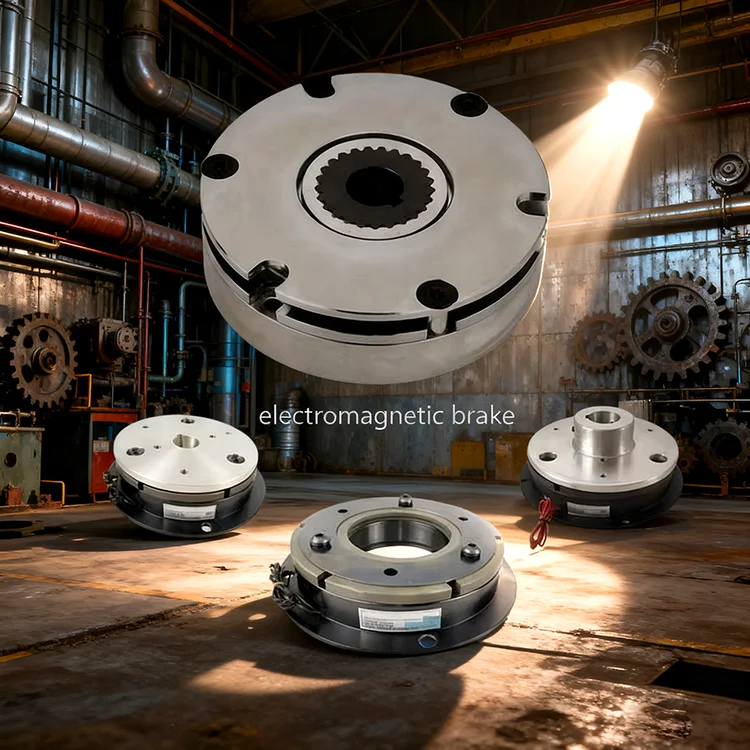
Adjusting disk brakes represent a sophisticated braking solution designed to deliver consistent stopping power across diverse industrial and automotive applications. These advanced braking systems incorporate intelligent adjustment mechanisms that automatically compensate for wear, maintaining optimal performance throughout their operational lifespan. The primary function of adjusting disk brakes centers on providing reliable deceleration and holding capabilities while minimizing maintenance requirements and downtime. Unlike conventional fixed braking systems, adjusting disk brakes feature self-compensating elements that continuously monitor brake pad wear and automatically adjust the air gap between friction surfaces. This technological innovation ensures that braking force remains constant regardless of pad thickness, eliminating performance degradation over time. The core components include precision-engineered friction disks, hydraulic or pneumatic actuation systems, automatic wear compensation modules, and robust housing assemblies manufactured from high-grade materials. These braking systems find extensive applications across manufacturing equipment, conveyor systems, industrial machinery, cranes, hoists, wind turbines, mining equipment, and heavy-duty vehicles. The technological features of adjusting disk brakes encompass temperature-resistant friction materials capable of withstanding extreme operating conditions, corrosion-resistant coatings for enhanced durability, modular designs facilitating quick replacement and servicing, and compatibility with various control systems including PLC integration. The adjustment mechanism operates through spring-loaded pistons or mechanical compensators that maintain consistent brake engagement regardless of wear accumulation. This intelligent design significantly reduces the frequency of manual adjustments traditionally required in standard braking systems. Modern adjusting disk brakes incorporate advanced materials science, precision manufacturing techniques, and computational modeling to optimize heat dissipation, reduce noise generation, and extend service intervals. Their ability to maintain consistent braking torque across millions of operational cycles makes them indispensable in applications demanding reliability, safety, and cost-effectiveness.

New Product Releases

Choosing adjusting disk brakes for your equipment brings numerous practical benefits that directly impact operational efficiency and overall cost management. First and foremost, these braking systems dramatically reduce maintenance time and associated labor costs. Traditional brake systems require frequent manual adjustments to compensate for wear, often necessitating scheduled downtime and skilled technician intervention. With adjusting disk brakes, the automatic compensation feature handles this process continuously, allowing your equipment to operate longer between service intervals. This translates to fewer production interruptions and increased productivity for your facility. The consistent braking performance offered by these systems enhances workplace safety significantly. Because the braking force remains constant throughout the component lifecycle, operators can rely on predictable stopping distances and holding capabilities. This reliability proves especially critical in applications involving personnel proximity or valuable cargo, where braking inconsistencies could lead to accidents or damage. Another compelling advantage centers on extended component longevity. The even wear patterns achieved through automatic adjustment prevent the accelerated degradation that occurs when brakes operate with improper air gaps. This balanced wear extends the service life of both friction materials and backing plates, reducing replacement frequency and parts expenditure. From an economic perspective, adjusting disk brakes deliver measurable return on investment through reduced total cost of ownership. While initial purchase prices may exceed basic brake systems, the cumulative savings from decreased maintenance labor, extended component life, reduced downtime, and lower spare parts inventory quickly offset this difference. Many facilities report payback periods of less than two years when switching to adjusting disk brakes on critical equipment. The simplified maintenance procedures also benefit operations with limited technical staff. Service tasks become straightforward inspections rather than complex adjustment procedures, enabling less specialized personnel to perform routine checks. This democratization of maintenance capability enhances operational flexibility and reduces dependence on external service providers. Energy efficiency represents another practical benefit, as properly adjusted brakes minimize parasitic drag during non-braking operation. This reduction in residual friction decreases power consumption and heat generation, contributing to lower energy bills and improved thermal management. The environmental benefits extend further through reduced waste generation, as longer component lifespans mean fewer discarded parts entering waste streams. Finally, adjusting disk brakes offer superior adaptability to varying load conditions and operational demands, automatically compensating for changes in braking requirements without operator intervention or system recalibration.

Practical Tips

Transmission Pain Points in Printing/Textile/Chemical Machinery: How Electromagnetic Clutches Improve Equipment Stability?

08

Dec

Transmission Pain Points in Printing/Textile/Chemical Machinery: How Electromagnetic Clutches Improve Equipment Stability?

Struggling with transmission instability in printing, textile, or chemical machinery? TJ-A electromagnetic clutches eliminate slip, boost throughput 15–20%, and ensure asbestos-free safety. Discover how top global manufacturers achieve 99.8% reliability—request a spec sheet today.
View More
High-Quality Web Guide Control Systems From a Leading Domestic Manufacturer With 20 Years of Expertise

08

Dec

High-Quality Web Guide Control Systems From a Leading Domestic Manufacturer With 20 Years of Expertise

Discover high-precision web guide control systems from a trusted domestic manufacturer with 20 years of R&D expertise. Reduce waste, boost efficiency, and ensure reliability. Request a quote today.
View More
The Pain of Non-Standard Transmission in Special Working Conditions

09

Apr

The Pain of Non-Standard Transmission in Special Working Conditions

Struggling with standard transmission failures in extreme temps, dust, or tight spaces? TianJi’s 20-year R&D delivers reliable custom clutches & brakes—engineered for your exact specs. Get a free technical consultation today.
View More

Get Your Custom Quote

Tell us your requirements and get a tailored solution for your project.
Name
Mobile
Email
Please include
Message
0/1000

adjusting disk brakes

Automatic Wear Compensation Technology

Automatic Wear Compensation Technology

The cornerstone feature of adjusting disk brakes lies in their sophisticated automatic wear compensation technology, which fundamentally transforms how braking systems maintain performance over time. This innovative mechanism employs precision-engineered components that continuously monitor the air gap between friction surfaces and make instantaneous adjustments to preserve optimal braking characteristics. The compensation system operates through mechanical or hydraulic principles depending on the specific design, but all variants share the common goal of maintaining consistent engagement regardless of pad thickness reduction. As friction materials gradually wear during normal operation, traditional brake systems experience increasing air gaps that require manual adjustment to restore proper function. This wear progression leads to diminishing braking force, extended stopping distances, and potential safety hazards if adjustments are delayed or overlooked. Adjusting disk brakes eliminate this concern entirely through their self-regulating design. The compensation mechanism typically incorporates spring-loaded pistons, ratcheting elements, or hydraulic chambers that automatically extend as wear occurs, effectively replacing the lost material thickness with mechanical adjustment. This process happens incrementally during each braking cycle, ensuring that performance parameters remain within tight tolerances throughout the component lifecycle. The engineering precision required for this functionality demands exacting manufacturing standards and quality control processes. Each adjustment increment must be carefully calibrated to match the wear rate of friction materials while avoiding over-compensation that could cause drag or premature engagement. Leading manufacturers employ advanced metallurgy, heat treatment protocols, and dimensional accuracy verification to ensure reliable adjustment operation across millions of cycles and varying environmental conditions. The practical implications of automatic wear compensation extend beyond mere convenience. Industrial facilities utilizing this technology report significant reductions in unscheduled maintenance events, as brakes no longer require periodic manual adjustment. This reliability enhancement proves particularly valuable in continuous process industries where unexpected downtime creates cascading production losses. Furthermore, the consistent braking performance enabled by automatic compensation enhances equipment operator confidence and safety margins. Operators can execute stopping procedures with predictable results, eliminating the uncertainty associated with degraded brake response in worn conventional systems. The technology also contributes to extended friction material life by ensuring even wear patterns across the contact surface, preventing the localized high spots and thermal stress concentrations that accelerate degradation in manually adjusted systems.
Enhanced Safety and Reliability Features

Enhanced Safety and Reliability Features

Safety stands as the paramount consideration in any braking application, and adjusting disk brakes incorporate multiple design elements specifically engineered to maximize operational security and system dependability. The fundamental safety advantage stems from the elimination of performance degradation between maintenance intervals, ensuring that braking capacity remains at design specifications regardless of accumulated operating hours. This consistency proves critical in emergency stopping situations where every millisecond and centimeter matters in preventing collisions or equipment damage. The robust construction of adjusting disk brakes incorporates redundant safety mechanisms that provide fail-safe operation even under adverse conditions. Many designs feature dual-circuit configurations where independent actuation paths ensure partial braking capability persists even if one system component fails. This redundancy architecture follows aerospace and automotive safety principles, bringing proven reliability concepts to industrial applications. Temperature management represents another crucial safety dimension addressed by advanced adjusting disk brake designs. Friction processes inherently generate substantial heat, and inadequate thermal dissipation can lead to brake fade, material degradation, or catastrophic failure. Engineers optimize these systems through computational fluid dynamics modeling and empirical testing to maximize heat transfer away from friction surfaces. Ventilated disk designs, specialized fin geometries, and heat-resistant alloys work synergistically to maintain safe operating temperatures even during repeated high-energy braking cycles. The materials science behind modern adjusting disk brakes contributes significantly to safety performance. Friction compounds are formulated to deliver stable coefficients across wide temperature ranges, preventing the unpredictable behavior that occurs when conventional materials exceed their thermal limits. These advanced composites incorporate ceramic particles, metallic fibers, and proprietary binders that maintain structural integrity and friction characteristics from sub-zero startup conditions through extreme operational heating. Corrosion resistance features further enhance long-term safety and reliability, particularly in harsh environments involving moisture, chemicals, or salt exposure. Protective coatings, stainless steel components, and sealed bearing assemblies prevent degradation that could compromise braking function or structural integrity. Regular inspection protocols become simplified with adjusting disk brakes, as maintenance personnel can quickly verify proper operation through visual checks and basic measurements rather than complex adjustment procedures. This accessibility encourages more frequent safety verification, creating additional protective layers against undetected degradation. Compliance with international safety standards including ISO, OSHA, and industry-specific regulations is built into quality adjusting disk brake designs, providing procurement professionals with confidence that installations meet or exceed regulatory requirements.
Versatile Applications Across Industries

Versatile Applications Across Industries

The adaptability of adjusting disk brakes across diverse industrial sectors demonstrates their fundamental value proposition and technological maturity. Manufacturing facilities represent a primary application domain, where these braking systems control conveyor speeds, position assembly line components, and provide emergency stopping for automated machinery. The precision and repeatability offered by adjusting disk brakes enable tight production tolerances and consistent product quality, while their reliability minimizes the production interruptions that compromise delivery schedules and customer satisfaction. Material handling equipment including cranes, hoists, and lifting platforms depends heavily on dependable braking performance for both operational efficiency and personnel safety. Adjusting disk brakes in these applications must handle frequent start-stop cycles, varying loads, and occasional emergency stops while maintaining consistent performance. The automatic compensation feature proves especially valuable in crane service, where brake adjustments traditionally required taking equipment out of service and deploying specialized technicians. Wind energy generation has emerged as a significant application area for advanced adjusting disk brakes, with these systems serving critical functions in turbine yaw control and emergency shutdown procedures. The harsh environmental conditions, extended service intervals, and safety-critical nature of wind turbine braking demand the reliability and low-maintenance characteristics that adjusting disk brakes provide. Mining and extraction industries utilize these braking systems on conveyors, haul trucks, and processing equipment operating in punishing conditions involving dust, moisture, temperature extremes, and continuous heavy-duty cycles. The robust construction and automatic adjustment capabilities enable extended operation between service opportunities in remote locations where maintenance access is limited and downtime costs are substantial. Transportation applications including rail vehicles, commercial trucks, and specialized industrial vehicles benefit from the consistent stopping performance and reduced maintenance burden of adjusting disk brakes. The automotive sector increasingly adopts electronic versions of this technology for passenger vehicles, bringing industrial-proven concepts to consumer applications. Marine and offshore industries employ adjusting disk brakes on deck machinery, winches, and positioning systems where salt water exposure and vibration demand exceptional durability and corrosion resistance. Entertainment and amusement facilities integrate these braking systems into rides and attractions where absolute reliability and safety are non-negotiable requirements. The common thread across all these diverse applications is the fundamental requirement for dependable, low-maintenance braking that adjusting disk brakes uniquely satisfy through their intelligent self-compensating design and robust engineering.
email goToTop