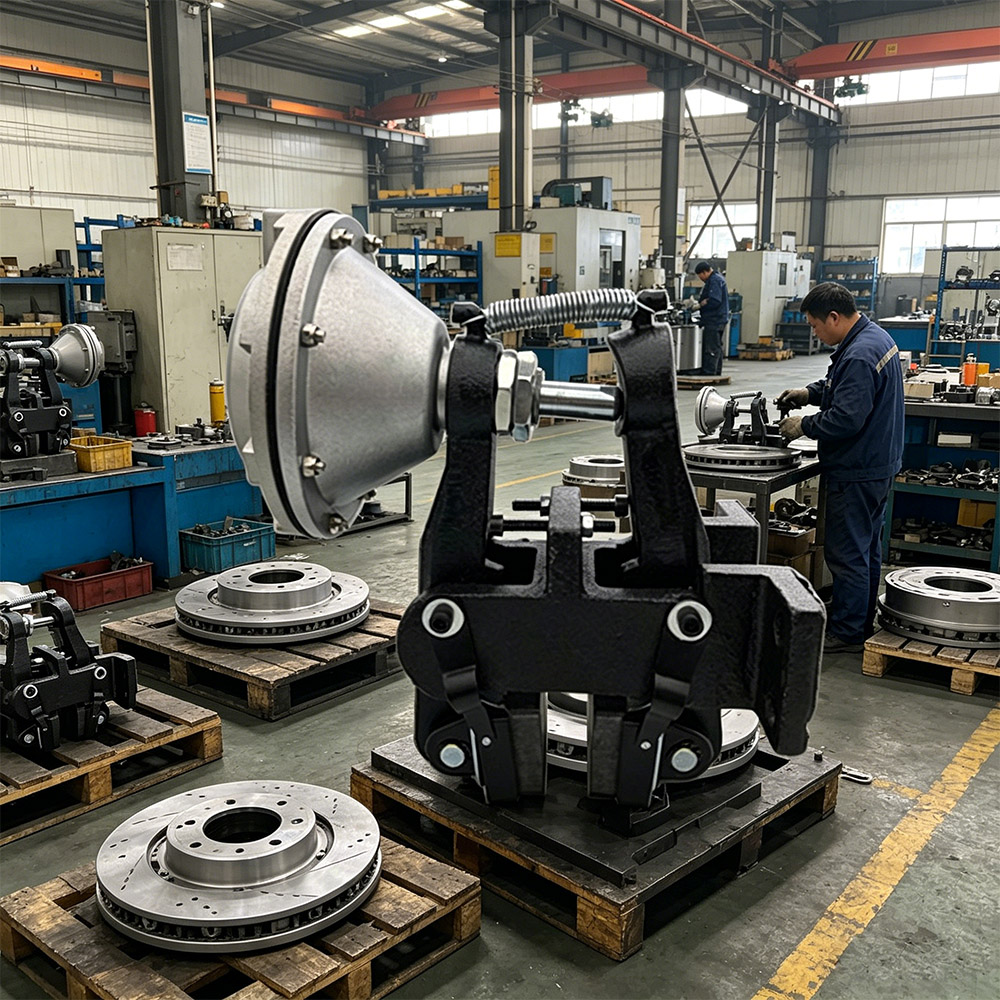
Pneumatic Shaft Brake: Reliable Industrial Braking Solutions for Safety and Precision Control

All Categories

pneumatic shaft brake

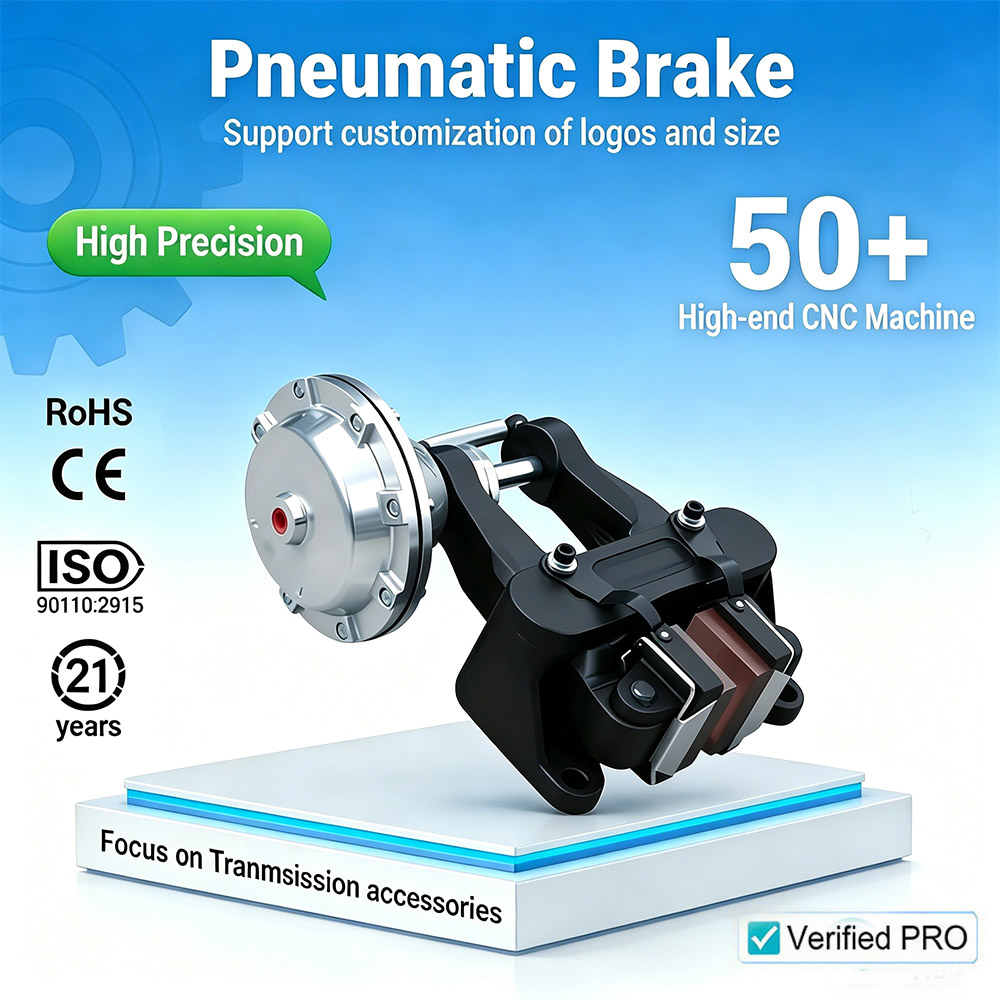
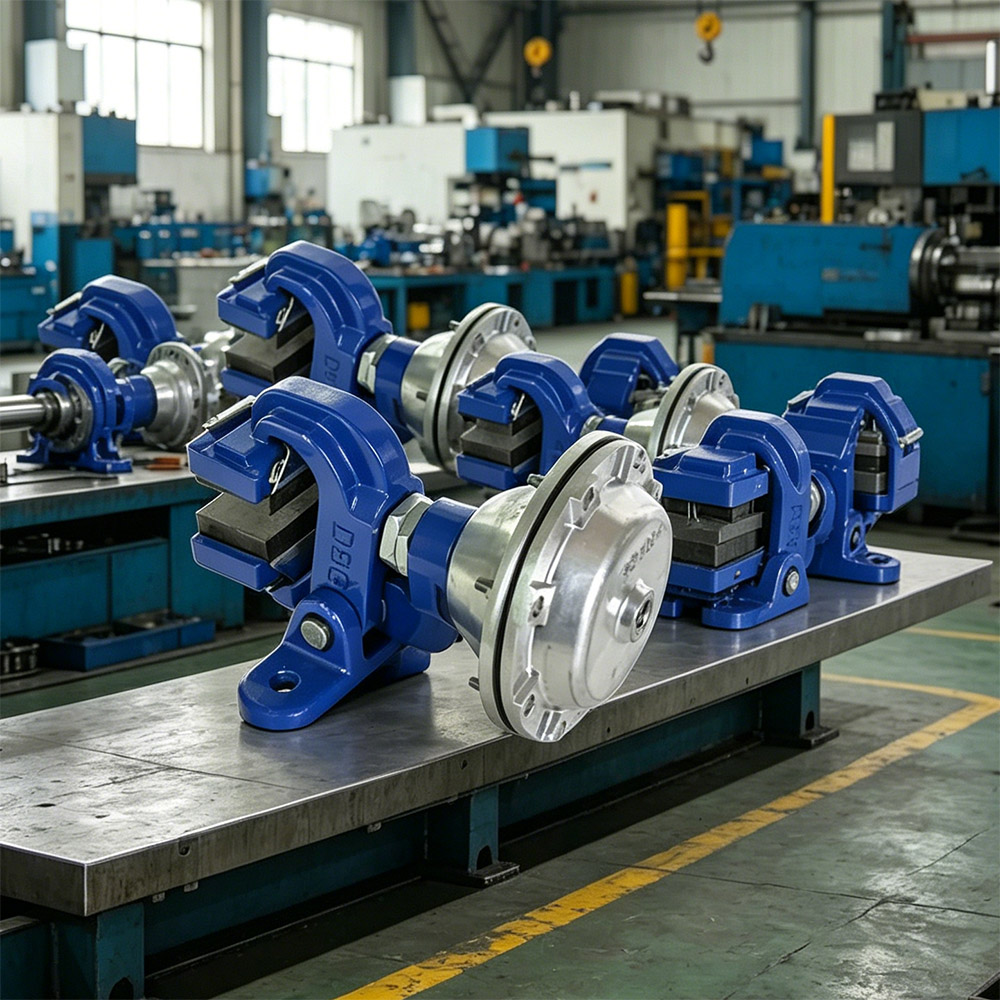
The pneumatic shaft brake represents a critical safety and control component in modern industrial machinery, designed to provide reliable stopping power and precise positioning for rotating shafts and equipment. This advanced braking system utilizes compressed air as its primary operating medium, converting pneumatic energy into mechanical force to engage braking surfaces and halt shaft rotation efficiently. The pneumatic shaft brake has become an essential element across various manufacturing sectors, particularly in applications where rapid response times, consistent performance, and fail-safe operation are paramount. At its core, the pneumatic shaft brake functions by applying controlled pressure to friction elements that grip the rotating shaft, generating the necessary torque to decelerate or completely stop motion within milliseconds. The main functions of this braking system extend beyond simple stopping capabilities, encompassing precise speed regulation, emergency shutdown protection, positioning accuracy for automated processes, and holding torque maintenance when equipment is stationary. Technologically, the pneumatic shaft brake incorporates sophisticated engineering features including spring-applied, air-released mechanisms that ensure automatic engagement during power loss, adjustable pressure regulators for customizable braking force, heat-dissipating materials that prevent thermal degradation during repeated cycles, and modular designs that facilitate straightforward installation and maintenance. The applications for pneumatic shaft brakes span numerous industries, from printing presses and packaging machinery to conveyor systems, textile equipment, woodworking machines, and metal processing facilities. In printing operations, these brakes enable precise web tension control and instant stopping to prevent material waste. Packaging lines rely on pneumatic shaft brakes for synchronized motion control and product positioning accuracy. The versatility of the pneumatic shaft brake makes it suitable for both high-speed continuous operations and intermittent duty cycles, accommodating shaft diameters ranging from compact mechanisms to large industrial drives, with braking torques scalable to match specific application requirements and operational demands across diverse manufacturing environments.

Popular Products

The pneumatic shaft brake delivers numerous practical benefits that directly translate into improved operational efficiency and cost savings for businesses across manufacturing sectors. First and foremost, these braking systems offer exceptional response speed, engaging within fractions of a second when activated, which proves invaluable during emergency situations or when precise stopping is required to maintain product quality and worker safety. This rapid response capability significantly reduces the risk of equipment damage and workplace accidents compared to slower mechanical or hydraulic alternatives. Another major advantage lies in the inherent fail-safe design of most pneumatic shaft brake configurations, where spring mechanisms automatically apply braking force whenever air pressure drops due to power failure, line rupture, or system malfunction. This automatic engagement provides continuous protection without requiring backup power sources or complex electronic controls, giving operators peace of mind and minimizing downtime caused by unexpected shutdowns. The maintenance requirements for pneumatic shaft brakes remain remarkably low compared to other braking technologies, as the systems contain fewer moving parts subject to wear and the air medium itself requires no filtration or cooling systems like hydraulic fluids demand. Operators can expect extended service intervals, reduced spare parts inventory, and minimal maintenance labor costs throughout the brake's operational lifetime. Energy efficiency represents another compelling benefit, as pneumatic shaft brakes consume air only during engagement or release cycles rather than continuously, unlike electromagnetic brakes that draw constant electrical current to maintain their state. This intermittent consumption pattern results in lower operating costs, particularly in facilities where multiple braking points exist throughout production lines. The adjustability of pneumatic shaft brakes allows operators to fine-tune braking force by regulating air pressure, enabling optimization for different materials, speeds, or load conditions without replacing hardware components. This flexibility accommodates process changes and product variations without significant investment in new equipment. Installation simplicity further enhances the value proposition, as pneumatic shaft brakes typically mount directly onto existing shafts with standard mechanical interfaces, requiring only compressed air connections that most industrial facilities already provide throughout their operations. The compact footprint of modern pneumatic shaft brake designs enables integration into space-constrained machinery without extensive modifications or structural reinforcements. Temperature tolerance stands out as another practical advantage, with quality pneumatic shaft brakes operating reliably across wide ambient temperature ranges and handling the heat generated during braking cycles through efficient dissipation designs that prevent performance degradation. Finally, the straightforward operating principle of pneumatic shaft brakes means that maintenance personnel require minimal specialized training to service these systems, reducing training costs and enabling faster troubleshooting when issues arise, ultimately contributing to higher overall equipment effectiveness and production uptime across manufacturing operations.

Practical Tips

Transmission Pain Points in Printing/Textile/Chemical Machinery: How Electromagnetic Clutches Improve Equipment Stability?

08

Dec

Transmission Pain Points in Printing/Textile/Chemical Machinery: How Electromagnetic Clutches Improve Equipment Stability?

Struggling with transmission instability in printing, textile, or chemical machinery? TJ-A electromagnetic clutches eliminate slip, boost throughput 15–20%, and ensure asbestos-free safety. Discover how top global manufacturers achieve 99.8% reliability—request a spec sheet today.
View More
High-Quality Web Guide Control Systems From a Leading Domestic Manufacturer With 20 Years of Expertise

08

Dec

High-Quality Web Guide Control Systems From a Leading Domestic Manufacturer With 20 Years of Expertise

Discover high-precision web guide control systems from a trusted domestic manufacturer with 20 years of R&D expertise. Reduce waste, boost efficiency, and ensure reliability. Request a quote today.
View More
The Pain of Non-Standard Transmission in Special Working Conditions

09

Apr

The Pain of Non-Standard Transmission in Special Working Conditions

Struggling with standard transmission failures in extreme temps, dust, or tight spaces? TianJi’s 20-year R&D delivers reliable custom clutches & brakes—engineered for your exact specs. Get a free technical consultation today.
View More

Get Your Custom Quote

Tell us your requirements and get a tailored solution for your project.
Name
Mobile
Email
Please include
Message
0/1000

pneumatic shaft brake

Superior Safety Through Automatic Fail-Safe Engagement

Superior Safety Through Automatic Fail-Safe Engagement

The automatic fail-safe engagement mechanism represents the most critical safety feature of the pneumatic shaft brake, providing unparalleled protection for both personnel and equipment in industrial environments. Unlike braking systems that require active power to engage, the pneumatic shaft brake employs a spring-applied, air-released design philosophy that fundamentally inverts the safety equation. In this configuration, powerful compression springs maintain constant force against the brake pads or shoes, naturally holding the shaft in a locked position. When operators need to release the brake and allow shaft rotation, compressed air enters the brake chamber, pushing against a piston or diaphragm that compresses the springs and retracts the friction elements from the braking surface. This design means that any interruption in air supply, whether from intentional shutdown, accidental line damage, compressor failure, or emergency stop activation, immediately results in brake engagement as the springs expand to their natural state. This inherent fail-safe characteristic eliminates the dangerous scenarios possible with electrically-released or hydraulically-released brakes, where power loss could leave heavy machinery free-wheeling without stopping capability. The practical implications of this safety advantage extend throughout daily operations, particularly during maintenance activities when technicians work near rotating equipment. The automatic engagement ensures that equipment cannot unexpectedly start moving if someone inadvertently activates controls or if residual energy in the system causes motion. In industries handling heavy rolls of material such as paper, film, or metal coils, the fail-safe pneumatic shaft brake prevents dangerous unspooling that could injure workers or damage products worth thousands of dollars. The spring force in quality pneumatic shaft brakes is engineered to provide sufficient holding torque even under maximum rated loads, ensuring that gravity, inertia, or external forces cannot overcome the brake when engaged. Furthermore, the simplicity of the spring mechanism means there are no complex electronic controllers or sensors that might fail and compromise safety, the physics of mechanical springs provide inherently reliable force generation that remains consistent across millions of operating cycles. Manufacturers design these springs from fatigue-resistant materials that maintain their force characteristics throughout the brake's service life, and the enclosed designs protect springs from environmental contaminants that might cause premature failure. This automatic fail-safe engagement transforms the pneumatic shaft brake from merely a control device into a fundamental safety system that regulatory compliance officers and safety managers appreciate for its passive protection that requires no human intervention or electronic monitoring to function correctly during critical failure scenarios.
Exceptional Durability With Minimal Maintenance Requirements

Exceptional Durability With Minimal Maintenance Requirements

The exceptional durability and minimal maintenance requirements of the pneumatic shaft brake deliver substantial long-term cost advantages that become increasingly apparent over years of continuous operation in demanding industrial environments. The fundamental design of pneumatic actuation contributes significantly to this longevity, as compressed air serves as a clean, non-corrosive operating medium that does not degrade brake components the way hydraulic fluids might through chemical reactions or contamination. Unlike hydraulic systems that require regular fluid changes, filter replacements, and seal inspections to prevent leaks, pneumatic shaft brakes utilize ambient air that needs no maintenance itself, eliminating entire categories of service requirements and their associated costs. The friction materials used in modern pneumatic shaft brakes incorporate advanced composite formulations engineered specifically for extended wear life, often combining organic fibers, metallic particles, and ceramic compounds in matrices that resist heat, maintain consistent friction coefficients across temperature ranges, and wear gradually rather than catastrophically. These materials typically provide hundreds of thousands of engagement cycles before requiring replacement, and their predictable wear patterns enable condition-based maintenance scheduling rather than arbitrary time-based servicing that may replace components with remaining useful life. The enclosed designs of quality pneumatic shaft brakes protect internal components from environmental contaminants such as dust, moisture, metal particles, and chemical vapors that pervade many manufacturing facilities, extending component life significantly compared to open brake designs where contaminants accelerate wear. Sealed bearings within the brake mechanism require no periodic lubrication, eliminating another maintenance task and the risk of lubricant contamination affecting brake performance. The spring mechanisms that provide fail-safe engagement are manufactured from corrosion-resistant alloys and undergo surface treatments that prevent rust and fatigue cracking, ensuring consistent force delivery throughout decades of service without spring replacement. When maintenance does become necessary, the modular construction of pneumatic shaft brakes facilitates rapid component replacement, with friction pads, springs, and seals typically accessible without removing the entire brake assembly from the shaft. This serviceability design minimizes downtime during maintenance windows and reduces the skill level required for service tasks, allowing facility maintenance teams to handle most requirements without specialized brake technicians. The pneumatic actuation mechanism itself contains few moving parts compared to complex electromagnetic or hydraulic systems, and these components operate within well-understood mechanical principles that rarely fail unexpectedly. Predictive maintenance programs can easily monitor pneumatic shaft brake condition through simple air pressure checks and periodic friction material thickness measurements, providing advance warning of service needs before performance degrades. The total cost of ownership for pneumatic shaft brakes consistently proves lower than alternative technologies when accounting for maintenance labor, spare parts consumption, unscheduled downtime, and replacement frequency, making them economically attractive for budget-conscious operations seeking reliable performance without excessive maintenance burdens.
Precise Control and Rapid Response for Optimal Process Performance

Precise Control and Rapid Response for Optimal Process Performance

The precise control capabilities and rapid response characteristics of the pneumatic shaft brake enable manufacturing processes to achieve levels of accuracy, repeatability, and productivity that directly impact product quality and operational efficiency. The instantaneous nature of pneumatic actuation allows these brakes to transition from fully released to fully engaged states in milliseconds, responding to control signals or emergency conditions faster than human operators can perceive. This rapid response proves essential in high-speed production environments where material travels at hundreds of feet per minute, and stopping distances must be minimized to prevent waste, maintain registration accuracy, or protect downstream equipment from jams. In printing applications, the pneumatic shaft brake enables precise web tension control by providing immediate resistance when material acceleration threatens to create slack or excessive tension that would cause print defects. The brake can modulate engagement force by varying air pressure, creating controlled drag that maintains optimal tension throughout acceleration and deceleration cycles without the hunting or oscillation common with slower-responding systems. Converting operations benefit similarly, as the pneumatic shaft brake holds precise position during die-cutting, laminating, or slitting processes where registration errors measured in thousandths of an inch determine whether products meet specifications or become scrap. The repeatability of pneumatic shaft brake engagement ensures consistent stopping positions across thousands of cycles, eliminating the variation that accumulates into significant quality problems in long production runs. Automated manufacturing systems leverage this repeatability to synchronize multiple processes, knowing that shafts will stop at programmed positions reliably enough to coordinate with robotic pick-and-place operations, welding sequences, or assembly steps. The controllability of braking force through pressure regulation allows operators to optimize deceleration rates for different materials and speeds, applying gentle braking for fragile webs that might tear under sudden stopping forces, or aggressive braking for heavy materials and high inertia situations where rapid stops are necessary. This adjustability extends equipment versatility, enabling a single machine to handle diverse product portfolios without requiring brake hardware changes between runs. The smooth engagement characteristics of properly designed pneumatic shaft brakes prevent the jerking or chattering that damages precision machinery, bearing surfaces, and gearing, contributing to extended mechanical life throughout the driven system. In positioning applications, the holding torque provided by engaged pneumatic shaft brakes maintains accuracy under external forces such as vibration, thermal expansion, or slight pressure variations that might cause drift in less robust holding mechanisms. The brake effectively locks the shaft in position with force magnitudes adjustable to match specific requirements, from light holding for delicate positioning to maximum torque for securing heavy loads on inclines. Integration with modern control systems occurs seamlessly, as pneumatic shaft brakes respond to simple on-off valve signals or proportional pressure commands that industrial controllers generate easily, requiring no specialized motion control expertise or complex programming to implement effective braking strategies that enhance overall process performance and product quality.
email goToTop