AC Magnetic Brake Motor: Complete Guide to Precision Control and Safety Solutions

All Categories

ac magnetic brake motor

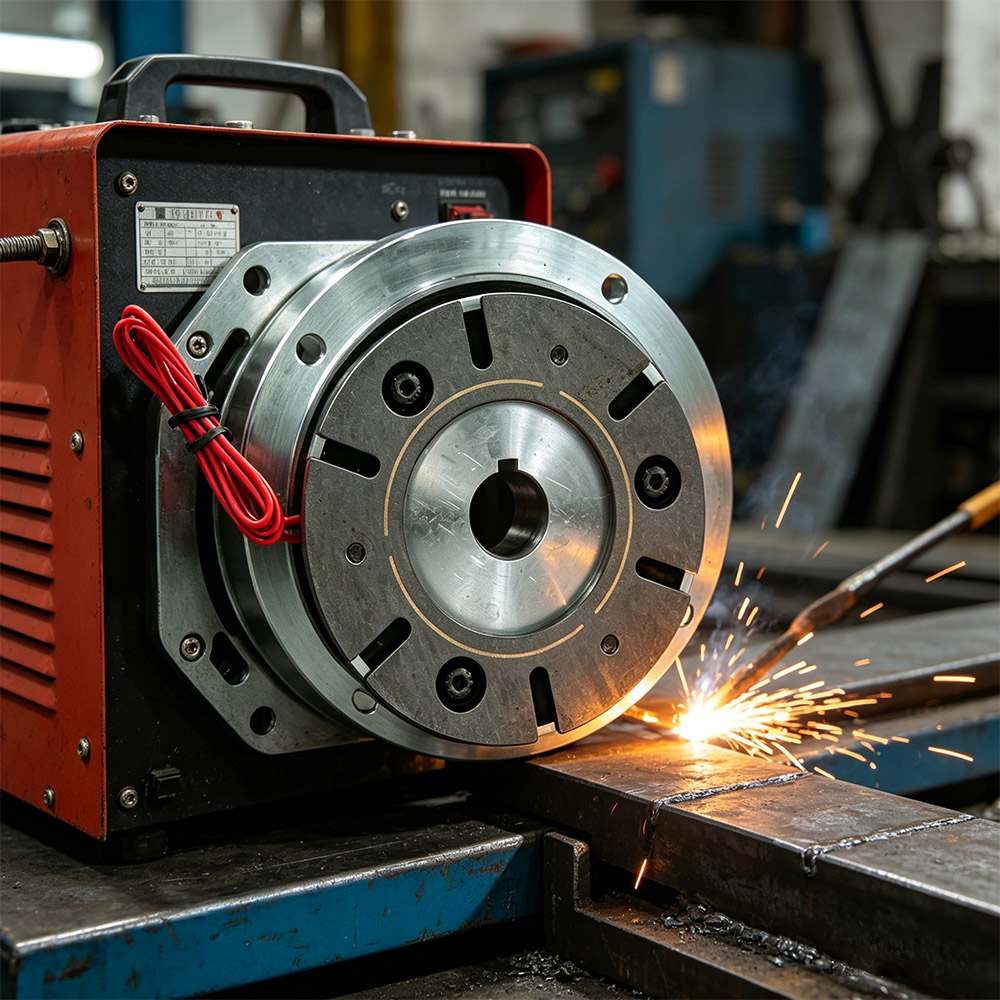
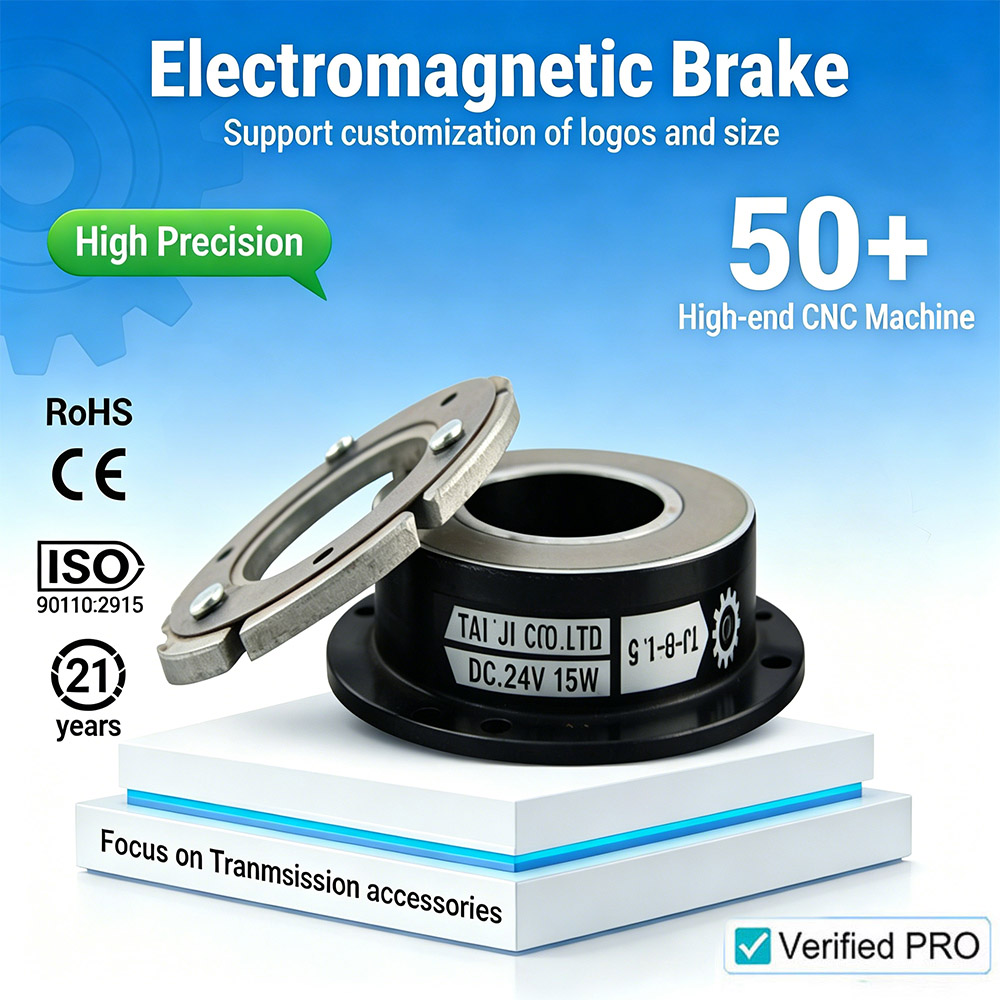
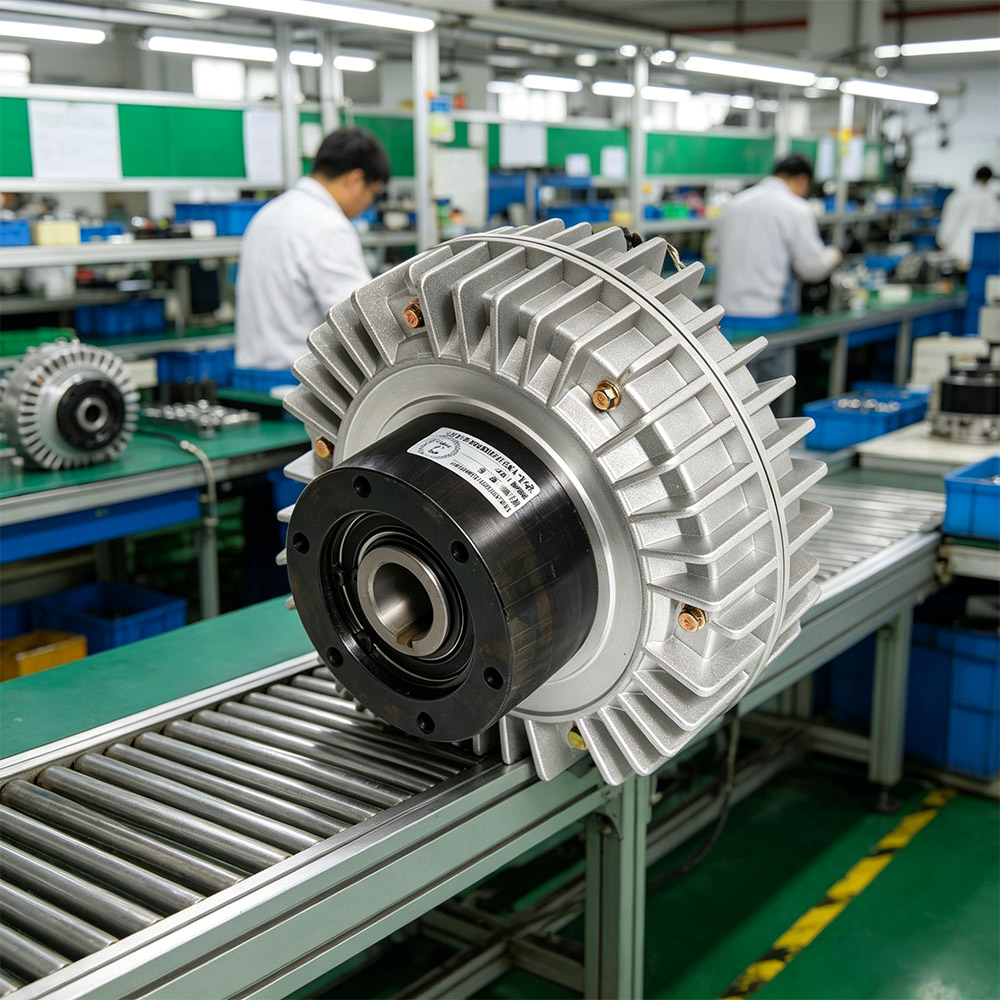
The ac magnetic brake motor represents a sophisticated integration of electric motor technology and electromagnetic braking systems, designed to provide precise motion control in industrial applications. This specialized motor combines a standard alternating current motor with an integrated electromagnetic brake mechanism that activates when power is disconnected. The primary function of an ac magnetic brake motor is to deliver reliable rotational power while ensuring immediate stopping capability when needed. The motor operates on alternating current electricity, typically available in single-phase or three-phase configurations depending on the power requirements. The electromagnetic brake component uses magnetic force to engage brake pads or discs against a rotating surface, creating friction that rapidly halts motion. Technological features include quick response times, with brake engagement occurring within milliseconds of power interruption. The brake mechanism is spring-applied and electrically released, meaning it automatically engages during power failures, providing a fail-safe stopping solution. Modern ac magnetic brake motors incorporate thermal protection, overload protection, and advanced winding insulation to ensure longevity and reliable operation. The compact design integrates the braking system directly into the motor housing, eliminating the need for external braking components and reducing installation complexity. Applications span numerous industries including material handling systems, conveyor belts, packaging machinery, automated production lines, elevators, cranes, printing equipment, textile machinery, and robotic systems. In manufacturing environments, these motors excel where precise positioning and immediate stopping are critical safety requirements. The ac magnetic brake motor finds particular utility in vertical lifting applications where holding loads in position prevents dangerous drops. Food processing equipment benefits from the hygienic design options available with stainless steel housings. The versatility of ac magnetic brake motor technology allows customization for voltage requirements, mounting configurations, shaft dimensions, and braking torque specifications to match specific operational demands across diverse industrial sectors.

New Product Recommendations

Choosing an ac magnetic brake motor delivers substantial practical benefits that directly impact operational efficiency and workplace safety. The immediate stopping capability means your equipment halts within fractions of a second after power cutoff, preventing coasting that could damage products or endanger workers. This rapid response protects your investment in machinery and reduces the risk of accidents in busy production environments. The fail-safe design provides automatic braking during unexpected power losses, ensuring loads remain securely held without requiring backup power systems or manual intervention. This built-in safety feature gives you peace of mind and complies with stringent workplace safety regulations. Installation simplicity saves you time and money since the integrated design eliminates separate brake systems, reducing component counts, wiring complexity, and installation labor. Your maintenance teams will appreciate the reduced upkeep requirements, as quality ac magnetic brake motors operate reliably for extended periods with minimal attention. The sealed brake mechanism protects internal components from dust, moisture, and contaminants, extending service life even in challenging industrial environments. Energy efficiency translates to lower operating costs because the brake only consumes power during release, not during holding. This design reduces your electricity bills compared to continuously powered braking systems. Precise control allows your equipment to position materials accurately, improving product quality and reducing waste from misalignment or damage. The quiet operation creates a more comfortable work environment, as modern electromagnetic brakes engage smoothly without the jarring noise associated with mechanical braking systems. Versatility across voltage standards means you can specify motors compatible with your existing electrical infrastructure, whether you operate on different continental power systems or specialized industrial voltages. The compact footprint saves valuable floor space in crowded facilities, allowing you to maximize production capacity within existing buildings. Temperature tolerance ensures consistent performance across seasonal variations and in environments with heat-generating processes. The robust construction withstands vibration, shock, and continuous duty cycles common in industrial settings. Customization options let you select exact specifications matching your application requirements, from mounting styles to shaft configurations to braking torque levels. Long-term reliability reduces unexpected downtime that disrupts production schedules and disappoints customers. The proven technology has decades of successful implementation across industries, giving you confidence in performance. Replacement parts remain readily available, ensuring your equipment stays operational throughout its service life. The combination of safety, efficiency, and reliability makes the ac magnetic brake motor a smart investment that pays dividends through improved productivity and reduced risk.

Practical Tips

Transmission Pain Points in Printing/Textile/Chemical Machinery: How Electromagnetic Clutches Improve Equipment Stability?

08

Dec

Transmission Pain Points in Printing/Textile/Chemical Machinery: How Electromagnetic Clutches Improve Equipment Stability?

Struggling with transmission instability in printing, textile, or chemical machinery? TJ-A electromagnetic clutches eliminate slip, boost throughput 15–20%, and ensure asbestos-free safety. Discover how top global manufacturers achieve 99.8% reliability—request a spec sheet today.
View More
High-Quality Web Guide Control Systems From a Leading Domestic Manufacturer With 20 Years of Expertise

08

Dec

High-Quality Web Guide Control Systems From a Leading Domestic Manufacturer With 20 Years of Expertise

Discover high-precision web guide control systems from a trusted domestic manufacturer with 20 years of R&D expertise. Reduce waste, boost efficiency, and ensure reliability. Request a quote today.
View More
The Pain of Non-Standard Transmission in Special Working Conditions

09

Apr

The Pain of Non-Standard Transmission in Special Working Conditions

Struggling with standard transmission failures in extreme temps, dust, or tight spaces? TianJi’s 20-year R&D delivers reliable custom clutches & brakes—engineered for your exact specs. Get a free technical consultation today.
View More

Get Your Custom Quote

Tell us your requirements and get a tailored solution for your project.
Name
Mobile
Email
Please include
Message
0/1000

ac magnetic brake motor

Instantaneous Fail-Safe Braking Protection

Instantaneous Fail-Safe Braking Protection

The most critical advantage of an ac magnetic brake motor lies in its instantaneous fail-safe braking capability, a feature that fundamentally enhances workplace safety and equipment protection. This technology employs a spring-applied, electrically released mechanism that represents the gold standard in industrial braking systems. When your ac magnetic brake motor receives power during normal operation, an electromagnetic coil generates a magnetic field that compresses powerful springs, disengaging the brake pads from the friction surface and allowing free rotation. The moment electrical power interrupts, whether through intentional shutdown, emergency stop activation, or unexpected power failure, the electromagnetic field collapses instantly. Those compressed springs immediately release their stored energy, forcing brake pads against the braking surface with substantial force, creating friction that rapidly arrests rotation. This process occurs within 20 to 100 milliseconds depending on motor size, far faster than human reaction time or mechanical systems can achieve. The fail-safe nature means the system defaults to the safe condition of being stopped rather than continuing to run, a critical distinction in applications involving vertical loads, hazardous processes, or precise positioning requirements. Consider a vertical conveyor lifting fragile components in an electronics assembly facility. If power fails unexpectedly, an ac magnetic brake motor immediately locks the conveyor in position, preventing the load from crashing downward and destroying expensive components or injuring workers below. Traditional motors without integrated brakes would allow gravity to accelerate the load downward, creating a dangerous and costly situation. The spring-applied design requires no external power source, compressed air, or hydraulic pressure to engage, making it inherently reliable without dependencies on auxiliary systems that might also fail during emergencies. This independence from secondary systems reduces complexity and potential failure points in your safety architecture. Regulatory compliance becomes straightforward as this braking technology meets international safety standards for machinery, satisfying inspectors and insurance requirements. The consistent, repeatable braking force ensures predictable stopping distances, allowing engineers to calculate safety zones accurately and design facilities with appropriate clearances. Material handling applications particularly benefit from this controlled deceleration, as sudden stops without proper braking can cause load shifting, packaging damage, or product spillage. The ac magnetic brake motor prevents these issues by maintaining secure holding force until operators deliberately restart the system. This feature also enables precise multi-position stopping in indexing applications, where products must halt at exact locations for processing, assembly, or packaging operations.
Integrated Design Simplifying Installation and Maintenance

Integrated Design Simplifying Installation and Maintenance

The integrated construction of an ac magnetic brake motor delivers remarkable advantages in installation efficiency, spatial economy, and maintenance simplification that translate directly into cost savings and operational reliability for your facility. Unlike separate motor and brake combinations that require careful alignment, mounting brackets, coupling assemblies, and complex wiring harnesses, the ac magnetic brake motor arrives as a complete, factory-tested unit with the braking mechanism precisely integrated within the motor housing. This engineering approach eliminates alignment challenges that plague external brake installations, where even slight misalignment between motor shaft and brake shaft creates vibration, premature wear, and eventual failure. The factory integration ensures perfect alignment between rotating components and brake elements, with tolerances measured in thousandths of an inch, impossible to replicate during field installation. Your installation teams complete setup in a fraction of the time required for separate components, reducing labor costs and getting production lines operational faster. The simplified wiring requirements represent another significant advantage, as the ac magnetic brake motor typically needs only the standard motor power connections plus a single additional connection for brake control, compared to the multiple power feeds, control circuits, and safety interlocks required for external brake systems. This reduction in electrical complexity decreases installation errors, simplifies troubleshooting, and reduces the skill level required for installation and service, potentially lowering labor costs. The compact footprint created by housing the brake within the motor body saves precious floor space in crowded production facilities where every square foot carries a rental or ownership cost. Equipment designers can create more compact machinery, reducing material costs and shipping expenses while improving ergonomics for operators. Maintenance accessibility improves because technicians work with a single integrated unit rather than separately servicing motor and brake components. Scheduled inspections proceed more quickly, and replacement inventory requirements decrease since you stock complete motor assemblies rather than maintaining separate inventories of motors, brakes, couplings, and mounting hardware. The sealed construction of quality ac magnetic brake motor units protects internal brake components from environmental contaminants that shorten service life in separate brake systems exposed to dust, moisture, and chemical vapors common in industrial environments. This protection extends maintenance intervals, reduces unplanned downtime, and lowers total cost of ownership. When replacement eventually becomes necessary, the integrated design means your maintenance team removes one unit and installs one replacement, minimizing production interruption. The standardization of mounting dimensions across manufacturers allows you to specify replacement ac magnetic brake motors from multiple suppliers, avoiding vendor lock-in and ensuring competitive pricing throughout the equipment lifecycle.
Precision Control Enabling Superior Performance

Precision Control Enabling Superior Performance

The precision control characteristics of an ac magnetic brake motor fundamentally enhance operational performance in applications demanding exact positioning, smooth motion transitions, and repeatable stopping accuracy. This precision stems from the electromagnetic brake's ability to engage progressively rather than abruptly, combined with the motor's inherent speed control capabilities when paired with appropriate drive electronics. In automated manufacturing systems, positioning accuracy directly impacts product quality, with misaligned components leading to defects, rework, and customer dissatisfaction. The ac magnetic brake motor addresses these challenges by providing holding torque that maintains position without creep or drift, even on inclined surfaces or with unbalanced loads. Consider a robotic pick-and-place system in pharmaceutical packaging where tablets must be positioned within millimeters of target locations. The ac magnetic brake motor holds each axis precisely at the commanded position between movements, eliminating the positional drift that occurs with motors lacking brake systems. This positional stability allows the use of higher precision mechanical components downstream, as the motor reliably delivers parts to exact locations where cameras, sensors, or assembly tools expect them. The controlled deceleration possible with properly specified ac magnetic brake motors reduces mechanical stress on driven equipment compared to hard stops that generate shock loads propagating through gearboxes, chains, belts, and structural components. These shock loads accelerate wear, cause premature failure, and create maintenance headaches. By absorbing kinetic energy smoothly during stopping, the electromagnetic brake extends the service life of your entire mechanical system, protecting your capital investment. Applications involving delicate products particularly benefit from smooth deceleration, as sudden stops can damage fragile items, disturb liquid levels in containers, or dislodge components during assembly. A packaging line handling glass bottles requires gentle speed transitions to prevent breakage, and the ac magnetic brake motor provides the controlled stopping that preserves product integrity. The repeatability of brake engagement ensures consistent cycle times in automated processes, allowing production planners to calculate throughput accurately and meet delivery commitments. Inconsistent stopping behavior creates timing variations that reduce effective production rates and complicate synchronization between multiple machines in integrated production lines. The fast response time of electromagnetic brakes enables shorter cycle times in indexing applications, where equipment must accelerate, run briefly, then stop repeatedly. The ac magnetic brake motor accomplishes these rapid cycles reliably, maximizing production output from existing equipment. Dynamic braking capability in some ac magnetic brake motor designs allows energy dissipation during deceleration rather than relying solely on friction, reducing brake wear and extending service intervals. This feature proves particularly valuable in high-cycle applications where brake components would otherwise require frequent replacement. The holding torque provided by the brake supplements the motor's positioning capability, allowing the use of smaller motors than would otherwise be required to maintain position against external forces, reducing equipment costs and energy consumption.
email goToTop