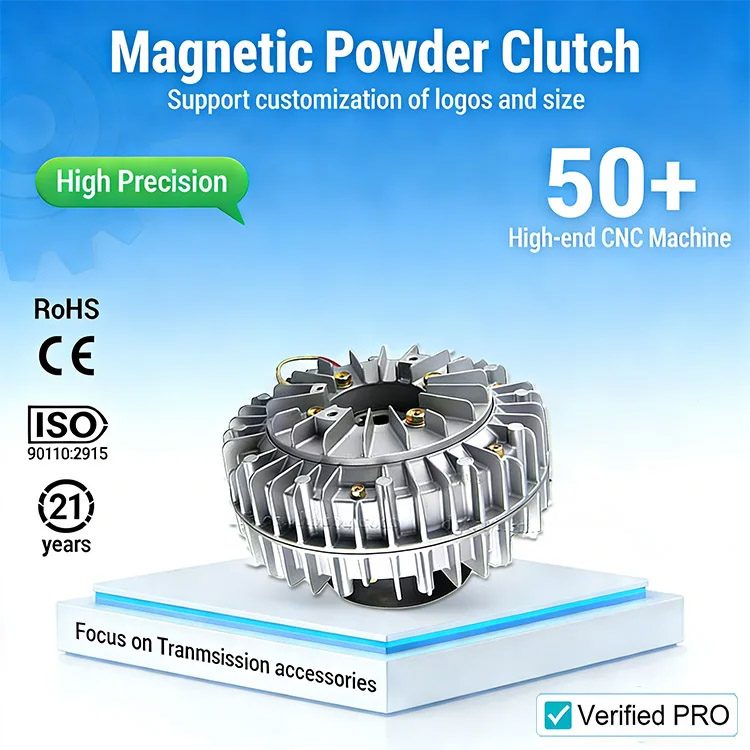
Power Off Brake Systems - Fail-Safe Braking Solutions for Industrial Applications

All Categories

power off brake

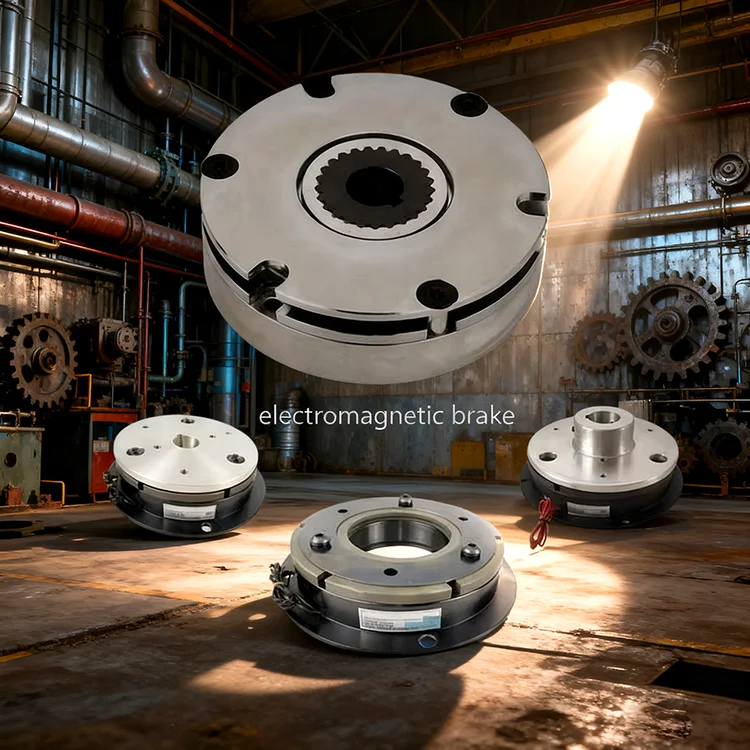
A power off brake represents an essential safety mechanism designed to automatically engage when electrical power is disconnected or fails. This specialized braking system operates on a fail-safe principle, ensuring that machinery and equipment come to a controlled stop during power interruptions. The power off brake functions by utilizing spring force to apply braking pressure, which is only released when electrical current energizes the brake coil. This fundamental design makes the power off brake an indispensable component in industrial automation, material handling systems, robotics, and various mechanical applications where safety cannot be compromised. The technology behind the power off brake integrates electromagnetic principles with mechanical spring mechanisms. When power flows through the electromagnetic coil, it generates a magnetic field that compresses the spring and disengages the brake pads from the braking surface. The moment power ceases, the magnetic field collapses, allowing the compressed springs to immediately apply braking force. This instantaneous response ensures equipment stops promptly, preventing potential accidents and protecting both personnel and machinery. Modern power off brake systems incorporate advanced materials such as high-friction composite pads, corrosion-resistant housings, and precision-engineered springs that maintain consistent performance across millions of cycles. The braking torque can be precisely calibrated to match specific application requirements, ranging from light-duty applications requiring minimal holding force to heavy industrial equipment demanding substantial stopping power. These brakes are commonly found in elevator systems, conveyor belts, servo motors, packaging machinery, medical equipment, and automated production lines. Their compact design allows for seamless integration into existing mechanical systems without requiring extensive modifications. The power off brake delivers reliable performance across varying environmental conditions, including temperature fluctuations, humidity, and dust exposure, making it suitable for diverse industrial environments.

New Products

The power off brake offers numerous practical benefits that directly impact operational efficiency and workplace safety. First and foremost, this braking system provides unparalleled safety assurance because it automatically activates during unexpected power failures, preventing uncontrolled movement that could endanger workers or damage equipment. Unlike traditional braking systems that require continuous power to maintain braking force, the power off brake reverses this principle, ensuring protection even during complete electrical system failures. This inherent fail-safe characteristic eliminates the risk of accidents caused by power outages, voltage drops, or electrical malfunctions. Maintenance requirements are significantly reduced compared to hydraulic or pneumatic braking alternatives. The power off brake operates with minimal components, typically consisting of springs, electromagnetic coils, and friction materials, which translates to fewer potential failure points and reduced downtime. Routine maintenance involves simple inspections and occasional friction pad replacements, tasks that can be completed quickly without specialized training or expensive diagnostic equipment. This simplicity directly reduces long-term operational costs and keeps machinery productive. Energy efficiency represents another compelling advantage, as the power off brake consumes electricity only when releasing the brake, not while maintaining the stopped position. This contrasts sharply with electromagnetically-held brakes that require continuous power consumption to keep equipment stationary. In applications where equipment remains idle for extended periods, the energy savings become substantial, contributing to reduced operational expenses and supporting sustainability initiatives. Installation flexibility allows the power off brake to adapt to various mounting configurations and spatial constraints. Engineers can specify different sizes, torque ratings, and voltage options to precisely match application requirements without over-engineering solutions. The standardized mounting interfaces facilitate retrofitting into existing equipment, enabling upgrades without complete system redesigns. Response time is exceptionally fast, with typical engagement occurring within milliseconds of power loss. This rapid reaction prevents coasting or drift, ensuring precise positioning in applications requiring accurate stopping points. Manufacturing processes, automated assembly lines, and robotic systems particularly benefit from this quick response, as it maintains product quality and production consistency. The power off brake also operates silently compared to mechanical brake systems, reducing workplace noise pollution and creating more comfortable working environments. Durability extends operational lifespan, with quality units performing reliably through hundreds of thousands of cycles before requiring component replacement, providing excellent return on investment for facility managers and equipment owners.

Tips And Tricks

Transmission Pain Points in Printing/Textile/Chemical Machinery: How Electromagnetic Clutches Improve Equipment Stability?

08

Dec

Transmission Pain Points in Printing/Textile/Chemical Machinery: How Electromagnetic Clutches Improve Equipment Stability?

Struggling with transmission instability in printing, textile, or chemical machinery? TJ-A electromagnetic clutches eliminate slip, boost throughput 15–20%, and ensure asbestos-free safety. Discover how top global manufacturers achieve 99.8% reliability—request a spec sheet today.
View More
High-Quality Web Guide Control Systems From a Leading Domestic Manufacturer With 20 Years of Expertise

08

Dec

High-Quality Web Guide Control Systems From a Leading Domestic Manufacturer With 20 Years of Expertise

Discover high-precision web guide control systems from a trusted domestic manufacturer with 20 years of R&D expertise. Reduce waste, boost efficiency, and ensure reliability. Request a quote today.
View More
The Pain of Non-Standard Transmission in Special Working Conditions

09

Apr

The Pain of Non-Standard Transmission in Special Working Conditions

Struggling with standard transmission failures in extreme temps, dust, or tight spaces? TianJi’s 20-year R&D delivers reliable custom clutches & brakes—engineered for your exact specs. Get a free technical consultation today.
View More

Get Your Custom Quote

Tell us your requirements and get a tailored solution for your project.
Name
Mobile
Email
Please include
Message
0/1000

power off brake

Fail-Safe Protection Through Spring-Applied Technology

Fail-Safe Protection Through Spring-Applied Technology

The most critical advantage of the power off brake lies in its spring-applied, fail-safe design that fundamentally redefines equipment safety standards. This technological approach ensures that braking force is mechanically applied through compressed springs rather than relying on continuous electrical power. When electrical current flows through the electromagnetic coil, it creates a magnetic field strong enough to overcome spring tension, compressing the springs and withdrawing the brake pads from the friction surface. This allows free rotation of the connected shaft or mechanism. However, the moment power interruption occurs, whether from deliberate shutdown, emergency stop activation, circuit breaker tripping, or unexpected electrical failure, the magnetic field immediately collapses. Without the electromagnetic force to restrain them, the compressed springs instantly release their stored mechanical energy, forcefully pressing the brake pads against the braking surface. This mechanical action happens automatically, requiring no human intervention, electronic signals, or backup power systems. The spring force is calibrated during manufacturing to deliver precise, consistent braking torque that matches the application specifications. This design philosophy contrasts fundamentally with power-on brake systems that require continuous electricity to maintain braking force, creating vulnerability during power failures. The power off brake eliminates this vulnerability entirely, making it the preferred choice for applications where safety cannot depend on uninterrupted electrical supply. Critical applications such as personnel elevators, patient handling equipment in hospitals, overhead cranes, and automated machinery in manufacturing facilities rely on this fail-safe characteristic to protect human life and expensive equipment. The spring-applied mechanism also provides holding power during maintenance procedures, allowing technicians to work safely on equipment without concerns about unexpected movement. Engineers appreciate how this technology simplifies safety circuit design, as the brake naturally defaults to the safe engaged position rather than requiring complex monitoring systems to detect failures and trigger emergency braking. The mechanical simplicity of spring application means fewer electronic components that could malfunction, creating inherent reliability that electronic systems cannot match. Quality power off brake units undergo rigorous testing to verify spring performance across temperature extremes, ensuring consistent braking force whether operating in freezing cold storage facilities or high-temperature industrial environments.
Minimal Maintenance Requirements and Extended Operational Lifespan

Minimal Maintenance Requirements and Extended Operational Lifespan

The power off brake distinguishes itself through remarkably low maintenance demands that translate directly into reduced operational costs and maximized equipment availability. This advantage stems from the fundamental simplicity of its mechanical and electrical design, which incorporates fewer moving parts compared to hydraulic brake systems with pumps, valves, and fluid reservoirs, or pneumatic systems requiring compressors, air lines, and pressure regulators. The primary components requiring periodic attention are the friction pads, which gradually wear through normal operation, and occasional inspection of the spring mechanism and electromagnetic coil. Modern friction materials engineered for power off brake applications feature advanced composite formulations that resist wear, maintain consistent friction coefficients across wide temperature ranges, and minimize dust generation. These materials typically deliver hundreds of thousands of braking cycles before replacement becomes necessary, with some industrial-grade applications achieving over one million cycles. When pad replacement does become necessary, the procedure is straightforward and can be completed by maintenance personnel using standard hand tools, without requiring brake removal from the equipment. This accessibility minimizes downtime and eliminates the need for specialized technicians or expensive service contracts. The electromagnetic coil, encapsulated in protective materials that shield against moisture, dust, and mechanical impact, operates reliably for years without intervention. Unlike hydraulic systems that suffer from seal degradation, fluid contamination, and leakage issues, or pneumatic systems vulnerable to moisture accumulation and air line failures, the power off brake maintains consistent performance without fluid changes or seal replacements. The spring mechanism, manufactured from high-grade steel alloys with precise heat treatment, resists fatigue and maintains force characteristics throughout the brake lifespan. Periodic visual inspections verify spring condition, but actual spring replacement is rarely necessary except in extreme duty cycle applications. Bearing surfaces, where present, are often sealed and pre-lubricated, eliminating routine lubrication requirements that plague conventional mechanical systems. This maintenance simplicity proves especially valuable in applications where equipment accessibility is limited, such as overhead installations, cleanroom environments, or hazardous locations where minimizing maintenance interventions reduces risk exposure. Facility managers appreciate how reduced maintenance requirements free technical staff to focus on value-adding activities rather than routine servicing. The predictable wear patterns of power off brake components enable condition-based maintenance strategies, where replacements occur based on actual wear rather than arbitrary time intervals, optimizing parts inventory and labor allocation.
Versatile Application Across Diverse Industrial Sectors

Versatile Application Across Diverse Industrial Sectors

The power off brake demonstrates exceptional versatility, adapting seamlessly to an impressive range of industrial applications spanning multiple sectors and operating conditions. This adaptability stems from the availability of numerous configurations, size ranges, torque ratings, and voltage specifications that enable precise matching to specific application requirements. In material handling systems, power off brakes secure conveyor belts during loading operations, prevent backdriving on inclined conveyors, and provide emergency stopping capability that protects personnel and products. Warehouse automation systems incorporate these brakes into sorting mechanisms, vertical lifts, and automated storage retrieval systems where reliable holding power during power interruptions prevents product damage and system jams. Manufacturing facilities deploy power off brakes throughout production lines, from packaging equipment that requires precise stopping positions to assembly robots that must freeze instantly during emergency stops. The medical equipment industry relies heavily on power off brake technology for patient safety. Hospital beds, surgical tables, patient lifts, and diagnostic imaging equipment incorporate these brakes to ensure patients remain securely positioned regardless of power status. The fail-safe nature of the power off brake aligns perfectly with medical device safety requirements where patient protection is paramount. In elevator and escalator systems, power off brakes serve as essential safety devices that prevent uncontrolled movement when power fails or during maintenance procedures. Building codes and safety regulations often mandate fail-safe braking systems in vertical transportation equipment, making the power off brake not just advantageous but legally required. Entertainment and stage equipment applications include theatrical rigging systems, camera cranes, and automated stage platforms where performer safety depends on reliable braking during power interruptions. The renewable energy sector employs power off brakes in wind turbine yaw and pitch control systems, solar panel tracking mechanisms, and hydroelectric gate controls where environmental exposure demands robust, reliable braking solutions. Printing and paper processing machinery incorporates these brakes to maintain web tension and prevent material waste during emergency stops. Food processing equipment benefits from stainless steel power off brake models designed for washdown environments and sanitary applications. Robotics and automation systems integrate compact power off brakes into joint mechanisms, gripper assemblies, and positioning stages where space constraints demand high torque density. The marine industry specifies corrosion-resistant power off brake variants for deck equipment, hatch covers, and stabilizer systems exposed to saltwater environments. This broad application spectrum demonstrates how power off brake technology solves braking challenges across vastly different operating environments, from cleanrooms requiring non-contaminating operation to heavy industry demanding extreme durability.
email goToTop