Magnetic Particle Clutch - Precision Torque Control Solutions for Industrial Applications

All Categories

magnetic particle clutch

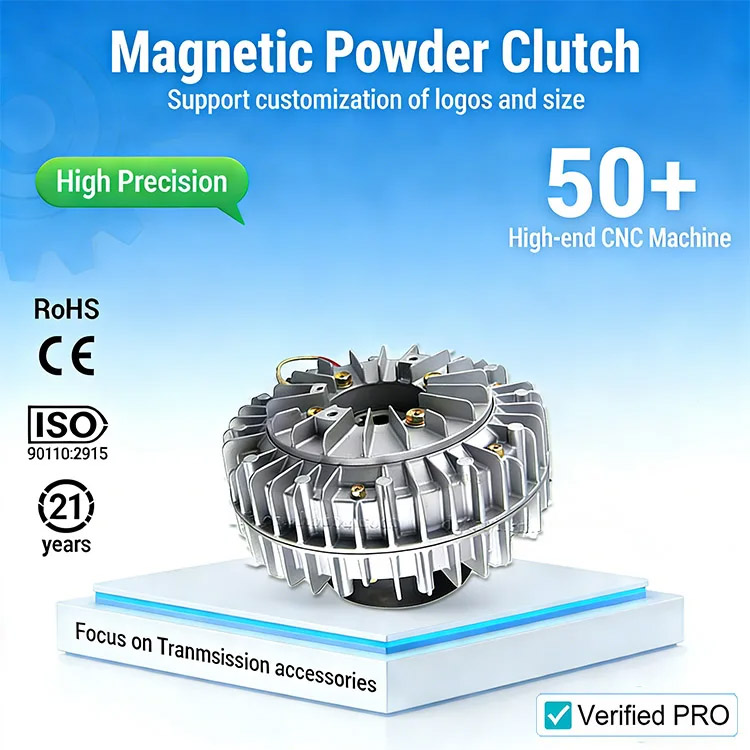
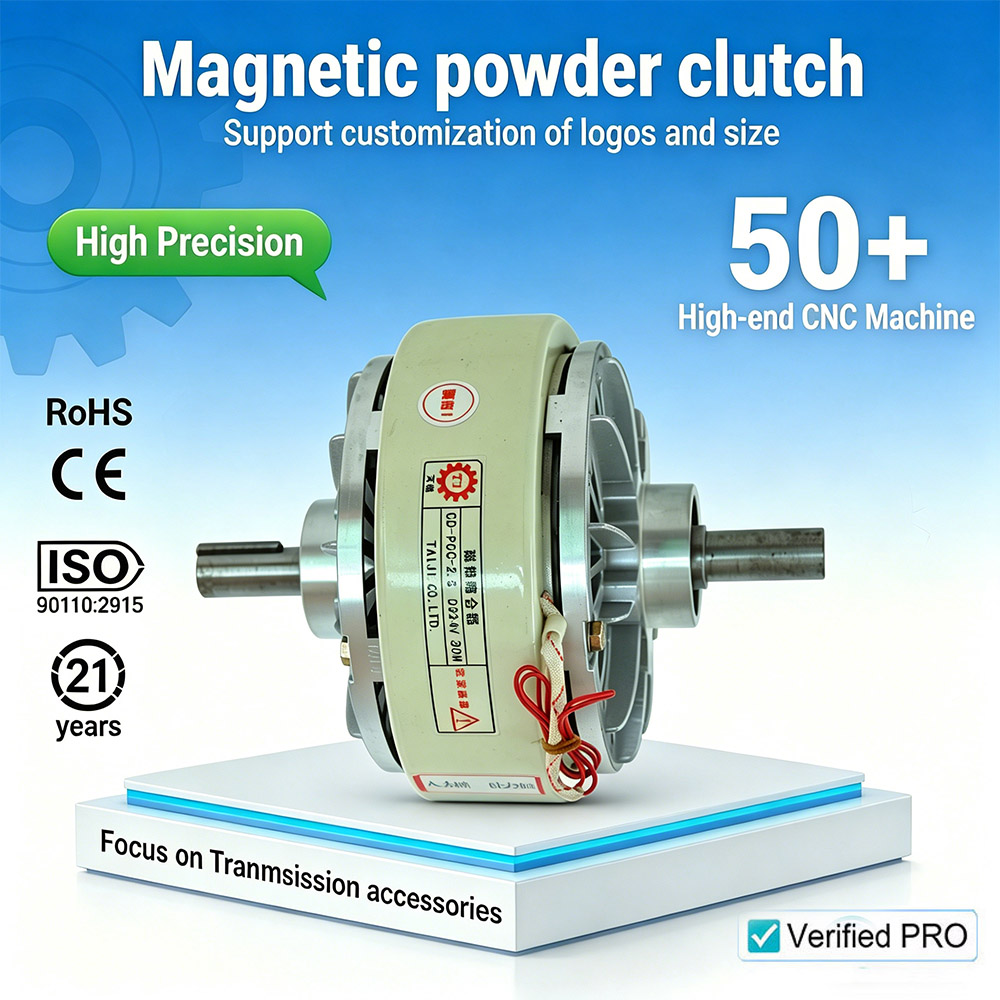
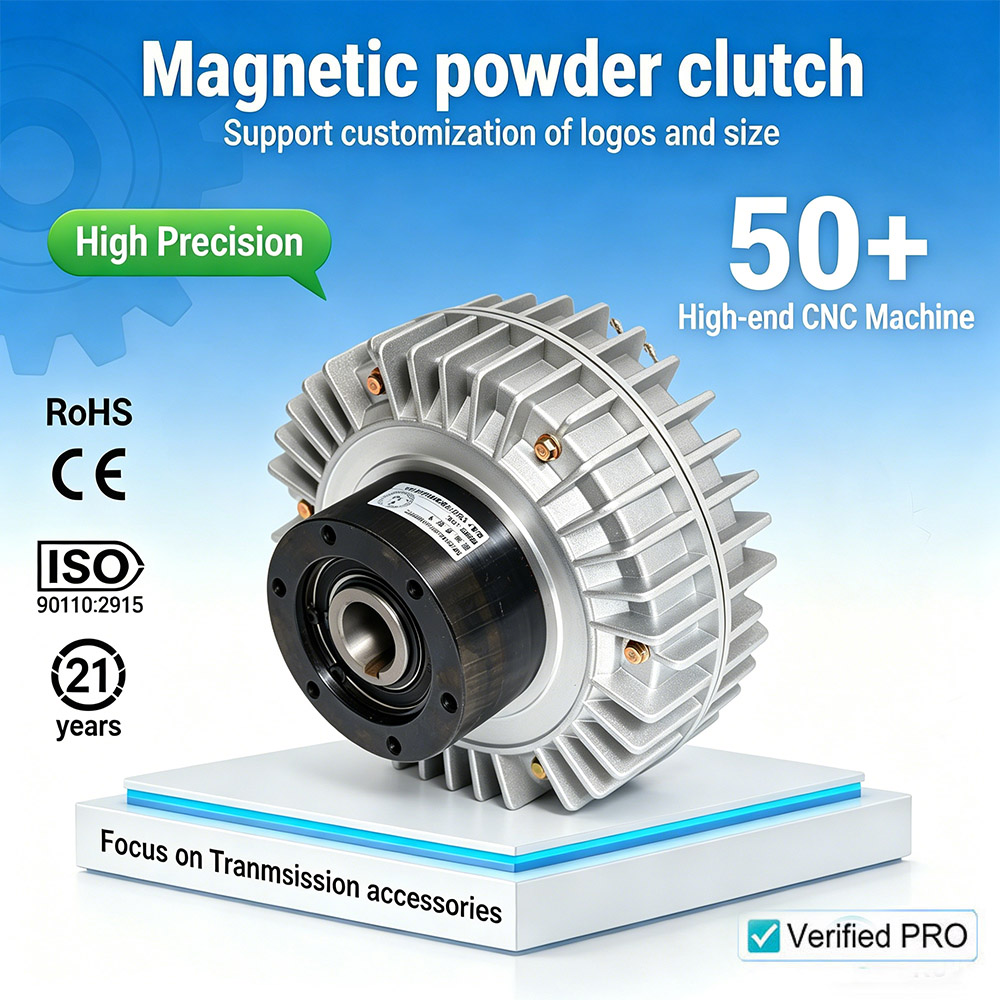
A magnetic particle clutch represents an innovative torque transmission device that operates through the precise control of magnetic fields and fine metallic particles. This sophisticated mechanism enables smooth, stepless torque adjustment and transmission between driving and driven components. The core technology relies on magnetic particles suspended in a sealed chamber between input and output rotors. When electrical current energizes the electromagnetic coil, these particles form chain-like structures that solidify under magnetic influence, creating a mechanical bond that transfers rotational force. The magnetic particle clutch stands out for its exceptional ability to maintain consistent tension control across various industrial applications. Its primary functions include precise torque regulation, controlled acceleration and deceleration, and reliable overload protection for connected machinery. The technological foundation incorporates electromagnetic principles with mechanical engineering, resulting in a system that responds instantly to electrical signals. This device finds widespread use in industries requiring accurate tension management, such as printing presses, packaging machinery, textile processing equipment, wire winding operations, and material handling systems. The magnetic particle clutch offers remarkable versatility through its capacity to operate in both clutch and brake configurations, providing comprehensive control over rotational motion. Engineers appreciate this technology for its ability to deliver consistent performance without requiring physical contact between engagement surfaces, which dramatically reduces wear and extends operational lifespan. The system maintains stable torque output regardless of speed variations, making it invaluable for processes demanding uniform tension or controlled material flow. Modern magnetic particle clutch designs incorporate advanced cooling systems, precision-engineered particle chambers, and sophisticated electronic controls that enhance reliability and performance. This technology has evolved to meet increasingly demanding industrial requirements, offering solutions for applications ranging from delicate web handling to robust power transmission tasks.

New Product Releases

Choosing a magnetic particle clutch delivers numerous practical benefits that directly impact your operational efficiency and bottom line. First and foremost, this technology provides extraordinarily precise control over torque transmission, allowing you to adjust tension or rotational force with exceptional accuracy. You can fine-tune operations to exact specifications, ensuring consistent product quality and reducing material waste caused by over-tensioning or slippage. The smooth engagement characteristic eliminates sudden jolts or jerks that could damage sensitive materials or machinery components, protecting your investment in equipment and raw materials. Another significant advantage lies in the minimal maintenance requirements compared to traditional mechanical clutches. Since the magnetic particle clutch operates without friction surfaces that wear down through direct contact, you avoid frequent replacement of brake pads, bands, or friction discs. This translates into lower maintenance costs and reduced downtime for repairs or component changes. Your production continues uninterrupted for longer periods, maximizing throughput and profitability. The instant response time of electromagnetic activation gives you superior control during critical operations. When you need to stop, start, or adjust speed, the system reacts within milliseconds, providing the responsiveness necessary for modern automated processes. This quick reaction capability proves especially valuable in applications requiring frequent speed changes or emergency stops. Energy efficiency represents another compelling advantage, as the device only consumes electrical power during torque transmission adjustments. Unlike continuously engaged mechanical systems that waste energy through constant friction, this technology reduces your electrical consumption and operational costs. The heat generation remains minimal during normal operation, eliminating the need for extensive cooling systems and further reducing energy expenditure. Reliability stands as a cornerstone benefit, with properly maintained units delivering years of consistent performance. The sealed particle chamber protects internal components from contamination, dust, and environmental factors that typically degrade mechanical systems. You gain peace of mind knowing your tension control system will perform predictably shift after shift. The flexibility to configure the same basic unit for various torque ranges and applications streamlines inventory management and simplifies equipment standardization across your facility. You can adapt quickly to changing production requirements without extensive retooling or equipment replacement. Installation simplicity allows integration into existing systems with minimal modifications, reducing implementation costs and accelerating return on investment.

Latest News

Transmission Pain Points in Printing/Textile/Chemical Machinery: How Electromagnetic Clutches Improve Equipment Stability?

08

Dec

Transmission Pain Points in Printing/Textile/Chemical Machinery: How Electromagnetic Clutches Improve Equipment Stability?

Struggling with transmission instability in printing, textile, or chemical machinery? TJ-A electromagnetic clutches eliminate slip, boost throughput 15–20%, and ensure asbestos-free safety. Discover how top global manufacturers achieve 99.8% reliability—request a spec sheet today.
View More
High-Quality Web Guide Control Systems From a Leading Domestic Manufacturer With 20 Years of Expertise

08

Dec

High-Quality Web Guide Control Systems From a Leading Domestic Manufacturer With 20 Years of Expertise

Discover high-precision web guide control systems from a trusted domestic manufacturer with 20 years of R&D expertise. Reduce waste, boost efficiency, and ensure reliability. Request a quote today.
View More
The Pain of Non-Standard Transmission in Special Working Conditions

09

Apr

The Pain of Non-Standard Transmission in Special Working Conditions

Struggling with standard transmission failures in extreme temps, dust, or tight spaces? TianJi’s 20-year R&D delivers reliable custom clutches & brakes—engineered for your exact specs. Get a free technical consultation today.
View More

Get Your Custom Quote

Tell us your requirements and get a tailored solution for your project.
Name
Mobile
Email
Please include
Message
0/1000

magnetic particle clutch

Unmatched Precision in Torque Control and Tension Management

Unmatched Precision in Torque Control and Tension Management

The magnetic particle clutch delivers precision that transforms how manufacturers approach tension-sensitive operations. At the heart of this capability lies the relationship between electromagnetic field strength and particle coupling behavior. When you apply electrical current to the coil, the magnetic field intensity directly correlates with the degree of particle chain formation, creating a perfectly linear relationship between input signal and output torque. This linearity means you can predict and control tension with mathematical accuracy, programming exact values into your control systems and achieving repeatable results across thousands of production cycles. Industries processing delicate materials such as thin films, foils, paper products, or textiles benefit enormously from this precision. Over-tensioning tears or stretches materials beyond acceptable tolerances, creating costly waste and production delays. Under-tensioning causes wrinkles, misalignment, or inadequate winding, equally problematic for quality standards. The magnetic particle clutch eliminates these issues by maintaining tension within extremely narrow tolerances, often within one percent of setpoint values. Modern digital controllers paired with these clutches allow operators to program complex tension profiles that automatically adjust throughout production runs. For example, when winding material onto cores of increasing diameter, the system compensates for changing radius by modulating torque output, ensuring consistent web tension from start to finish. This intelligent adaptation would require constant manual adjustment with conventional systems, introducing human error and variability. The stepless adjustment capability means transitions between different tension levels occur smoothly without the discrete steps characteristic of mechanical systems. Your materials experience gradual changes that preserve integrity and appearance, particularly important for applications like laminating, coating, or printing where sudden tension variations cause visible defects. Quality control becomes more manageable and predictable when you can document exact torque settings for each product specification, creating reproducible processes that meet certification requirements and customer expectations. The precision extends to low-speed operations where many mechanical clutches struggle to maintain consistent engagement. Whether running at crawling speeds during setup or full production velocities, the magnetic particle clutch delivers proportional torque control across the entire speed range, providing versatility that adapts to diverse operational needs within a single installation.
Extended Service Life Through Non-Contact Operation

Extended Service Life Through Non-Contact Operation

The operational principle of magnetic particle clutch technology fundamentally differs from conventional friction-based systems in ways that dramatically extend equipment lifespan and reduce ownership costs. Traditional clutches rely on physical surfaces pressing together to transfer torque, generating heat and causing progressive wear that inevitably leads to performance degradation and component replacement. The magnetic particle clutch eliminates this contact-dependent mechanism entirely, using electromagnetic forces to organize particles into torque-transmitting structures without any surfaces grinding against each other. This non-contact torque transmission means the primary wear mechanisms affecting conventional clutches simply do not exist. You avoid the gradual thinning of friction materials, the glazing of contact surfaces from heat exposure, and the contamination from microscopic particles shed during engagement cycles. The magnetic particles themselves remain suspended in the sealed chamber, protected from external contaminants and operating in a controlled environment optimized for longevity. Manufacturers engineer these particles from materials selected for magnetic properties and durability, capable of forming and reforming chain structures millions of times without significant degradation. The sealed design prevents moisture, dust, chemicals, and other environmental factors from entering the particle chamber, maintaining optimal operating conditions regardless of surrounding factory environments. Even in demanding applications involving high cycle counts or continuous operation, properly specified units deliver years of reliable service. Maintenance intervals stretch significantly compared to friction clutches, with many installations requiring only periodic inspections rather than scheduled component replacements. When maintenance does become necessary, it typically involves checking electrical connections, verifying cooling system function if equipped, and confirming particle chamber integrity rather than replacing worn friction materials. The economic implications prove substantial when calculated over equipment lifetimes. Reduced maintenance means less frequent production interruptions, lower spare parts inventory costs, and decreased labor expenditure on repair activities. Your maintenance teams can focus attention on truly critical systems rather than routine clutch servicing. The predictable performance curve allows better planning for eventual replacement or overhaul, avoiding unexpected failures that halt production and create emergency repair situations. Many users report magnetic particle clutches outlasting multiple generations of friction-based alternatives in identical applications, providing return on investment that extends far beyond initial purchase price considerations. This durability advantage becomes especially pronounced in continuous process industries where downtime carries heavy financial penalties and replacement windows occur infrequently.
Superior Heat Dissipation and Thermal Management for Continuous Operation

Superior Heat Dissipation and Thermal Management for Continuous Operation

Thermal management represents a critical performance factor in any torque transmission device, and the magnetic particle clutch excels in this area through intelligent design and favorable operational physics. Unlike friction clutches that convert kinetic energy directly into heat at contact surfaces, creating intense localized temperatures, the magnetic particle clutch distributes energy absorption across the entire particle mass and chamber volume. This thermal distribution prevents hotspot formation and allows more effective heat dissipation through the unit's housing and external cooling mechanisms. The design typically incorporates cooling fins, internal fluid circulation, or forced air systems that continuously remove heat generated during slip conditions or high-torque transmission. When applications demand prolonged operation under load, such as continuous web processing lines running multiple shifts, proper heat management becomes essential for maintaining consistent performance and preventing thermal degradation. Excessive heat causes friction materials to break down, lubricants to lose effectiveness, and metal components to warp or lose temper, all problems that diminish reliability. The magnetic particle clutch addresses these concerns through materials and construction methods specifically selected for thermal stability. The particles maintain magnetic properties across wide temperature ranges, and the chamber construction uses materials that conduct heat efficiently while maintaining structural integrity. Advanced units include temperature monitoring sensors that provide real-time thermal data to control systems, enabling proactive adjustments that prevent overheating before it affects performance. If temperatures approach upper operating limits, controllers can modulate duty cycles, activate supplementary cooling, or alert operators to potential issues before damage occurs. This intelligent thermal management protects your investment and ensures uninterrupted production. The heat generation characteristics also prove more favorable during frequent start-stop cycles common in modern automated systems. Each engagement in a friction clutch produces a burst of heat as sliding surfaces synchronize speeds, and rapid cycling can overwhelm cooling capacity, causing performance fade or premature wear. The magnetic particle clutch handles these transient loads more effectively, with heat generation proportional to the speed differential and torque transmitted rather than concentrated at engagement surfaces. Applications involving indexing, positioning, or variable speed operation benefit from this thermal advantage, operating cooler and more reliably than friction alternatives in identical duty cycles. The superior heat management also enables more compact installations in space-constrained applications, as you need not allocate as much volume to cooling systems or heat dissipation structures, streamlining machine designs and reducing overall equipment footprints while maintaining thermal safety margins.
email goToTop