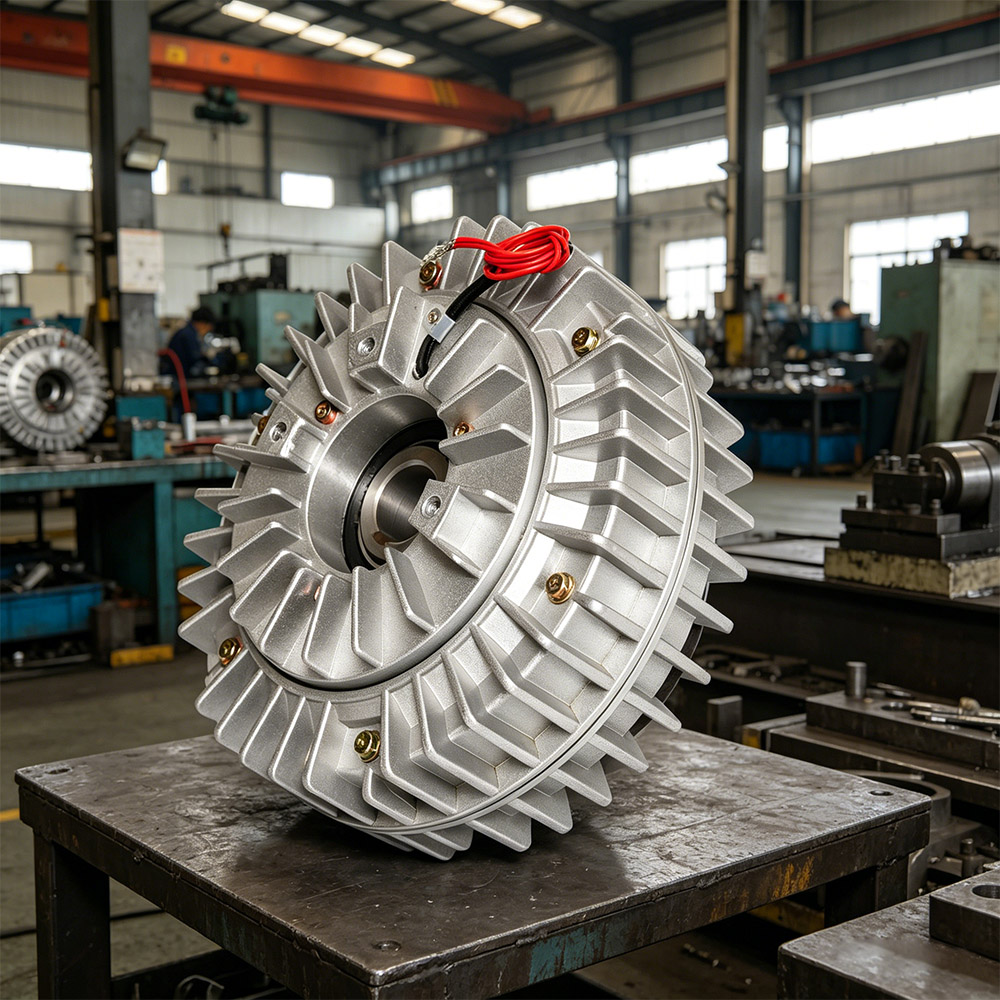
Enhanced Performance in Demanding Operating Conditions
The air disc brake excels in the challenging real-world conditions that commercial vehicles encounter daily, from steep mountain passes to stop-and-go urban traffic, delivering consistent performance when operators need it most. In mountainous terrain where loaded trucks must control speed during lengthy descents, the air disc brake maintains full stopping power even after continuous application, while the superior cooling capacity prevents the dangerous fade that can compromise drum brakes on the same routes. Professional drivers operating in these demanding environments report greater confidence and reduced fatigue when their vehicles are equipped with air disc brakes, knowing they can rely on predictable braking response regardless of how many times they have applied the brakes. Urban delivery vehicles that make dozens or even hundreds of stops daily benefit tremendously from air disc brakes because the system withstands repeated thermal cycling without degradation, maintaining performance from the first stop of the morning to the last delivery of the evening. The self-cleaning action inherent in air disc brake design proves invaluable in harsh weather conditions, as the exposed rotor sheds water, snow, and ice more effectively than enclosed drum brakes, ensuring reliable stopping power during rain storms and winter weather. Corrosive environments such as coastal areas or regions where road salt is heavily applied pose challenges for brake systems, but air disc brakes demonstrate superior durability because their design minimizes areas where corrosive materials can accumulate unnoticed. The ventilated rotor designs common in air disc brake systems actively channel air through cooling vanes, creating a pumping action that expels contaminants and maintains clean friction surfaces. High-speed highway operation demands braking systems that can safely dissipate enormous energy during emergency stops, and air disc brakes excel in these scenarios because their large swept area and efficient heat transfer prevent localized hot spots that can cause rotor warping or pad glazing. Fleet operators running mixed routes that combine highway cruising with frequent stops find air disc brakes particularly valuable because the system adapts seamlessly to varying demands without requiring driver intervention or special operating procedures. The consistent pedal feel provided by air disc brakes across different operating temperatures and conditions allows drivers to develop accurate brake modulation skills that transfer reliably from vehicle to vehicle, improving overall fleet safety. Construction and off-highway applications subject brake systems to dust, mud, and debris that can infiltrate and damage drum brakes, while the open design of air disc brakes allows contaminants to escape rather than accumulating within the assembly. Temperature stability represents a critical performance factor in demanding applications, and air disc brakes maintain their friction characteristics across a wider temperature range than drum brakes, ensuring that stopping power remains available whether brakes are cold at startup or hot after extended use.

 EN
EN