
 EN
EN
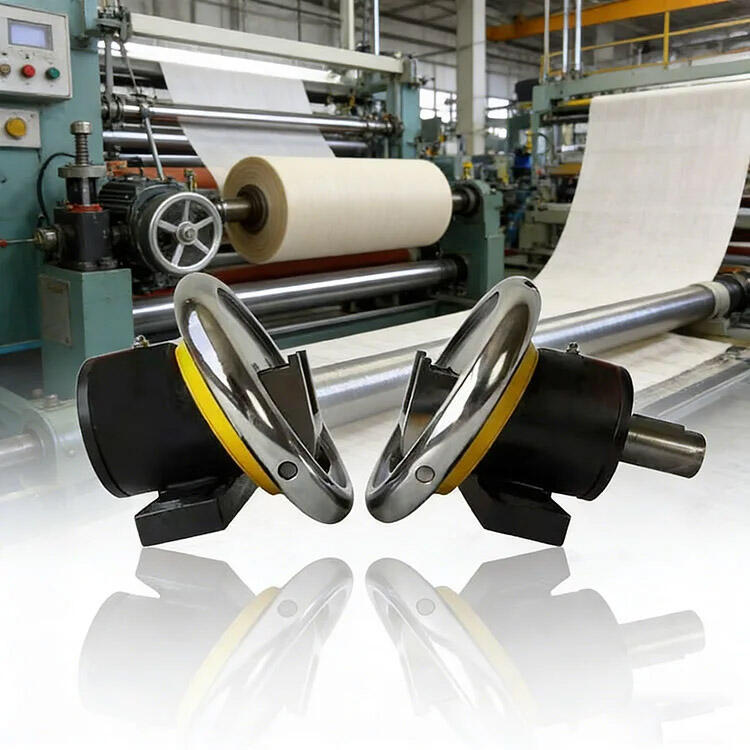
As a dedicated component supplier working alongside established machinery manufacturers, we don’t just make parts—we perfect the interface between torque and tension. For years, our core focus has been the precision manufacturing of Air Shafts (Air-expanding shafts) and Safety Chucks. But today, I want to share real-world insights from our clients' production floors: What happens when our Safety Chucks meet our own Air Shafts?
The answer? A synergy that defines reliability.
A Fit That Speaks to Master Craftsmanship
In the world of winding, unwinding, and heavy roll handling, "compatibility" is often a loose promise. Not here. Our Safety Chucks are not generic off-the-shelf units; they are engineered with the exact dimensional tolerances of our air shafts.
-
Lug-to-jaw precision: We use CNC grinding stations that maintain micron-level accuracy. The result? Zero play, zero binding. When our safety chuck’s drive lug engages the air shaft’s journal, it locks with a satisfying, solid “click”—no wobble, no excessive wear on the contact points.
-
Metallurgical selection: We source high-grade alloy steels, then through proprietary heat treatment processes (carburizing + induction hardening), we achieve a surface hardness of 55–60 HRC on the critical lug faces, while keeping the core tough and impact-resistant.
Extended Lifecycle – Built for 24/7 Operations
Our clients often ask: “Why do your Safety Chucks outlast others by 2–3 times?” The answer lies in how we manage friction and fatigue.
-
Anti-wear engineering: The lug’s geometry is designed to distribute radial and axial loads evenly across the air shaft’s bearing journal. This prevents stress risers—the #1 cause of premature lug fracture or shaft journal gouging.
-
Sealed for survival: Real factories are dusty, oily, and hot. Our safety chucks come with heavy-duty labyrinth seals and high-temperature grease reservoirs. You get smooth rotation for months, not shifts, between maintenance intervals.
-
Case study from a laminating plant: After 18 months of continuous 3-shift operation (web widths 1.6m, tension up to 800kg), the same pair of our Safety Chucks showed less than 0.05mm of lug wear. The matching air shaft’s journal remained factory-fresh. The plant manager’s comment? “I forgot they were even there.”
- https://www.delta-china.com.cn/zh-CN/index
Why “Our Factory’s Air Shaft + Our Safety Chuck” Works Best
When you pair components from the same precision house, you eliminate the guessing game:
-
Lug height vs. chuck pocket depth – perfectly matched from the start.
-
Heat treatment alignment – both components wear together, not against each other.
-
Real load testing – every batch of safety chucks is test-fitted to a master air shaft on a dynamometer rig before shipment.
A Note to Fellow Engineers
If you’re tired of safety chucks that “eat” your air shaft journals after six months, or chucks that rattle and misalign at high speeds—look closer at the manufacturer’s process. Do they grind their lugs post-heat treatment? Do they control the chamfer radii? We do.
Our promise: Our Safety Chucks won’t be the reason your line stops. And yes, they’ll probably outlast your next two maintenance contracts.

