Web Steering Guide Systems: Precision Alignment Solutions for Manufacturing Excellence

All Categories

web steering guide

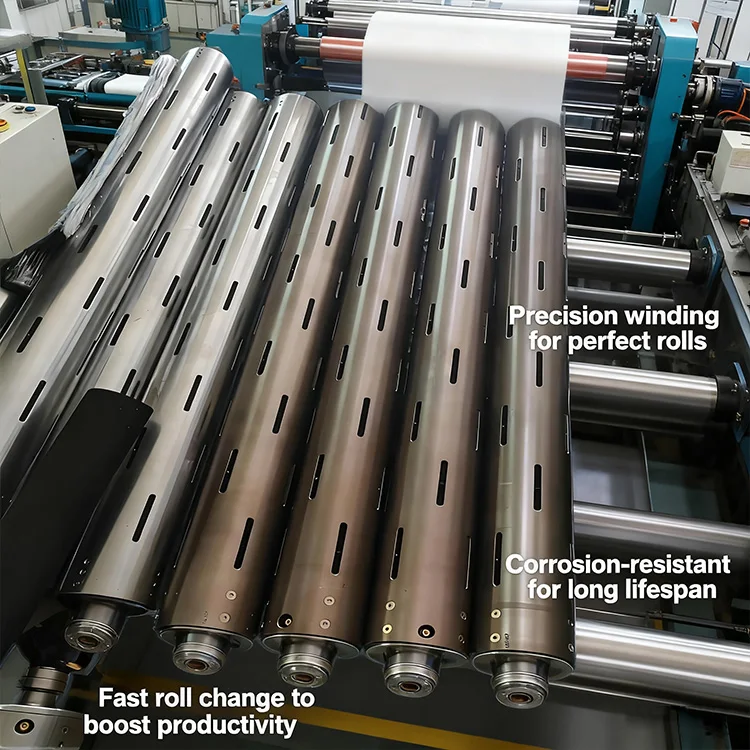
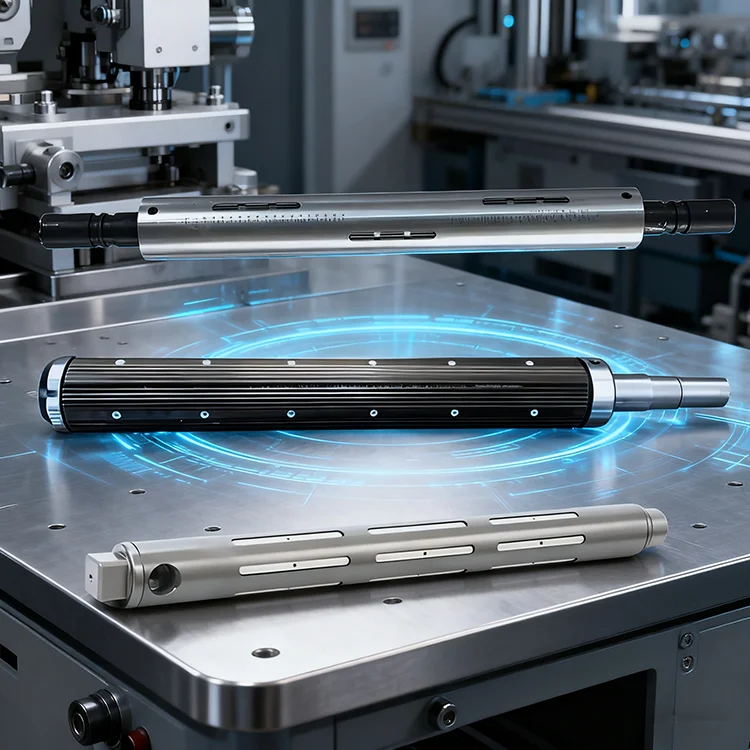
A web steering guide represents an essential component in modern manufacturing and material handling systems, designed to maintain precise alignment and positioning of continuous materials as they move through production lines. This sophisticated equipment ensures that flexible materials such as paper, film, fabric, foil, and other web-based products remain perfectly centered and properly aligned throughout various processing stages. The web steering guide employs advanced sensor technology and automated control mechanisms to detect any deviation from the intended path and immediately corrects positioning errors before they compromise product quality. Manufacturing facilities across multiple industries rely on this technology to optimize production efficiency, reduce material waste, and maintain consistent output quality. The system operates by continuously monitoring the lateral position of moving web materials using specialized sensors that detect edge positions or printed registration marks. When the sensors identify any misalignment, the control unit instantly processes this information and activates correction mechanisms that gently adjust the material back to its optimal position. This real-time adjustment capability prevents defects, minimizes downtime, and protects expensive production equipment from damage caused by improperly aligned materials. Modern web steering guide systems integrate seamlessly with existing production line infrastructure and can be customized to accommodate various material widths, speeds, and processing requirements. The technology has evolved significantly to incorporate digital controls, user-friendly interfaces, and predictive maintenance features that alert operators to potential issues before they affect production. Industries ranging from packaging and printing to textiles and electronics manufacturing depend on web steering guide technology to maintain competitive advantages through improved product consistency and operational reliability. The investment in quality steering systems delivers measurable returns through reduced scrap rates, extended equipment lifespan, and enhanced production capacity utilization.

New Products

Implementing a web steering guide in your production facility delivers numerous practical benefits that directly impact your bottom line and operational efficiency. First and foremost, these systems dramatically reduce material waste by preventing costly alignment errors that would otherwise result in defective products requiring disposal or expensive rework. When your materials maintain perfect alignment throughout processing, you maximize the usable output from every raw material roll, translating directly into cost savings and improved profitability. The precision control offered by web steering guide technology ensures consistent product quality that meets or exceeds customer expectations, strengthening your market reputation and fostering long-term client relationships. Operators appreciate how these systems simplify their work by automating alignment tasks that would otherwise require constant manual attention and adjustment, freeing skilled workers to focus on higher-value activities that contribute more significantly to production goals. Production managers value the increased throughput capabilities that steering systems enable, as properly aligned materials can safely run at higher speeds without risking equipment damage or quality compromises. The automatic correction features minimize production interruptions, reducing costly downtime that affects delivery schedules and customer satisfaction. Maintenance teams benefit from the protective function these systems provide to expensive processing equipment, as properly aligned materials cause less wear on rollers, cutting blades, and other contact points throughout the production line. The data collection capabilities built into modern web steering guide systems provide valuable insights into production patterns and performance trends, enabling informed decision-making about process improvements and capacity planning. Installation flexibility means you can integrate steering systems into existing production lines without requiring extensive modifications or prolonged shutdown periods. The technology adapts to various material types and production requirements, making it a versatile solution for facilities processing multiple product lines. Energy efficiency improvements result from optimized material flow and reduced waste processing requirements. Quality control becomes more predictable and manageable when materials consistently maintain proper alignment, simplifying inspection procedures and reducing the need for intensive final product screening. Employee safety improves as automated steering systems eliminate the need for workers to manually adjust moving materials, reducing exposure to pinch points and other mechanical hazards. The competitive advantages gained through improved efficiency, quality, and reliability position your operation favorably in challenging market conditions where margins matter and customer demands continue intensifying.

Practical Tips

Transmission Pain Points in Printing/Textile/Chemical Machinery: How Electromagnetic Clutches Improve Equipment Stability?

08

Dec

Transmission Pain Points in Printing/Textile/Chemical Machinery: How Electromagnetic Clutches Improve Equipment Stability?

Struggling with transmission instability in printing, textile, or chemical machinery? TJ-A electromagnetic clutches eliminate slip, boost throughput 15–20%, and ensure asbestos-free safety. Discover how top global manufacturers achieve 99.8% reliability—request a spec sheet today.
View More
High-Quality Web Guide Control Systems From a Leading Domestic Manufacturer With 20 Years of Expertise

08

Dec

High-Quality Web Guide Control Systems From a Leading Domestic Manufacturer With 20 Years of Expertise

Discover high-precision web guide control systems from a trusted domestic manufacturer with 20 years of R&D expertise. Reduce waste, boost efficiency, and ensure reliability. Request a quote today.
View More
The Pain of Non-Standard Transmission in Special Working Conditions

09

Apr

The Pain of Non-Standard Transmission in Special Working Conditions

Struggling with standard transmission failures in extreme temps, dust, or tight spaces? TianJi’s 20-year R&D delivers reliable custom clutches & brakes—engineered for your exact specs. Get a free technical consultation today.
View More

Get Your Custom Quote

Tell us your requirements and get a tailored solution for your project.
Name
Mobile
Email
Please include
Message
0/1000

web steering guide

Advanced Real-Time Precision Alignment Technology

Advanced Real-Time Precision Alignment Technology

The cornerstone of web steering guide effectiveness lies in its sophisticated real-time alignment technology that continuously monitors and corrects material positioning with exceptional accuracy. This advanced system employs multiple sensing methods including optical edge detection, ultrasonic measurement, and line scanning technology to track material position with sub-millimeter precision even at high production speeds. The sensor arrays operate independently of material color, transparency, or surface characteristics, ensuring reliable performance across diverse product portfolios. Processing algorithms analyze sensor data hundreds of times per second, calculating the exact correction needed and commanding actuators to make smooth, graduated adjustments that prevent overcorrection and material stress. The web steering guide control architecture incorporates predictive modeling that anticipates alignment trends based on historical data patterns, enabling preemptive adjustments that maintain tighter tolerances than purely reactive systems. This intelligence prevents the accumulation of small deviations that could compound into significant quality issues downstream. The correction mechanisms utilize precision stepper motors or servo-driven actuators that execute movements with repeatability measured in micrometers, ensuring consistent performance across millions of operational cycles. Material handling remains gentle throughout the correction process, with carefully calibrated contact pressures and support geometries that prevent marking, scratching, or distortion of delicate substrates. The system architecture supports multiple correction strategies including pivot steering, frame shifting, and differential speed control, with automatic selection of the optimal method based on material characteristics and processing conditions. Operators can easily configure sensitivity parameters through intuitive touchscreen interfaces that provide real-time visualization of material position and system performance metrics. The web steering guide technology includes comprehensive diagnostic capabilities that continuously monitor system health, detecting sensor degradation, mechanical wear, or calibration drift before these issues affect production quality. Integration with facility automation systems enables coordinated operation with upstream and downstream equipment, optimizing overall line performance and enabling advanced features like automatic width changeovers and recipe-based parameter adjustment. This level of technological sophistication transforms material handling from a source of production variability into a precisely controlled process that consistently delivers superior results while protecting your investment in processing equipment and raw materials.
Exceptional Versatility Across Industries and Applications

Exceptional Versatility Across Industries and Applications

The remarkable adaptability of web steering guide systems makes them invaluable across an extraordinarily diverse range of manufacturing environments and material types. Printing operations benefit tremendously from the precise registration maintenance these systems provide, ensuring that multi-color graphics align perfectly and printed materials meet exacting quality standards demanded by brands and consumers. Packaging manufacturers rely on steering technology to maintain alignment during lamination, coating, slitting, and converting processes where even minor deviations can render products unusable or compromise package integrity. Textile producers processing everything from delicate nonwovens to heavy industrial fabrics depend on web steering guide systems to prevent edge damage, maintain pattern alignment, and optimize yield from expensive raw materials. Electronics manufacturing facilities use this technology when processing flexible circuits, battery separator films, and display components where positioning accuracy directly impacts product functionality and reliability. The pharmaceutical and medical device industries employ steering systems when producing sterile packaging materials, transdermal patches, and diagnostic test strips where quality and consistency are absolutely critical. Converting operations handling pressure-sensitive labels, adhesive tapes, and specialty films achieve superior edge quality and dimensional accuracy through precise alignment control. The web steering guide technology accommodates extreme variation in material properties, successfully handling substrates ranging from gossamer-thin films measuring just a few micrometers to heavy-duty materials several millimeters thick. Width capacity spans from narrow strips under one hundred millimeters to wide-format materials exceeding several meters, with quick changeover capabilities that minimize production interruptions when switching between products. Speed compatibility extends from slow-speed processes requiring meticulous precision to high-speed operations running at hundreds of meters per minute, with steering systems maintaining accuracy across this entire performance range. Environmental flexibility enables operation in temperature-controlled cleanrooms, humid coating environments, and industrial settings with significant temperature variations. The systems handle materials with challenging characteristics including high elasticity, static charge accumulation, and tendency toward curling or tracking deviation. Customization options allow tailoring of web steering guide configurations to specific application requirements, including specialized sensor mounting arrangements, explosion-proof construction for hazardous environments, and integration with existing machine control architectures. This exceptional versatility means that investing in quality steering technology provides long-term value as production requirements evolve and product portfolios expand.
Measurable Return on Investment Through Operational Excellence

Measurable Return on Investment Through Operational Excellence

Adopting web steering guide technology delivers compelling financial returns that become evident across multiple dimensions of manufacturing performance. The most immediate impact appears in dramatically reduced scrap rates, as properly aligned materials eliminate defects caused by misregistration, off-center processing, or edge damage. Manufacturers typically report waste reduction ranging from thirty to seventy percent after implementing steering systems, with savings directly flowing to profitability given the significant cost of raw materials in most operations. Production efficiency gains result from the ability to run equipment at optimal speeds without alignment-related slowdowns or emergency stops, increasing throughput without capital investment in additional capacity. The web steering guide enables lights-out manufacturing during overnight and weekend shifts by eliminating the need for constant operator attention to alignment issues, effectively expanding production hours without proportional labor cost increases. Quality consistency improvements reduce customer complaints, returns, and warranty claims while strengthening brand reputation and enabling premium pricing for superior products. Maintenance cost reductions accumulate as properly aligned materials cause less wear on expensive processing equipment including coating heads, printing cylinders, laminating nips, and cutting assemblies. Equipment lifespan extensions defer major capital expenditures while maximizing return on existing asset investments. The data logging and analysis capabilities built into modern web steering guide systems provide insights that drive continuous improvement initiatives, identifying optimization opportunities that might otherwise remain hidden in day-to-day operations. Faster job changeovers result from automated alignment procedures that eliminate time-consuming manual setup and adjustment, improving scheduling flexibility and reducing the minimum economical run lengths. Energy consumption decreases as optimized material handling reduces the power required for web tension control and climate control systems processing less waste material. Labor productivity improvements allow reassignment of skilled workers from repetitive alignment monitoring to value-adding activities like quality analysis, preventive maintenance, and process development. Regulatory compliance becomes easier to demonstrate when steering systems provide documented evidence of consistent process control and quality management. Insurance costs may decrease as automated systems reduce workplace injury risks associated with manual material handling. The web steering guide technology typically achieves payback periods ranging from six to eighteen months depending on production volume and material costs, after which the benefits continue accumulating throughout the equipment's operational life spanning many years. Competitive positioning strengthens as your facility's reputation for quality and reliability attracts new business opportunities and enables expansion into markets with stringent quality requirements. These measurable financial benefits make web steering guide investment a strategic decision that enhances both immediate operational performance and long-term business sustainability.
email goToTop