Magnetic Particle Brakes for Tension Control - Precision Tension Management Solutions

All Categories

magnetic particle brakes for tension control

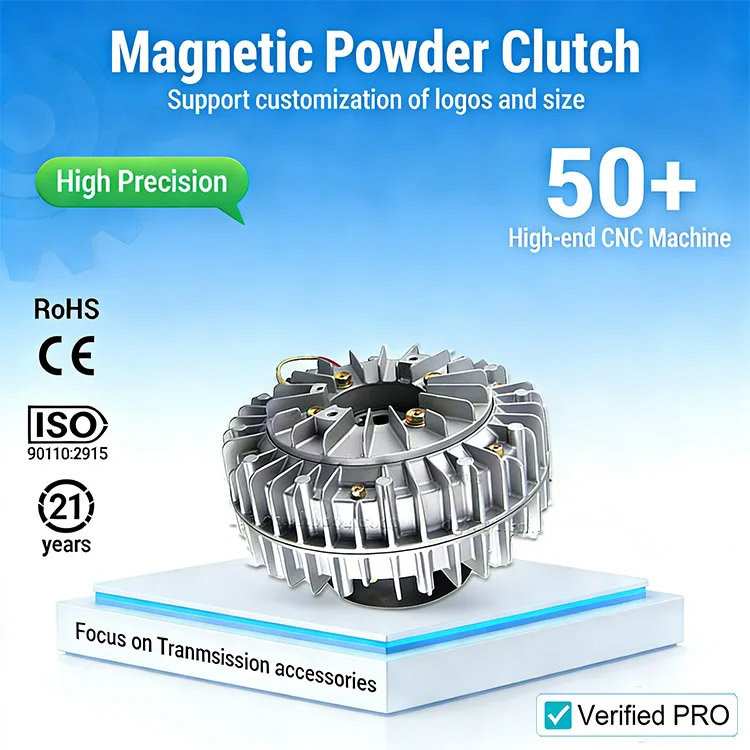
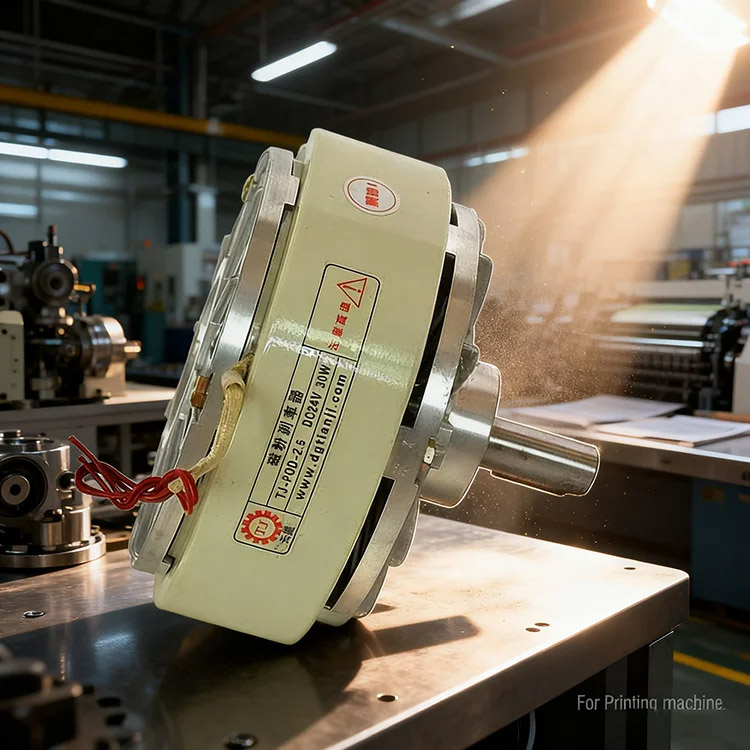
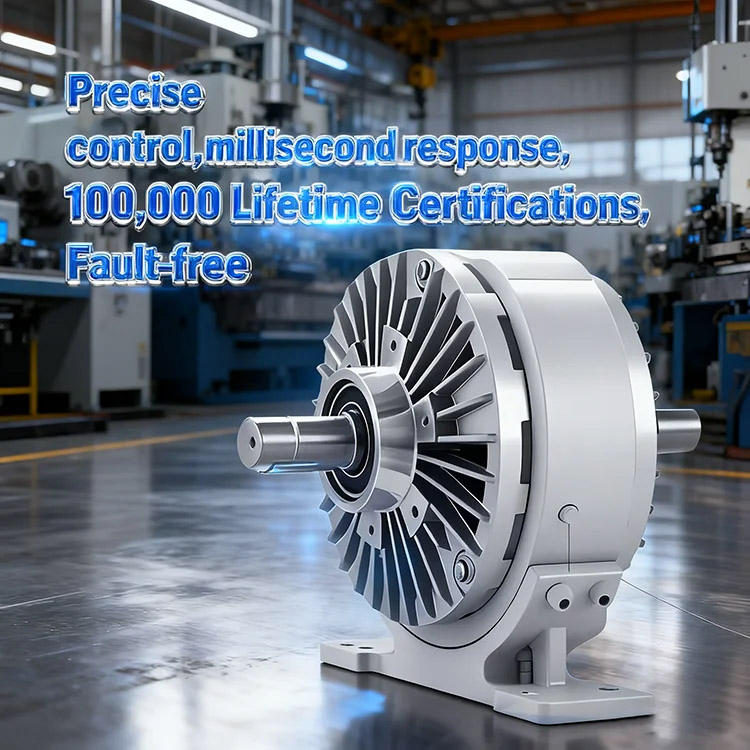
Magnetic particle brakes for tension control represent a sophisticated solution for managing material tension in various industrial manufacturing processes. These precision devices utilize magnetic particle technology to deliver consistent, adjustable torque that ensures smooth operation and superior product quality. The fundamental principle involves magnetic particles suspended in a powder matrix that solidifies when exposed to electromagnetic fields, creating controllable resistance. This mechanism allows operators to achieve precise tension regulation across diverse materials including paper, film, foil, wire, textiles, and other web-based products. The main functions of magnetic particle brakes for tension control encompass maintaining constant tension during unwinding and rewinding operations, compensating for diameter variations in material rolls, preventing material damage through over-tensioning, and ensuring uniform product characteristics throughout production runs. Technologically, these devices feature stepless torque adjustment capabilities, rapid response times to tension fluctuations, minimal heat generation during continuous operation, and exceptional durability with extended service lifespans. The electromagnetic coil within magnetic particle brakes for tension control generates a magnetic field that influences the powder-like particles, allowing infinitely variable torque control from zero to maximum capacity. This progressive engagement eliminates sudden jerks or material stress, which proves critical when handling delicate substrates. Applications span numerous industries including printing and packaging, where consistent tension ensures registration accuracy and prevents wrinkles; textile manufacturing, where uniform tension maintains fabric quality; wire and cable production, where precise control prevents stretching or breaking; converting operations involving slitting, laminating, or coating processes; and pharmaceutical packaging where exacting standards demand reliable tension management. Modern magnetic particle brakes for tension control integrate seamlessly with automated control systems, accepting analog or digital input signals that enable dynamic tension adjustments responding to real-time production conditions, diameter compensation algorithms, and programmable tension profiles for different materials or production stages.

New Product Recommendations

Implementing magnetic particle brakes for tension control delivers numerous practical benefits that directly impact your production efficiency and bottom line. First, these devices provide exceptional precision in maintaining consistent tension levels, which translates to fewer defects, reduced material waste, and higher-quality finished products. Unlike mechanical friction-based systems, magnetic particle brakes for tension control offer smooth, stepless adjustment that eliminates the jerky movements and tension spikes that can damage sensitive materials or create visible defects in your products. This smoothness means your operators can fine-tune tension settings to match specific material characteristics, accommodating everything from delicate tissue paper to heavy-duty industrial films without changing equipment. The reliability factor cannot be overstated - magnetic particle brakes for tension control contain few moving parts compared to conventional brake systems, resulting in significantly reduced maintenance requirements and longer operational lifespans. You will experience fewer unexpected breakdowns, less production downtime, and lower maintenance costs over the equipment lifecycle. The heat dissipation characteristics of these brakes remain excellent even during extended operation, preventing thermal buildup that could affect performance consistency or damage temperature-sensitive materials passing through your production line. Energy efficiency represents another compelling advantage, as magnetic particle brakes for tension control consume power only through the electromagnetic coil, with energy requirements proportional to the desired torque level. This means lower operating costs compared to continuously running mechanical systems or hydraulic alternatives requiring pumps and cooling systems. The fast response time of magnetic particle brakes for tension control enables quick adaptation to changing production conditions, automatically compensating when material diameter changes during unwinding or when line speed varies. This responsiveness helps maintain product consistency even during start-up, slowdown, or emergency stop situations. Installation flexibility makes magnetic particle brakes for tension control suitable for retrofitting existing production lines or integrating into new machinery designs, with compact footprints that fit space-constrained environments. The silent operation contributes to better working conditions for your personnel, eliminating the noise associated with mechanical clutches or friction brakes. Control integration capabilities allow these brakes to connect with your existing automation systems, PLCs, or tension controllers, enabling sophisticated closed-loop tension regulation that automatically adjusts to maintain preset values. This automation reduces operator workload while improving consistency beyond what manual adjustments can achieve. The broad torque range available across different models means you can select magnetic particle brakes for tension control sized precisely for your application requirements, avoiding oversized equipment that wastes energy or undersized units that limit production capabilities.

Latest News

Transmission Pain Points in Printing/Textile/Chemical Machinery: How Electromagnetic Clutches Improve Equipment Stability?

08

Dec

Transmission Pain Points in Printing/Textile/Chemical Machinery: How Electromagnetic Clutches Improve Equipment Stability?

Struggling with transmission instability in printing, textile, or chemical machinery? TJ-A electromagnetic clutches eliminate slip, boost throughput 15–20%, and ensure asbestos-free safety. Discover how top global manufacturers achieve 99.8% reliability—request a spec sheet today.
View More
High-Quality Web Guide Control Systems From a Leading Domestic Manufacturer With 20 Years of Expertise

08

Dec

High-Quality Web Guide Control Systems From a Leading Domestic Manufacturer With 20 Years of Expertise

Discover high-precision web guide control systems from a trusted domestic manufacturer with 20 years of R&D expertise. Reduce waste, boost efficiency, and ensure reliability. Request a quote today.
View More
The Pain of Non-Standard Transmission in Special Working Conditions

09

Apr

The Pain of Non-Standard Transmission in Special Working Conditions

Struggling with standard transmission failures in extreme temps, dust, or tight spaces? TianJi’s 20-year R&D delivers reliable custom clutches & brakes—engineered for your exact specs. Get a free technical consultation today.
View More

Get Your Custom Quote

Tell us your requirements and get a tailored solution for your project.
Name
Mobile
Email
Please include
Message
0/1000

magnetic particle brakes for tension control

Infinitely Variable Torque Control for Perfect Tension Management

Infinitely Variable Torque Control for Perfect Tension Management

The standout feature of magnetic particle brakes for tension control lies in their ability to deliver infinitely variable torque adjustment across their entire operating range, providing unmatched precision for tension management applications. This capability stems from the unique operating principle where magnetic particles respond proportionally to electromagnetic field strength, creating a continuously adjustable resistance without steps, gaps, or dead zones. When your production process requires specific tension levels, magnetic particle brakes for tension control allow operators or automated systems to dial in exact values and maintain them with exceptional stability. This precision proves invaluable when processing materials with varying thickness, elasticity, or sensitivity characteristics that demand different tension settings. Unlike mechanical systems with fixed positions or incremental adjustments, the continuous variability ensures you can optimize tension for each specific material and production scenario. The practical implications affect multiple aspects of your operation - product quality improves because consistent tension prevents stretching, bagging, wrinkling, or other defects that occur with fluctuating control. Material utilization increases as proper tension reduces waste from edge trim irregularities, thickness variations, or rejected products. The smooth torque progression during acceleration and deceleration phases protects materials from sudden stress that could cause breaks, particularly important for fragile films, thin foils, or sensitive textiles. Magnetic particle brakes for tension control maintain their accuracy across the full speed range of your equipment, delivering identical precision whether running at minimum speeds for threading or setup, or maximum production velocities. This consistency eliminates the need for speed-dependent compensation adjustments common with friction-based alternatives. The electromagnetic control interface accepts various input signals including voltage, current, or digital commands from tension controllers, enabling sophisticated regulation strategies. Advanced implementations use load cells or dancers to measure actual web tension, feeding this information back to controllers that adjust the magnetic particle brakes for tension control in real-time, creating closed-loop systems with extraordinary accuracy. The absence of mechanical wear on the torque-generating components means calibration remains stable over extended periods, reducing the frequency of tension adjustments and maintaining production consistency. Temperature stability further enhances performance reliability, as the magnetic particle technology functions consistently across normal industrial temperature ranges without the performance degradation seen in systems dependent on friction coefficients that vary with temperature. This infinitely variable control capability transforms magnetic particle brakes for tension control into precision instruments rather than simple braking devices, elevating your process control capabilities to levels previously unattainable with conventional technologies.
Exceptional Durability with Minimal Maintenance Requirements

Exceptional Durability with Minimal Maintenance Requirements

Magnetic particle brakes for tension control deliver outstanding longevity and reliability that significantly reduces total cost of ownership compared to alternative tension control technologies. The durability advantage originates from the fundamental design philosophy that minimizes mechanical wear by eliminating direct contact between the primary torque-transmitting components. Within these devices, the magnetic particles themselves create the resistance force when activated by the electromagnetic field, but these particles do not experience the destructive wear patterns seen in friction brake pads, clutch plates, or mechanical linkages. This wear-resistant characteristic means magnetic particle brakes for tension control maintain consistent performance specifications across millions of operating cycles without the gradual degradation typical of contact-based systems. The sealed construction protects internal components from environmental contaminants including dust, moisture, and airborne particles that would compromise other brake types, making these units suitable for demanding industrial environments ranging from dusty converting operations to humid coating processes. Bearing systems within magnetic particle brakes for tension control utilize quality components designed for extended service intervals, with many installations operating continuously for years between maintenance events. The absence of friction material consumption eliminates the recurring costs and production interruptions associated with pad replacement, adjustment procedures, and disposal of worn components. Heat management represents another durability factor, as the magnetic particle technology dissipates thermal energy efficiently through the brake housing, preventing the heat accumulation that degrades friction materials, warps components, or requires cooling systems in alternative designs. This thermal stability allows magnetic particle brakes for tension control to operate continuously at rated capacity without performance fade or mandatory cooling periods. The electromagnetic coil, being the primary electrical component, benefits from conservative thermal design that maintains wire insulation integrity throughout the expected service life. Maintenance requirements remain minimal and straightforward - periodic inspection of bearing condition, verification of mounting security, and electrical connection integrity typically constitute the complete maintenance protocol. No consumable parts require stocking, no complex adjustment procedures demand skilled technicians, and no specialized tools are necessary for routine service. This simplicity reduces maintenance costs while improving equipment availability since service intervals extend far beyond those of mechanical alternatives. The robust construction withstands the vibration, shock loads, and continuous duty cycles characteristic of industrial production environments without structural fatigue or component failure. Magnetic particle brakes for tension control prove particularly valuable in remote or difficult-to-access installations where maintenance access involves production shutdowns or safety procedures, as their reliability minimizes the frequency of such interventions. The long-term performance consistency means tension settings established during initial commissioning remain accurate throughout the equipment lifespan, eliminating drift or creep that would require periodic recalibration. This stability ensures your products maintain consistent quality characteristics year after year without the gradual tension variations that can go unnoticed until quality issues emerge. Investment protection extends beyond just the brake units themselves, as their gentle, consistent tension control protects your expensive production machinery from the stress and shock loads that mechanical brake systems can impose, potentially extending the service life of associated equipment components including shafts, bearings, and drive systems.
Seamless Integration with Modern Automation and Control Systems

Seamless Integration with Modern Automation and Control Systems

Modern manufacturing demands sophisticated process control, and magnetic particle brakes for tension control excel at integrating with contemporary automation architectures to enable advanced tension management strategies. The electrical control interface of these devices accepts standard industrial signals, making them compatible with programmable logic controllers, dedicated tension controllers, distributed control systems, and supervisory control and data acquisition platforms used throughout industry. This connectivity transforms magnetic particle brakes for tension control from standalone components into integral elements of comprehensive process control solutions. The analog input capability allows direct connection to tension measurement devices including load cells, dancer position sensors, or ultrasonic web guides, creating closed-loop feedback systems that automatically maintain preset tension values regardless of disturbances. When material diameter changes during unwinding, line speed varies, or material properties fluctuate, these automated systems detect deviations and command the magnetic particle brakes for tension control to adjust instantaneously, maintaining consistency impossible to achieve through manual operation. Digital communication protocols available on advanced models enable bidirectional data exchange, allowing control systems to not only command torque levels but also monitor brake status, operating temperature, and diagnostic information useful for predictive maintenance strategies. Recipe management capabilities benefit significantly from this integration - production facilities handling multiple products can store optimal tension profiles for each material type, automatically loading appropriate settings when changeovers occur and eliminating setup errors or operator variation. The fast electrical response characteristics of magnetic particle brakes for tension control complement rapid processing speeds, with torque adjustments occurring within milliseconds of command receipt, enabling dynamic compensation for sudden disturbances or rapid acceleration and deceleration profiles. Taper tension functionality becomes easily implementable, where tension gradually decreases as roll diameter increases during winding operations, preventing core crushing or telescoping defects in finished rolls. This sophisticated control would prove extremely difficult with mechanical brake systems but emerges naturally when magnetic particle brakes for tension control receive diameter-compensated signals from automation systems. Multi-zone tension control architectures, common in complex converting machinery with multiple unwind and rewind stations, benefit from the independent controllability of magnetic particle brakes for tension control at each position, with centralized coordination ensuring proper tension relationships between zones. Safety integration represents another important aspect - emergency stop functions can rapidly reduce tension to prevent material breaks or equipment damage, while controlled shutdown sequences can maintain appropriate tension levels during deceleration to avoid web slack or spillage. The scalability of control systems incorporating magnetic particle brakes for tension control allows starting with basic implementations and adding sophistication as needs evolve, protecting initial investment while enabling future capability expansion. Remote monitoring and adjustment capabilities enabled through network-connected control systems allow production engineers to optimize tension parameters without accessing the physical equipment location, supporting continuous improvement initiatives and rapid problem resolution. Data logging functionality captures tension performance over time, providing insights into process stability, identifying gradual drift requiring attention, and documenting quality control compliance for regulated industries. This wealth of operational data transforms magnetic particle brakes for tension control into sources of process intelligence beyond their primary tension regulation function.
email goToTop