Industrial Pneumatic Disc Brakes - Reliable Safety Braking Solutions for Heavy Machinery

All Categories

industrial pneumatic disc brakes

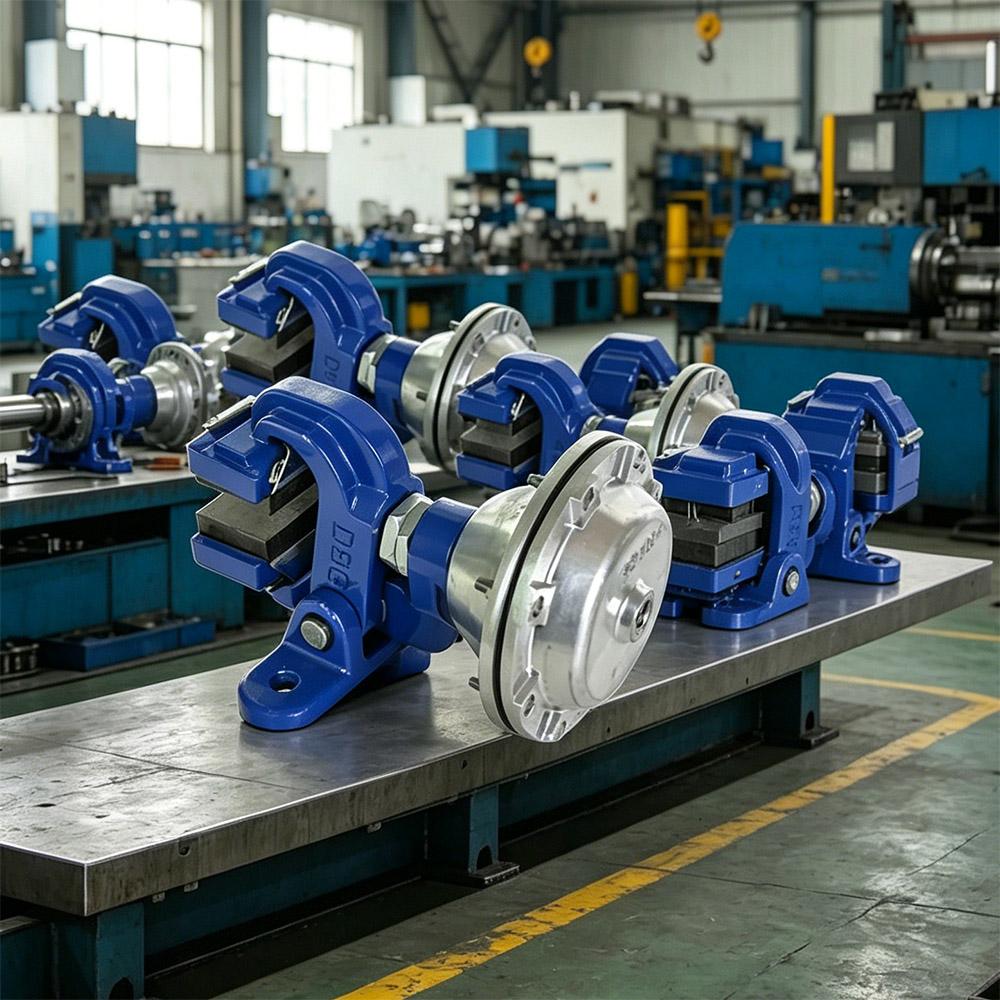
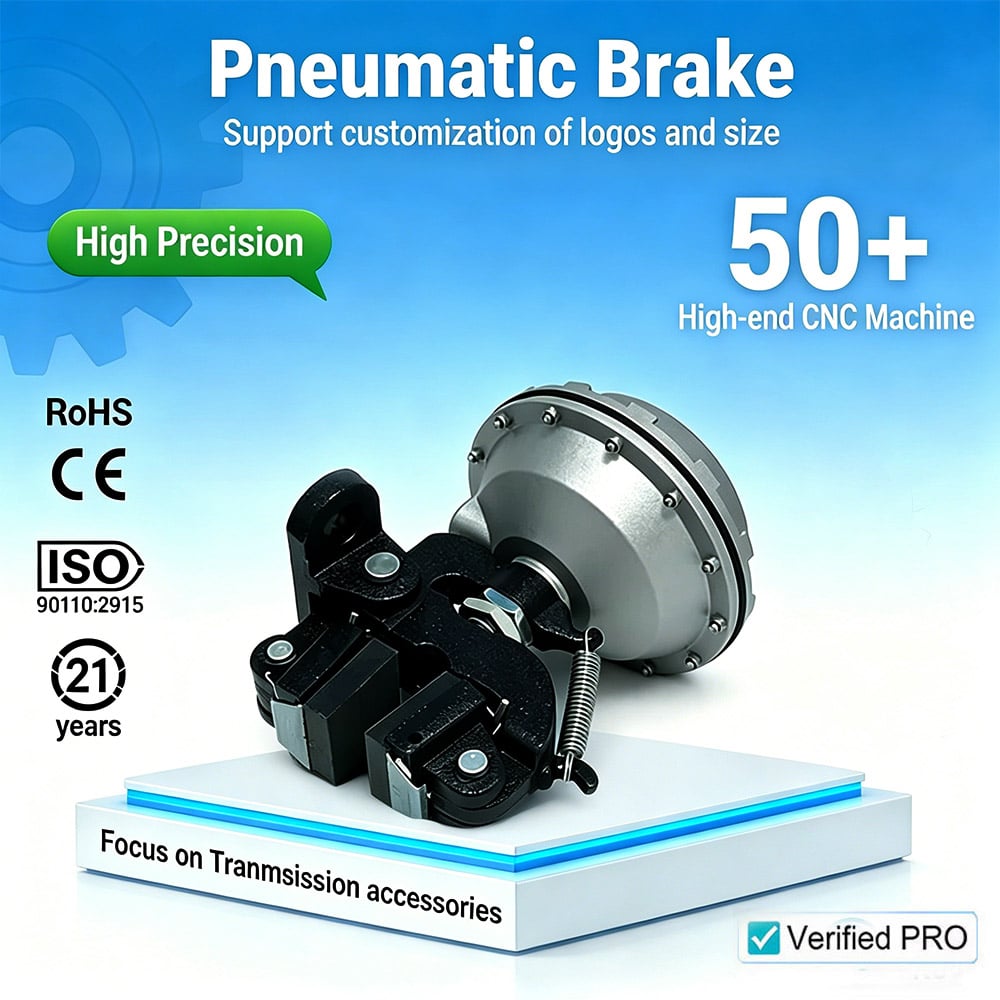
Industrial pneumatic disc brakes represent a critical safety and control component in modern manufacturing and heavy machinery operations. These sophisticated braking systems utilize compressed air to activate braking mechanisms that clamp down on rotating discs, providing reliable stopping power across diverse industrial applications. The fundamental operation involves pneumatic pressure acting upon pistons or diaphragms, which then engage brake pads against a disc rotor attached to the rotating shaft or wheel assembly. This technology has become indispensable in sectors ranging from material handling equipment to wind turbines, cranes, mining machinery, and automated production lines. The main functions of industrial pneumatic disc brakes include emergency stopping capabilities, holding loads in stationary positions, controlled deceleration during operational sequences, and maintaining precise positioning of equipment components. Technologically, these braking systems feature self-adjusting mechanisms that compensate for pad wear over extended service periods, ensuring consistent performance throughout their operational lifespan. Advanced designs incorporate modular construction, allowing for simplified maintenance procedures and rapid replacement of wear components without requiring complete system disassembly. The brake pads typically utilize high-friction composite materials engineered to withstand extreme temperatures and provide stable friction coefficients across varying environmental conditions. Spring-applied, pressure-release designs ensure fail-safe operation, where loss of pneumatic pressure automatically engages the brakes, preventing uncontrolled movement during power failures or system malfunctions. Industrial pneumatic disc brakes find extensive applications in conveyor systems where precise stopping and starting control maintains product integrity and worker safety. In crane operations, these brakes provide the holding force necessary to secure suspended loads during positioning maneuvers. Wind turbine installations rely on these systems for rotor speed control and emergency shutdown procedures. The adaptability of industrial pneumatic disc brakes to various mounting configurations, torque requirements, and environmental challenges makes them a versatile solution for engineers designing robust machinery systems that demand dependable braking performance under continuous duty cycles and harsh operating conditions.

New Product Recommendations

When selecting braking solutions for heavy-duty machinery and industrial equipment, industrial pneumatic disc brakes deliver numerous practical benefits that directly impact operational efficiency, safety standards, and long-term cost management. The reliability of these systems stems from their straightforward mechanical design, which minimizes potential failure points compared to more complex hydraulic or electronic alternatives. Compressed air serves as the operating medium, readily available in most industrial facilities through existing pneumatic infrastructure, eliminating the need for specialized hydraulic fluids or electrical control systems that require additional maintenance protocols. The response time of industrial pneumatic disc brakes proves exceptionally fast, with engagement occurring within milliseconds of signal activation, providing operators with immediate control over machinery movement. This quick reaction capability becomes crucial during emergency situations where split-second stopping can prevent equipment damage, product loss, or workplace injuries. The consistent braking force generated by pneumatic actuation remains stable across temperature variations and extended duty cycles, ensuring predictable performance regardless of operational demands. Maintenance requirements stay minimal due to the self-adjusting features incorporated into modern designs, automatically compensating for brake pad wear without manual intervention or periodic adjustments by maintenance personnel. This characteristic reduces downtime associated with brake servicing and lowers labor costs over the equipment lifecycle. The durability of industrial pneumatic disc brakes extends operational periods between component replacements, with high-quality friction materials capable of millions of braking cycles before requiring renewal. Environmental resistance represents another significant advantage, as sealed housings protect internal components from dust, moisture, and corrosive substances commonly encountered in manufacturing environments, mining operations, and outdoor installations. The modular construction philosophy embraced by leading manufacturers enables quick component replacement, with standardized interfaces allowing maintenance teams to swap brake assemblies rapidly during planned maintenance windows or emergency repairs. Energy efficiency benefits emerge from the spring-applied design, which requires pneumatic pressure only to release the brakes rather than maintain constant holding force, reducing compressed air consumption and lowering operational energy costs. The scalability of these systems accommodates diverse torque requirements, from small conveyor drives to massive industrial presses, through simple sizing adjustments rather than fundamental design changes. Safety certifications from international standards organizations validate the performance characteristics of industrial pneumatic disc brakes, providing assurance to facility managers and safety officers that installed equipment meets rigorous regulatory requirements. The fail-safe operational mode, where loss of air pressure automatically engages braking action, creates an inherently safe system that protects personnel and assets during utility failures or maintenance procedures. Cost-effectiveness emerges when evaluating total ownership expenses, as the combination of extended service intervals, reduced maintenance labor, minimal energy consumption, and long component lifespans delivers favorable return on investment compared to alternative braking technologies requiring more intensive support resources.

Latest News

Transmission Pain Points in Printing/Textile/Chemical Machinery: How Electromagnetic Clutches Improve Equipment Stability?

08

Dec

Transmission Pain Points in Printing/Textile/Chemical Machinery: How Electromagnetic Clutches Improve Equipment Stability?

Struggling with transmission instability in printing, textile, or chemical machinery? TJ-A electromagnetic clutches eliminate slip, boost throughput 15–20%, and ensure asbestos-free safety. Discover how top global manufacturers achieve 99.8% reliability—request a spec sheet today.
View More
High-Quality Web Guide Control Systems From a Leading Domestic Manufacturer With 20 Years of Expertise

08

Dec

High-Quality Web Guide Control Systems From a Leading Domestic Manufacturer With 20 Years of Expertise

Discover high-precision web guide control systems from a trusted domestic manufacturer with 20 years of R&D expertise. Reduce waste, boost efficiency, and ensure reliability. Request a quote today.
View More
The Pain of Non-Standard Transmission in Special Working Conditions

09

Apr

The Pain of Non-Standard Transmission in Special Working Conditions

Struggling with standard transmission failures in extreme temps, dust, or tight spaces? TianJi’s 20-year R&D delivers reliable custom clutches & brakes—engineered for your exact specs. Get a free technical consultation today.
View More

Get Your Custom Quote

Tell us your requirements and get a tailored solution for your project.
Name
Mobile
Email
Please include
Message
0/1000

industrial pneumatic disc brakes

Fail-Safe Spring-Applied Technology Ensures Maximum Safety Protection

Fail-Safe Spring-Applied Technology Ensures Maximum Safety Protection

The engineering principle underlying industrial pneumatic disc brakes incorporates a fail-safe mechanism that fundamentally prioritizes workplace safety and asset protection through spring-applied, pressure-release operation. This innovative design approach positions powerful compression springs as the primary braking force, maintaining constant engagement against the brake disc whenever pneumatic pressure falls below operational thresholds. When operators need to release the brakes for normal equipment movement, compressed air enters the brake chamber, overcoming spring tension and retracting the brake pads from the disc surface. This reverse logic compared to conventional systems creates an inherently safe condition where any interruption in pneumatic supply, whether from compressor failure, line damage, emergency shutdown, or intentional isolation during maintenance activities, immediately activates full braking force without requiring external power sources or control signals. The safety implications prove particularly significant in vertical lifting applications, material handling systems positioned above work areas, and automated machinery where uncontrolled movement could result in catastrophic consequences. Industrial facilities benefit from this passive safety feature as it eliminates reliance on operator reaction time or electronic monitoring systems to prevent hazardous runaway conditions. The spring cartridges utilized in these assemblies undergo rigorous fatigue testing to ensure consistent force delivery throughout millions of compression cycles, maintaining reliable engagement force even after years of continuous service. Manufacturers employ high-grade alloy steels and specialized heat treatments to optimize spring performance across temperature extremes encountered in foundries, outdoor installations, and refrigerated environments. The predetermined spring force calculations factor in worst-case scenarios including maximum load conditions, potential friction coefficient degradation, and environmental contamination effects, building substantial safety margins into the design specifications. Maintenance personnel appreciate the predictable behavior of spring-applied industrial pneumatic disc brakes during service procedures, as simple air pressure isolation guarantees positive brake engagement while technicians work on adjacent machinery components. Emergency response protocols become simplified since activating emergency stop systems or cutting pneumatic supply lines through strategically positioned valves provides immediate equipment shutdown without complex sequencing requirements. Regulatory compliance officers recognize the value of this passive safety architecture when conducting facility audits and risk assessments, as the fail-safe nature of industrial pneumatic disc brakes aligns with machinery safety directives and occupational health standards mandating protection against unexpected equipment startup or uncontrolled movement. The psychological comfort provided to operators working near heavy machinery equipped with these reliable braking systems contributes to improved workplace morale and confidence in equipment safety protocols.
Self-Adjusting Mechanisms Minimize Maintenance Demands and Maximize Uptime

Self-Adjusting Mechanisms Minimize Maintenance Demands and Maximize Uptime

Industrial pneumatic disc brakes incorporate sophisticated self-adjusting mechanisms that automatically compensate for brake pad wear throughout the operational lifecycle, delivering substantial maintenance advantages and operational continuity benefits that directly impact facility productivity metrics. Traditional braking systems require periodic manual adjustments to maintain proper pad-to-disc clearance as friction materials gradually wear during normal service, creating maintenance schedules that interrupt production activities and consume valuable technician time. The self-adjusting feature eliminates these routine interventions through ingenious mechanical designs that continuously monitor and correct the air gap between brake pads and disc surfaces. Several engineering approaches achieve this automatic compensation, including ratchet mechanisms that advance threaded adjusters incrementally as wear occurs, spring-loaded wear compensators that extend as pad thickness diminishes, and hydraulic automatic slack adjusters that maintain consistent actuation stroke regardless of wear state. The practical benefit manifests as extended intervals between maintenance visits, allowing facilities to schedule brake inspections based on actual condition monitoring rather than conservative time-based protocols that often result in premature component replacement. Production managers value the uptime improvements associated with self-adjusting industrial pneumatic disc brakes, as unexpected brake failures due to excessive wear or inadequate adjustment become virtually eliminated when systems remain within design parameters. The consistent brake performance maintained throughout the wear cycle ensures that stopping distances, holding forces, and response times remain stable from initial installation through final pad replacement, providing predictable machinery behavior that operators rely upon for precise process control. Maintenance cost reductions accumulate through multiple pathways including decreased labor hours for adjustment procedures, elimination of specialized adjustment tools and training requirements, reduced brake component damage from improper manual adjustments, and optimized pad utilization that extends replacement intervals to maximum practical limits. The self-adjusting capability proves especially valuable in remote installations or difficult-access locations where routine maintenance visits incur significant travel costs and logistical challenges. Wind turbine nacelles, offshore crane installations, and mining equipment operating in underground environments exemplify applications where self-adjusting industrial pneumatic disc brakes deliver disproportionate value by minimizing maintenance interventions in challenging service environments. Quality control benefits emerge as the automatic adjustment eliminates human error variables associated with manual procedures, ensuring every brake in a multi-brake installation maintains optimal performance without dependence on technician skill levels or attention to detail. Documentation requirements become simplified since adjustment procedures no longer require recording in maintenance logs, reducing administrative burdens on maintenance departments. The wear indicators integrated into many self-adjusting designs provide clear visual or electronic signals when pads approach replacement thresholds, enabling proactive parts ordering and scheduled replacement during planned maintenance windows rather than reactive emergency repairs that disrupt production schedules.
Modular Construction Enables Rapid Component Replacement and Flexible Configuration

Modular Construction Enables Rapid Component Replacement and Flexible Configuration

The modular construction philosophy embodied in contemporary industrial pneumatic disc brakes revolutionizes maintenance efficiency, spare parts management, and system customization through standardized interfaces and interchangeable component assemblies that adapt to evolving operational requirements. This design approach segments the complete brake assembly into discrete functional modules including the pneumatic actuator chamber, brake caliper housing, friction pad carriers, mounting brackets, and actuation linkages, each engineered as independent units with standardized connection points. Maintenance technicians benefit immediately from this architecture when addressing component failures or conducting preventive replacements, as damaged or worn modules can be quickly disconnected and substituted without disturbing adjacent assemblies or requiring complete brake removal from the equipment. The time savings compared to integrated designs prove substantial, often reducing repair durations from hours to minutes, directly translating into minimized production interruptions and improved equipment availability metrics. Spare parts inventory management becomes more efficient as facilities can stock common modules applicable across multiple brake sizes and configurations rather than maintaining complete assemblies for each specific installation, reducing capital tied up in spare parts while ensuring critical components remain available. The standardization inherent in modular industrial pneumatic disc brakes facilitates supplier relationships, as multiple manufacturers offering compatible modules create competitive procurement options and reduce dependence on single-source suppliers that can constrain maintenance flexibility. Engineering teams appreciate the configuration adaptability enabled by modular construction, allowing brake systems to be upgraded or modified for changed operational requirements without wholesale equipment replacement. Actuator modules can be swapped to accommodate different pneumatic pressure standards when facilities consolidate compressed air systems or modify supply pressures for energy optimization initiatives. Friction material selection becomes flexible as pad carrier modules accept various compound formulations optimized for specific temperature ranges, environmental conditions, or friction characteristics demanded by process changes. Mounting bracket modules accommodate different installation orientations and interface dimensions, enabling the same core brake components to serve diverse machinery types across a facility's equipment population. Training efficiency improves as maintenance personnel learn modular component relationships and standardized replacement procedures applicable across the entire installed base rather than mastering unique disassembly sequences for each brake model. Troubleshooting becomes systematic as technicians can isolate malfunctions to specific modules through logical testing sequences, replacing suspected components individually rather than condemning entire assemblies based on single-point failures. The quality assurance benefits of modular manufacturing allow brake producers to optimize production processes for each component type, implementing specialized fabrication techniques, materials, and quality control procedures appropriate to each module's function and performance requirements. Long-term serviceability extends equipment operational lifespans as obsolete modules can be redesigned and upgraded while maintaining compatibility with existing installations, protecting customer investments in machinery platforms that remain productive for decades. Environmental sustainability advantages emerge from modular industrial pneumatic disc brakes as selective component replacement reduces waste generation compared to disposing of complete assemblies when individual elements reach end-of-life conditions.
email goToTop