Powder Brake Systems: Precision Electromagnetic Tension Control for Industrial Applications

All Categories

powder brake

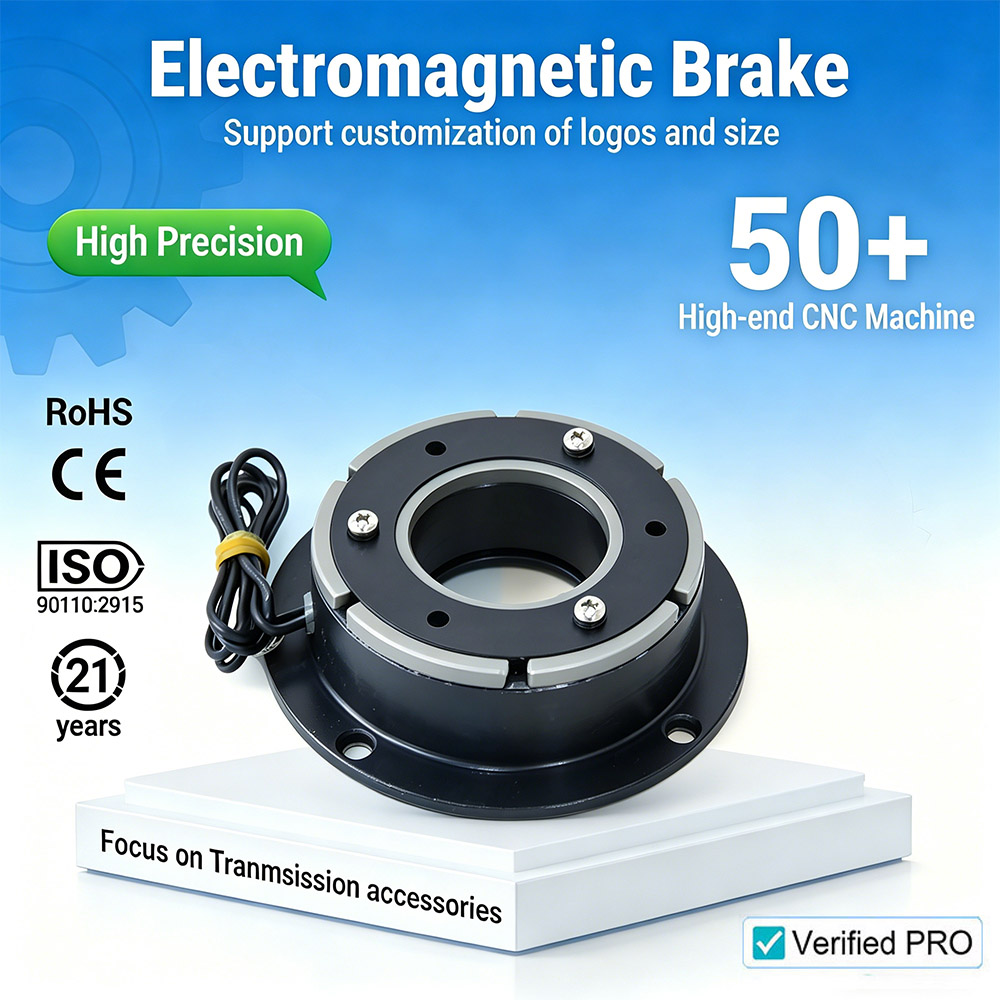
A powder brake is a sophisticated electromagnetic braking device that utilizes magnetic responsive powder to generate precise torque control and tension regulation in industrial applications. This innovative braking system operates through the unique properties of ferromagnetic particles suspended within the brake housing, which respond instantly to electromagnetic fields to create controlled resistance. The powder brake consists of several essential components including an electromagnetic coil, rotating drum, magnetic powder chamber, and heat dissipation system. When electrical current flows through the electromagnetic coil, it generates a magnetic field that causes the microscopic metal particles to align and form chains between the rotating and stationary components, creating a smooth braking force. The main functions of a powder brake encompass precise tension control during material processing, accurate speed regulation for rotating machinery, and consistent torque generation across various operational speeds. These devices excel in applications requiring continuous slip operation, where traditional friction brakes would experience excessive wear and performance degradation. The technological features of powder brakes include their ability to maintain stable torque output regardless of rotational speed, exceptional heat dissipation capabilities that prevent thermal degradation, and minimal maintenance requirements due to the absence of mechanical friction components. The magnetic powder composition ensures uniform force distribution, eliminating the jerky motion often associated with conventional braking systems. Applications for powder brakes span numerous industries including printing presses, packaging machinery, textile manufacturing, wire processing equipment, film production lines, and material handling systems. Their versatility makes them indispensable in processes requiring precise web tension control, such as label printing, plastic film extrusion, and paper converting operations. The powder brake technology delivers consistent performance in both continuous and intermittent duty cycles, making it suitable for demanding production environments where reliability and precision are paramount for maintaining product quality and operational efficiency.

Popular Products

The powder brake delivers exceptional performance advantages that directly translate into improved productivity and cost savings for manufacturing operations. First and foremost, this technology provides unparalleled precision in tension control, allowing operators to maintain exact material tension throughout production runs without manual adjustments. This precision eliminates product defects caused by inconsistent tension, reducing waste and improving overall product quality. The smooth torque characteristics of powder brakes prevent sudden jerks or fluctuations that could damage delicate materials such as thin films, foils, or specialty papers. Manufacturing facilities benefit from the extended operational lifespan of these devices, as the absence of mechanical friction components means there are no wearing brake pads or shoes requiring frequent replacement. This design translates into significantly lower maintenance costs and reduced downtime for repairs or component changes. The powder brake operates quietly compared to traditional mechanical braking systems, creating a more comfortable work environment for employees and reducing noise pollution in production facilities. Energy efficiency represents another compelling advantage, as these devices consume electrical power only when active braking force is required, unlike hydraulic systems that continuously consume energy maintaining pressure. The compact design of powder brakes allows for easy integration into existing machinery without requiring extensive modifications or additional space allocation. Their response time is remarkably fast, with torque adjustments occurring within milliseconds of control signal changes, enabling precise control even in high-speed production applications. Temperature stability ensures consistent performance across varying ambient conditions, with built-in heat dissipation mechanisms preventing performance degradation during extended operation periods. Installation simplicity means that technical staff can quickly integrate powder brakes into production lines without specialized training or complex setup procedures. The devices require minimal calibration once installed, maintaining their performance characteristics over thousands of operating hours. Operational flexibility allows a single brake model to serve multiple applications by simply adjusting the electrical input current, eliminating the need to stock various mechanical brake components for different machines. The powder brake technology proves particularly valuable in applications involving continuous slip operation, where it outperforms traditional brakes that would experience rapid wear under similar conditions. Cost-effectiveness emerges from the combination of low maintenance requirements, extended service life, and reduced material waste resulting from improved process control, making powder brakes an intelligent investment for quality-focused manufacturing operations.

Tips And Tricks

Transmission Pain Points in Printing/Textile/Chemical Machinery: How Electromagnetic Clutches Improve Equipment Stability?

08

Dec

Transmission Pain Points in Printing/Textile/Chemical Machinery: How Electromagnetic Clutches Improve Equipment Stability?

Struggling with transmission instability in printing, textile, or chemical machinery? TJ-A electromagnetic clutches eliminate slip, boost throughput 15–20%, and ensure asbestos-free safety. Discover how top global manufacturers achieve 99.8% reliability—request a spec sheet today.
View More
High-Quality Web Guide Control Systems From a Leading Domestic Manufacturer With 20 Years of Expertise

08

Dec

High-Quality Web Guide Control Systems From a Leading Domestic Manufacturer With 20 Years of Expertise

Discover high-precision web guide control systems from a trusted domestic manufacturer with 20 years of R&D expertise. Reduce waste, boost efficiency, and ensure reliability. Request a quote today.
View More
The Pain of Non-Standard Transmission in Special Working Conditions

09

Apr

The Pain of Non-Standard Transmission in Special Working Conditions

Struggling with standard transmission failures in extreme temps, dust, or tight spaces? TianJi’s 20-year R&D delivers reliable custom clutches & brakes—engineered for your exact specs. Get a free technical consultation today.
View More

Get Your Custom Quote

Tell us your requirements and get a tailored solution for your project.
Name
Mobile
Email
Please include
Message
0/1000

powder brake

Superior Torque Control Through Magnetic Powder Technology

Superior Torque Control Through Magnetic Powder Technology

The fundamental innovation behind powder brake performance lies in its unique magnetic powder technology, which revolutionizes how braking force is generated and controlled in industrial applications. Unlike conventional friction-based braking systems that rely on physical contact between solid surfaces, the powder brake employs thousands of microscopic ferromagnetic particles suspended within a sealed chamber between rotating and stationary components. When electromagnetic force is applied through the integrated coil, these particles instantly align along magnetic field lines, forming temporary chains that bridge the gap between the rotating drum and housing. This phenomenon creates a proportional braking torque that can be precisely adjusted by varying the electrical current supplied to the electromagnetic coil. The beauty of this magnetic powder mechanism is its ability to deliver perfectly smooth torque output across the entire speed range, from zero to maximum rotational velocity. Traditional brakes often exhibit torque variation with speed changes, creating control challenges in precision applications. The powder brake eliminates this limitation, maintaining consistent torque characteristics regardless of rotational speed, which proves invaluable for maintaining uniform tension in web processing applications. The magnetic particles respond instantaneously to current changes, enabling torque adjustments within milliseconds for dynamic process control. This rapid response capability allows the powder brake to compensate for sudden material property changes, roll diameter variations, or speed fluctuations that occur during production. The particle-based torque generation also distributes force evenly across the entire braking surface, preventing hot spots or localized wear that plague mechanical brake designs. Heat dissipation occurs naturally through the brake housing, with many models incorporating cooling fins or forced air systems to enhance thermal management during continuous operation. The sealed powder chamber protects the magnetic particles from contamination, moisture, and environmental factors that could compromise performance, ensuring long-term reliability in challenging industrial environments. Maintenance requirements remain minimal because the powder does not deteriorate with use like friction materials, and the absence of mechanical wear means no periodic adjustments or replacements are necessary. This magnetic powder technology represents a paradigm shift in braking control, offering manufacturers a reliable, precise, and maintenance-friendly solution for demanding tension control and torque regulation applications.
Maintenance-Free Operation With Extended Service Life

Maintenance-Free Operation With Extended Service Life

One of the most compelling advantages of powder brake technology is its virtually maintenance-free operation, which dramatically reduces total cost of ownership while maximizing equipment uptime. Traditional mechanical braking systems require regular inspection, adjustment, and replacement of friction components such as brake pads, shoes, or bands that wear progressively during operation. These maintenance activities consume valuable production time, require skilled technicians, and involve ongoing parts expenses that accumulate significantly over the equipment lifespan. The powder brake eliminates these concerns through its innovative non-contact torque generation mechanism, where magnetic particles create braking force without physical friction between solid surfaces. This fundamental design difference means there are no wearing components that gradually degrade and require periodic replacement. The magnetic powder itself maintains its properties indefinitely under normal operating conditions, providing consistent performance year after year without deterioration. Sealed bearing assemblies supporting the rotating drum represent the only components with finite service life, and these typically operate maintenance-free for tens of thousands of hours before requiring attention. The electromagnetic coil, constructed with high-temperature wire and robust insulation materials, continues functioning reliably throughout the brake's operational life without degradation or performance loss. This maintenance-free characteristic translates directly into reduced operational expenses, as facilities eliminate recurring costs for replacement brake components, technician labor, and production downtime associated with brake service. Manufacturing operations benefit from increased equipment availability, as machines equipped with powder brakes continue running without interruption for scheduled brake maintenance that would be necessary with conventional systems. The predictability of powder brake performance over time simplifies production planning, as operators need not account for gradual performance degradation or schedule preventive maintenance intervals. Quality consistency improves because the brake maintains identical torque characteristics from installation through years of service, eliminating variations that occur as mechanical brake components wear. Environmental benefits emerge from the elimination of friction material dust and the disposal requirements for worn brake components, contributing to cleaner production facilities and reduced environmental impact. The extended service life of powder brakes also supports sustainability initiatives by reducing material consumption and waste generation associated with replacement parts. For facilities operating multiple production lines, the cumulative benefits of maintenance-free powder brake operation become substantial, freeing maintenance resources for other critical equipment needs while ensuring consistent performance across all installations.
Versatile Application Range For Diverse Industrial Processes

Versatile Application Range For Diverse Industrial Processes

The powder brake demonstrates remarkable versatility across an extensive range of industrial applications, making it an ideal solution for manufacturers operating diverse production processes or seeking standardized components across multiple machine types. This adaptability stems from the brake's ability to provide precise torque control at any speed, including zero-speed operation and continuous slip conditions that would quickly destroy conventional friction brakes. Printing operations represent a primary application area where powder brakes excel, controlling web tension in flexographic, gravure, and offset printing presses to ensure accurate registration and prevent material damage. The smooth torque characteristics prevent the tension fluctuations that cause print defects, while the precise control enables operators to work with delicate substrates without tearing or stretching. Packaging machinery relies on powder brakes to maintain consistent tension during film unwinding, foil lamination, and label application processes, where material consistency directly impacts package integrity and appearance. Textile manufacturing operations employ powder brakes throughout production lines, from fiber spinning and yarn winding to fabric coating and finishing processes where precise tension control determines final product quality. Wire and cable production facilities utilize these devices to control payoff tension during stranding, insulation application, and spooling operations, preventing wire breaks and ensuring uniform product dimensions. Converting operations for paper, film, and foil products depend on powder brakes to maintain web tension during slitting, rewinding, and laminating processes where tension variations would compromise product quality or cause production stops. The food processing industry employs powder brakes in packaging lines, wrapping machines, and conveyor systems where sanitary design and reliable operation are essential. Pharmaceutical manufacturing operations integrate powder brakes into blister packaging equipment, label applicators, and material handling systems where precision and cleanliness requirements are stringent. The adaptability of powder brakes extends to custom machinery applications where unique tension control requirements exist, as the devices can be configured with various torque ratings, mounting configurations, and control interfaces to suit specific needs. This versatility eliminates the need to stock multiple brake types for different applications, simplifying spare parts inventory and reducing procurement complexity. Maintenance staff benefit from working with standardized components across diverse equipment, reducing training requirements and improving troubleshooting efficiency. The powder brake technology scales effectively from small desktop machines to large industrial production lines, with models available spanning torque ranges from fractional to hundreds of Newton-meters to accommodate virtually any application requirement.
email goToTop