
 EN
EN
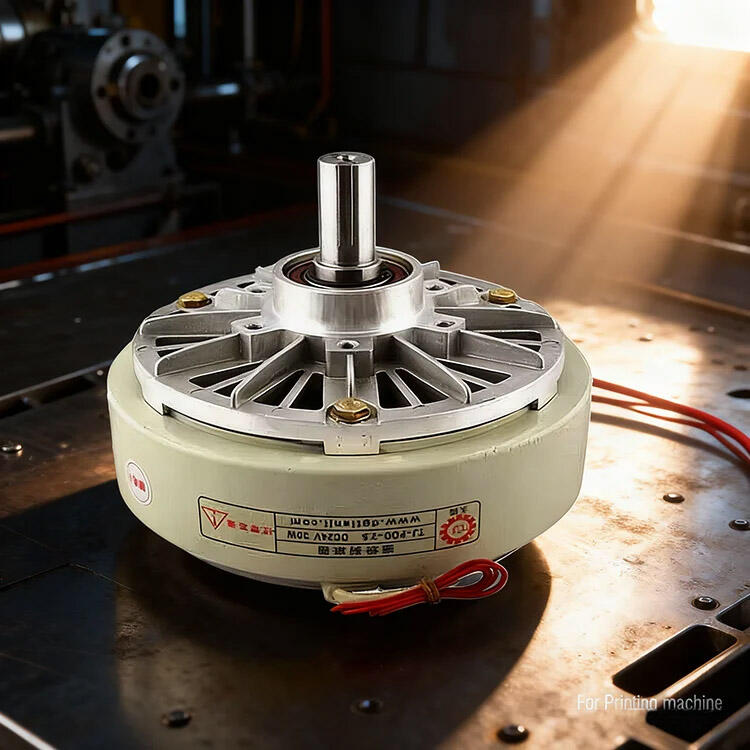
Controlling current output with precision is one of the most critical factors in getting the best performance from a magnetic powder brake. A magnetic powder brake relies on a magnetized iron powder medium to transmit torque between its rotor and stator, and the amount of torque it generates is directly proportional to the excitation current supplied to its coil. When that current is poorly managed, tension becomes unstable, heat builds up unnecessarily, and the working life of the magnetic powder brake shortens considerably. Optimizing current control is therefore not just a performance preference — it is an operational necessity for any serious industrial application.
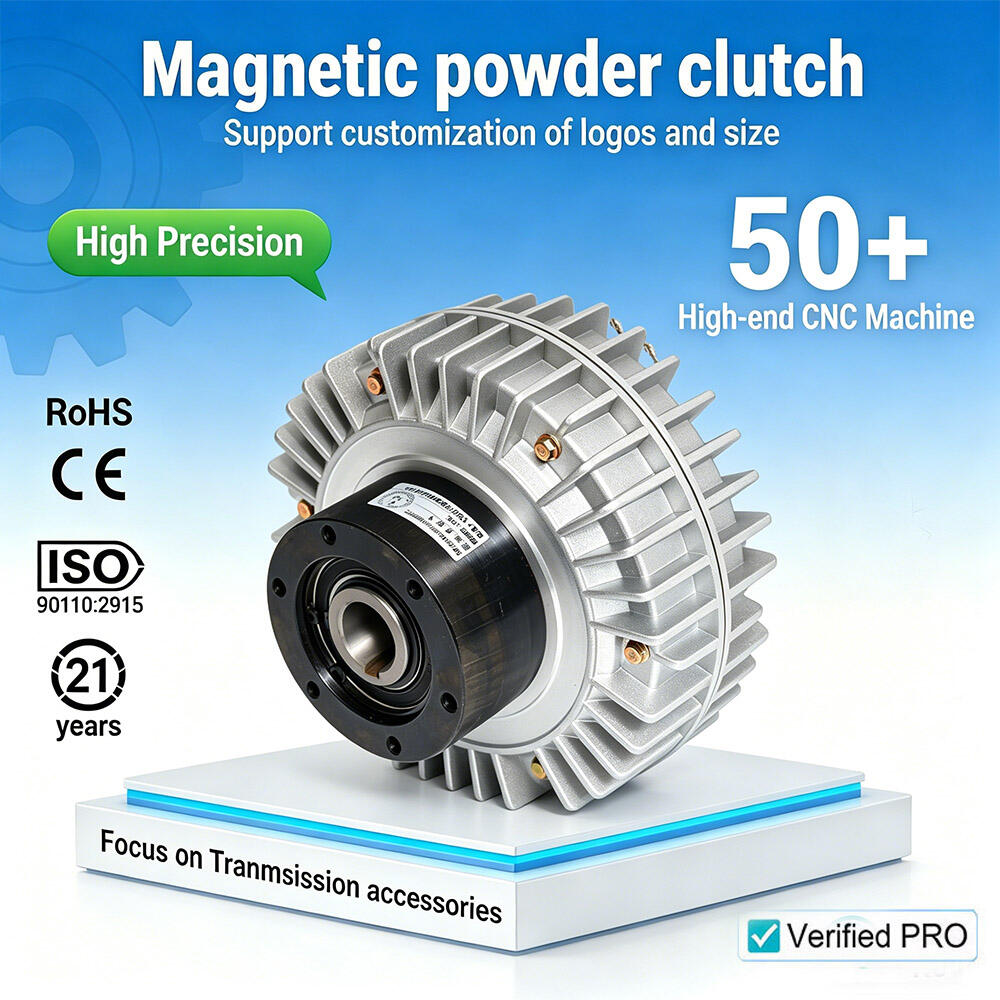
Industries that depend on precise web tension — such as printing, packaging, wire drawing, and textile manufacturing — place enormous demands on how a magnetic powder brake responds to current changes. Whether running a single-axis or dual-axis setup, the ability to fine-tune current delivery determines whether tension remains consistent across the full operating cycle. This article explores the key principles, practical strategies, and common pitfalls involved in optimizing magnetic powder brake current control so that engineers and line operators can make informed decisions.
How Current Controls Torque in a Magnetic Powder Brake
The Electromagnetic Mechanism
Inside every magnetic powder brake, a coil generates a magnetic field when supplied with DC current. This field causes iron powder particles suspended within the gap between the rotor and stator to form chains, creating friction that resists rotation. The stronger the current, the more tightly those chains form, and the higher the braking torque. Because this relationship between current and torque is nearly linear across the working range, the magnetic powder brake offers a level of torque controllability that mechanical brakes simply cannot match. This linearity is the foundation of all current optimization strategies.
Current-to-Torque Linearity and Its Limits
While the magnetic powder brake exhibits good linearity over most of its operating range, the relationship is not perfectly linear at the extremes. At very low current levels, residual magnetism can cause a minimum holding torque even when no signal is applied. At high current levels, the iron powder becomes magnetically saturated, and further current increases yield diminishing torque gains while significantly increasing heat generation. Operators must therefore identify the effective linear operating band of each magnetic powder brake unit and constrain current control within that range to maintain accuracy and efficiency.
Key Strategies for Optimizing Current Control
Using a Dedicated Tension Controller
A dedicated tension controller paired with a magnetic powder brake is the most reliable way to achieve stable, repeatable current output. These controllers accept feedback signals from load cells or dancer arms and automatically adjust the excitation current to maintain a preset tension target. Rather than relying on manually set potentiometers, a closed-loop tension controller compensates in real time for roll diameter changes, speed variations, and material inconsistencies. For a 24V magnetic powder brake operating within a 25–40 kg tension range, choosing a controller with matching voltage and current output specifications is essential for consistent performance.
The tension controller should also feature a smooth ramping function to prevent abrupt current steps that could cause material breakage or mechanical shock. When a magnetic powder brake receives a sudden surge of current, the instantaneous torque spike can damage delicate substrates like thin film or fine wire. A soft-start current profile ensures that braking torque builds gradually, protecting both the material and the magnetic powder brake components from unnecessary stress.
Calibrating the Current Output Range
Calibration is a step that many operators skip but that directly affects how well a magnetic powder brake tracks its target tension. The calibration process involves mapping the controller output current to the actual torque or tension reading measured at the web. Without calibration, the magnetic powder brake may consistently over-brake or under-brake even when the controller signal appears correct. A properly calibrated magnetic powder brake system allows operators to set tension values with confidence, knowing that the current delivered corresponds accurately to the force applied at the material interface.
During calibration, engineers should also check for hysteresis effects. Because iron powder can retain partial magnetization, a magnetic powder brake may exhibit slightly different torque values when current is increasing versus decreasing. Accounting for this hysteresis during calibration improves bidirectional accuracy and makes the magnetic powder brake more predictable during acceleration and deceleration phases.
Managing Heat and Long-Term Current Stability
Thermal Effects on Current Performance
Heat is the primary enemy of stable current control in a magnetic powder brake. As the coil heats up during extended operation, its electrical resistance increases, which reduces the current flowing through it at a fixed voltage. This means the magnetic powder brake will gradually produce less torque over time unless the controller compensates for the resistance drift. High-quality tension controllers include temperature compensation circuits that detect this resistance change and adjust voltage output to maintain a constant current level. Without this feature, operators may notice that tension drifts lower as the production run continues, leading to loose material and defective product.
Duty Cycle and Cooling Practices
Every magnetic powder brake has a rated duty cycle that defines how long it can operate at full current before requiring a cooling period. Exceeding this duty cycle not only degrades torque consistency but can permanently damage the iron powder medium, requiring a full refill or unit replacement. Optimizing current control also means managing the operating duty cycle intelligently. For continuous-running applications, selecting a magnetic powder brake with an appropriate thermal rating and providing adequate airflow around the housing helps sustain current-to-torque accuracy over long production shifts. In some setups, forced-air cooling or water-cooled housings are used to extend the effective duty cycle of the magnetic powder brake without compromising current control stability.
FAQ
What happens if the current to a magnetic powder brake is too high?
Supplying excessive current to a magnetic powder brake pushes the iron powder into magnetic saturation, producing minimal additional torque while generating significant heat. This accelerates wear on the powder medium and the coil, shortens the service life of the magnetic powder brake, and can lead to thermal shutdown or permanent damage. Always operate within the specified current range.
Can a magnetic powder brake work without a dedicated tension controller?
A magnetic powder brake can operate with a simple manual current source, but tension accuracy will be limited. Without feedback-based current adjustment, operators must manually compensate for roll diameter changes and speed variations. A dedicated tension controller dramatically improves the stability and repeatability of the magnetic powder brake, making it the strongly recommended choice for production environments.
How often should a magnetic powder brake be recalibrated?
The recalibration frequency for a magnetic powder brake depends on production volume and operating conditions. As a general guideline, recalibration should be performed whenever the iron powder is replenished, after any significant changes to the tension controller settings, or if tension drift becomes noticeable during production. Regular recalibration keeps the magnetic powder brake performing within its optimal current-to-torque range.

