Magnetic Particle Brakes: Precision Torque Control Solutions for Industrial Applications

All Categories

magnetic particle brakes

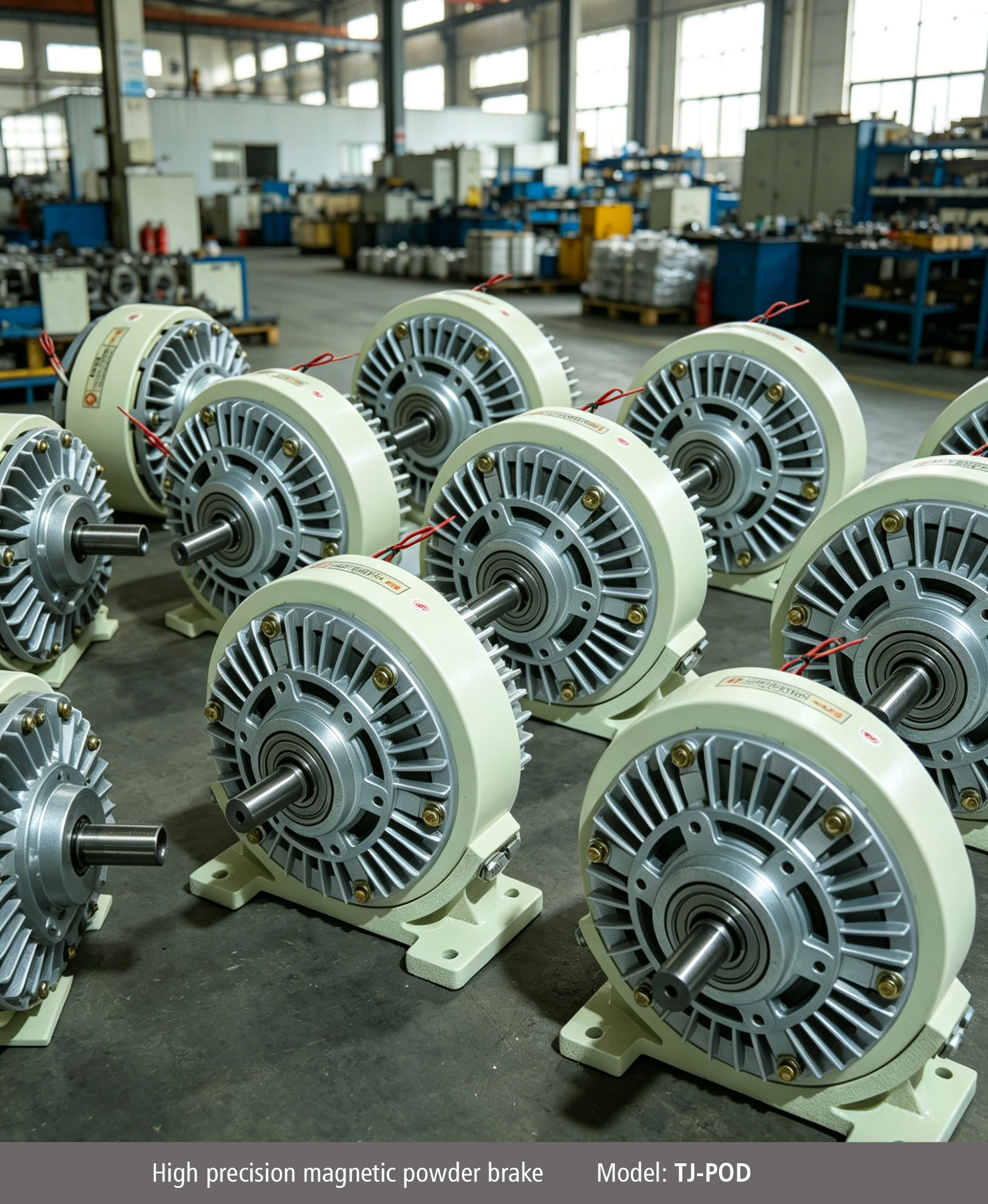
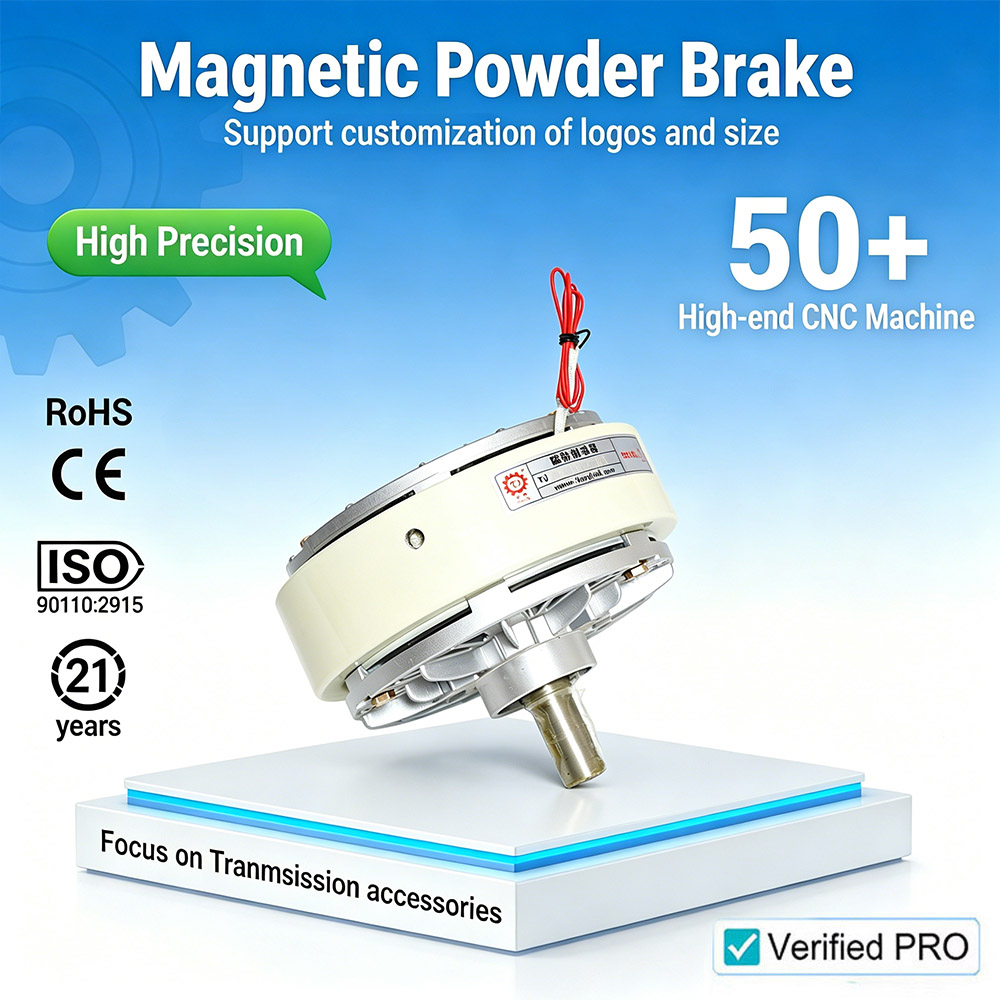
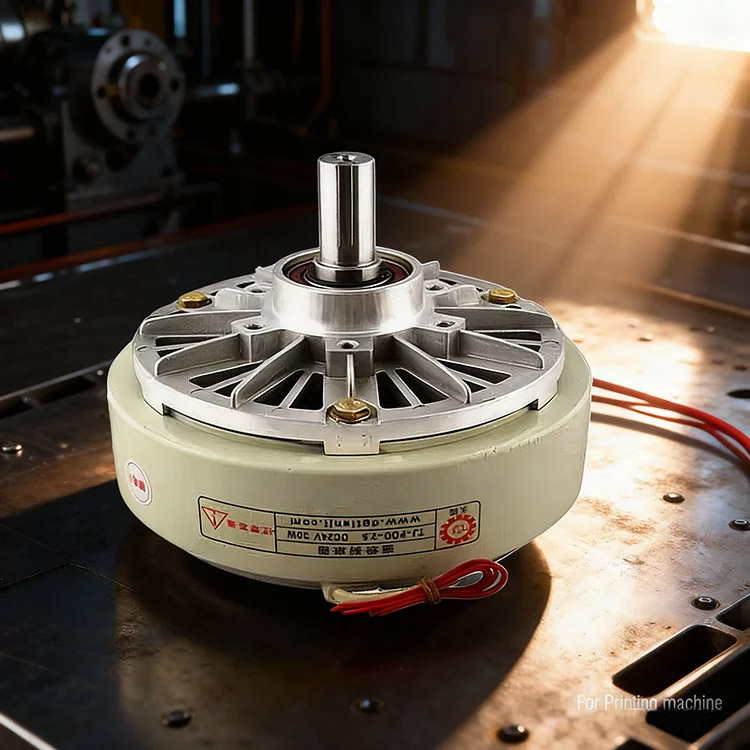
Magnetic particle brakes represent a sophisticated braking technology that utilizes magnetic fields and fine metallic particles to create precise, controllable resistance. These devices operate on the principle of magnetorheological effect, where iron particles suspended in a carrier fluid or dry powder form solidify when exposed to a magnetic field, creating adjustable braking torque. The primary function of magnetic particle brakes centers on delivering smooth, stepless torque control across a wide operational range, making them indispensable in applications requiring tension control, load simulation, and precision deceleration. The technological architecture features an electromagnetic coil that generates a magnetic field when electrical current passes through it, causing the magnetic particles within the working gap to form chain-like structures that transmit torque between input and output components. This unique mechanism enables operators to achieve linear torque output proportional to the applied current, offering exceptional controllability that mechanical friction brakes cannot match. The operational characteristics include rapid response times, typically within milliseconds, silent operation due to the absence of mechanical contact between rotating parts, and the ability to maintain consistent performance across varying speeds. Modern magnetic particle brakes incorporate advanced thermal management systems, precision-engineered particle chambers, and durable housing materials that ensure longevity even under demanding operational conditions. Applications span diverse industries including packaging machinery where consistent web tension proves critical, dynamometer testing equipment requiring accurate load simulation, wire processing systems demanding precise material control, and printing presses where registration accuracy depends on reliable tension management. The technology particularly excels in automated production environments where programmable control interfaces seamlessly with industrial control systems, enabling integration into sophisticated manufacturing processes that demand reproducible performance and minimal maintenance intervention.

New Product Recommendations

The practical benefits of magnetic particle brakes deliver substantial value to operations seeking reliable torque control solutions without the complications inherent in traditional braking systems. First and foremost, these devices provide exceptionally smooth torque transmission that eliminates the jerking or grabbing behavior common with friction-based alternatives, translating directly into improved product quality for manufacturers processing delicate materials or maintaining critical tension parameters. The stepless adjustment capability allows operators to dial in precisely the right amount of resistance for each application, accommodating product variations without time-consuming mechanical adjustments or component replacements. This flexibility reduces downtime and enhances productivity, particularly valuable in environments running multiple product specifications throughout production shifts. The operational longevity of magnetic particle brakes surpasses conventional systems because there are no friction surfaces wearing against each other during normal operation, which means fewer replacement parts, reduced maintenance schedules, and lower total cost of ownership over the equipment lifecycle. Users appreciate the predictable performance characteristics that remain consistent throughout the service life, eliminating the gradual degradation typical of mechanical brake pads or clutches that require frequent monitoring and adjustment. The heat dissipation design incorporated into quality magnetic particle brakes enables continuous duty cycles without performance deterioration, supporting non-stop production schedules that maximize return on capital investment. Installation proves straightforward with standard mounting configurations and electrical connections that technicians familiar with industrial equipment can complete quickly, minimizing commissioning time for new machinery or retrofit applications. The electrical control interface simplifies integration with programmable logic controllers, motion controllers, and industrial networks, enabling sophisticated automation strategies including closed-loop tension control, torque profiling, and remote diagnostics. Operational safety benefits include the inherent fail-safe characteristic where power loss results in zero braking torque, preventing damage to materials or machinery during electrical interruptions. The silent operation contributes to improved workplace environments, reducing noise pollution that affects worker comfort and communication effectiveness. Energy efficiency represents another practical advantage, as these devices consume power only proportional to the required torque output, with idle states drawing minimal current compared to systems requiring continuous power for standby operation. The compact footprint of magnetic particle brakes allows machinery designers to optimize space utilization, particularly valuable in applications where mounting area comes at a premium or retrofit situations demand compatibility with existing equipment layouts. Temperature stability across operational ranges ensures consistent performance in both climate-controlled facilities and industrial environments subject to seasonal variations, eliminating performance unpredictability that complicates process control.

Tips And Tricks

Transmission Pain Points in Printing/Textile/Chemical Machinery: How Electromagnetic Clutches Improve Equipment Stability?

08

Dec

Transmission Pain Points in Printing/Textile/Chemical Machinery: How Electromagnetic Clutches Improve Equipment Stability?

Struggling with transmission instability in printing, textile, or chemical machinery? TJ-A electromagnetic clutches eliminate slip, boost throughput 15–20%, and ensure asbestos-free safety. Discover how top global manufacturers achieve 99.8% reliability—request a spec sheet today.
View More
High-Quality Web Guide Control Systems From a Leading Domestic Manufacturer With 20 Years of Expertise

08

Dec

High-Quality Web Guide Control Systems From a Leading Domestic Manufacturer With 20 Years of Expertise

Discover high-precision web guide control systems from a trusted domestic manufacturer with 20 years of R&D expertise. Reduce waste, boost efficiency, and ensure reliability. Request a quote today.
View More
The Pain of Non-Standard Transmission in Special Working Conditions

09

Apr

The Pain of Non-Standard Transmission in Special Working Conditions

Struggling with standard transmission failures in extreme temps, dust, or tight spaces? TianJi’s 20-year R&D delivers reliable custom clutches & brakes—engineered for your exact specs. Get a free technical consultation today.
View More

Get Your Custom Quote

Tell us your requirements and get a tailored solution for your project.
Name
Mobile
Email
Please include
Message
0/1000

magnetic particle brakes

Precision Torque Control with Linear Response Characteristics

Precision Torque Control with Linear Response Characteristics

The defining advantage of magnetic particle brakes lies in their ability to deliver precision torque control with perfectly linear response characteristics across the entire operational range. Unlike mechanical friction systems that exhibit non-linear torque curves and unpredictable engagement behavior, magnetic particle technology responds proportionally to input current with mathematical precision. This linear relationship between electrical input and mechanical output torque enables engineers to implement sophisticated control algorithms that achieve tension regulation accuracy within fractions of a percent, critical for applications processing thin films, delicate fabrics, or precision wire products where material properties depend on maintaining exact tension parameters. The physical mechanism underlying this precision involves magnetic field strength directly correlating to particle chain formation density within the working gap, creating a predictable, repeatable relationship that remains stable across temperature variations and throughout the service life. Operators benefit from simplified control system programming because the linear response eliminates the need for complex compensation curves or lookup tables required by non-linear systems, reducing commissioning time and simplifying troubleshooting procedures. The repeatability characteristics prove particularly valuable in quality-critical applications where consistency between production runs determines product acceptance, as the magnetic particle brake delivers identical performance for identical input signals regardless of environmental factors or operational history. The resolution of torque adjustment extends to very fine increments, allowing process engineers to optimize parameters with precision that reveals performance improvements invisible to coarser control systems. This granular control capability supports continuous improvement initiatives by enabling systematic experimentation with process parameters to identify optimal operating points. The dynamic response speed complements the precision characteristics, with torque changes occurring within milliseconds of command signals, fast enough to compensate for disturbances before they propagate through the production process and affect product quality. This rapid response enables closed-loop control systems to maintain setpoints despite variations in material properties, speed changes, or external load fluctuations that challenge open-loop systems. The combination of precision, linearity, and speed creates control performance that elevates overall system capabilities, allowing machinery to achieve tighter specifications, higher speeds, and greater product consistency than possible with alternative braking technologies.
Extended Service Life with Minimal Maintenance Requirements

Extended Service Life with Minimal Maintenance Requirements

Operational reliability and maintenance efficiency stand as compelling advantages that distinguish magnetic particle brakes from conventional mechanical braking systems, delivering substantial lifecycle cost benefits to industrial operations. The fundamental design principle eliminates direct mechanical contact between rotating components during torque transmission, as the magnetic particles themselves form the coupling medium without metal-to-metal friction. This non-contact operation means wear mechanisms that plague friction brakes simply do not exist in magnetic particle systems, extending service intervals from hundreds of hours to thousands of operational hours without performance degradation. Manufacturing facilities benefit from reduced maintenance labor requirements, as technicians spend less time inspecting, adjusting, and replacing brake components, freeing personnel for value-adding activities rather than routine maintenance tasks. The predictable performance characteristics throughout the service life eliminate the gradual torque decay typical of wearing friction surfaces, maintaining process consistency from installation through end of service without compensating adjustments to control parameters. This stability proves particularly valuable in regulated industries where process validation requires demonstrating consistent equipment performance over extended periods. The sealed construction of quality magnetic particle brakes protects internal components from environmental contamination including dust, moisture, and airborne particles that accelerate wear in exposed mechanical systems, further enhancing durability in challenging industrial environments. The absence of consumable friction materials eliminates inventory requirements for replacement pads, discs, or linings, simplifying spare parts management and reducing carrying costs for maintenance supplies. When service eventually becomes necessary, the modular design of professional magnetic particle brakes facilitates component replacement with straightforward procedures that minimize equipment downtime, often accomplished during scheduled maintenance windows without disrupting production schedules. The thermal design incorporating efficient heat dissipation paths prevents localized overheating that degrades organic materials and accelerates component aging in mechanical systems, maintaining internal temperatures within ranges that preserve magnetic particle properties and electrical insulation integrity throughout extended operational periods. The electrical nature of control eliminates mechanical linkages, cables, and adjustment mechanisms subject to loosening, misalignment, and wear, reducing potential failure points and enhancing overall system reliability. Predictive maintenance strategies benefit from the electrical characteristics that enable monitoring of operating current as a diagnostic indicator, allowing maintenance teams to trend performance and schedule service based on actual condition rather than arbitrary time intervals.
Versatile Integration Capabilities for Modern Automation Systems

Versatile Integration Capabilities for Modern Automation Systems

The exceptional integration flexibility of magnetic particle brakes positions them as ideal components for contemporary automated manufacturing systems requiring sophisticated motion control and process regulation. The electrical control interface accepts standard industrial signals including analog voltage or current inputs, pulse-width modulation, and digital communication protocols, enabling seamless connectivity with programmable logic controllers, distributed control systems, and specialized motion controllers prevalent in modern factories. This compatibility eliminates the need for specialized interface hardware or signal conditioning equipment, reducing system complexity and installation costs while accelerating commissioning timelines. The proportional control characteristic supports implementation of advanced regulation strategies including cascaded control loops, feedforward compensation, and adaptive algorithms that optimize performance based on real-time process conditions, capabilities impossible with simple on-off mechanical systems. Remote control and monitoring capabilities integrate naturally with industrial Internet of Things architectures, allowing operators to adjust parameters, observe performance metrics, and receive diagnostic information from centralized control rooms or mobile devices, enhancing operational flexibility and enabling rapid response to process variations. The compact mechanical envelope and flexible mounting options accommodate integration into space-constrained machinery designs, with shaft configurations, flange patterns, and mounting dimensions standardized to facilitate interchangeability and simplify mechanical design tasks. The operational characteristics including bidirectional torque capability, zero-backlash engagement, and speed-independent torque output eliminate mechanical complications that constrain machine design, allowing engineers to optimize overall system architecture without compromising functionality to accommodate braking system limitations. The electrical power requirements align with standard industrial power supplies, typically operating on common voltage levels without specialized power conditioning equipment, simplifying electrical design and reducing component costs. The response bandwidth extending to hundreds of hertz enables participation in dynamic control systems responding to rapid process changes, supporting applications including cyclic tension variation, programmed torque profiling, and disturbance rejection that demand fast, precise torque modulation. The inherent isolation between control circuits and mechanical power transmission enhances electrical safety and simplifies compliance with machinery safety standards, as low-voltage control signals remain separated from rotating mechanical components. The scalability of magnetic particle brake technology across a wide torque range allows system designers to standardize on a single technology platform across multiple machine models, simplifying engineering procedures, reducing spare parts inventory diversity, and leveraging accumulated application expertise across product lines.
email goToTop