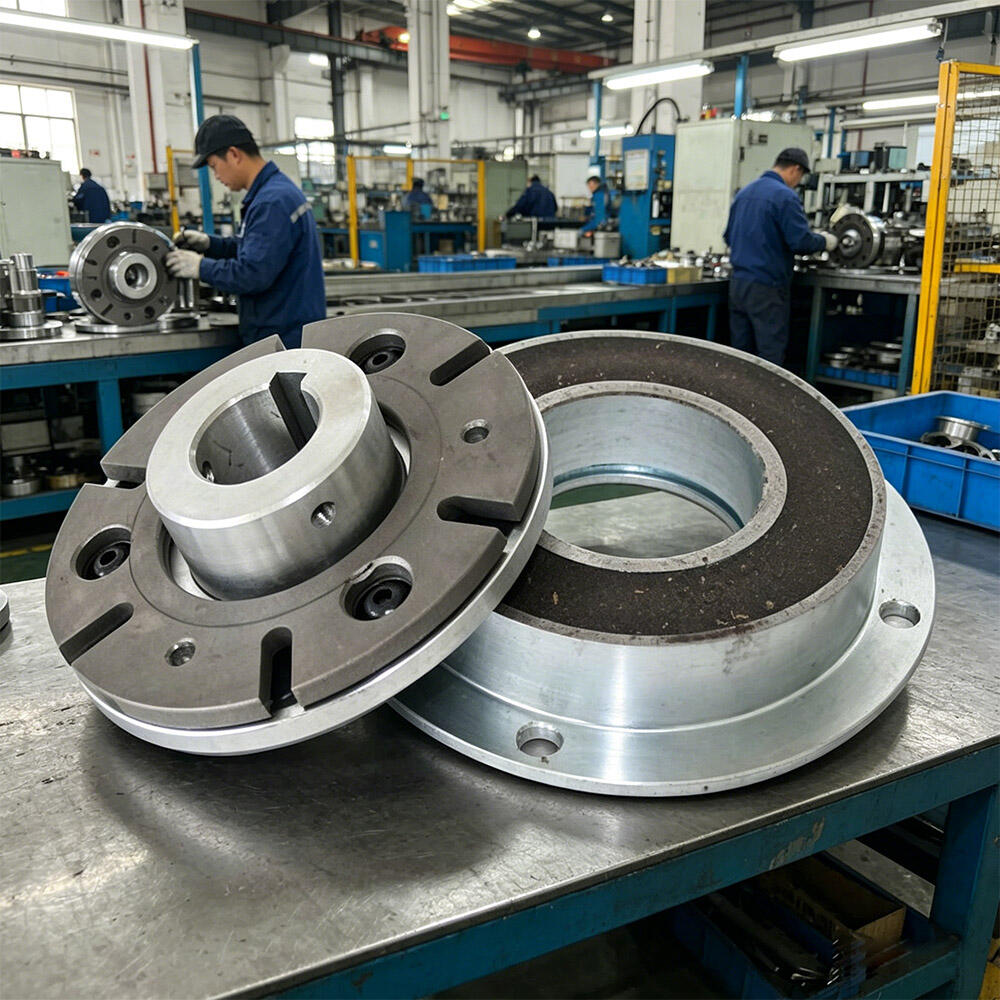
Electromagnetic Clutches and Brakes - High-Performance Power Transmission Solutions

All Categories

electromagnetic clutches and brakes

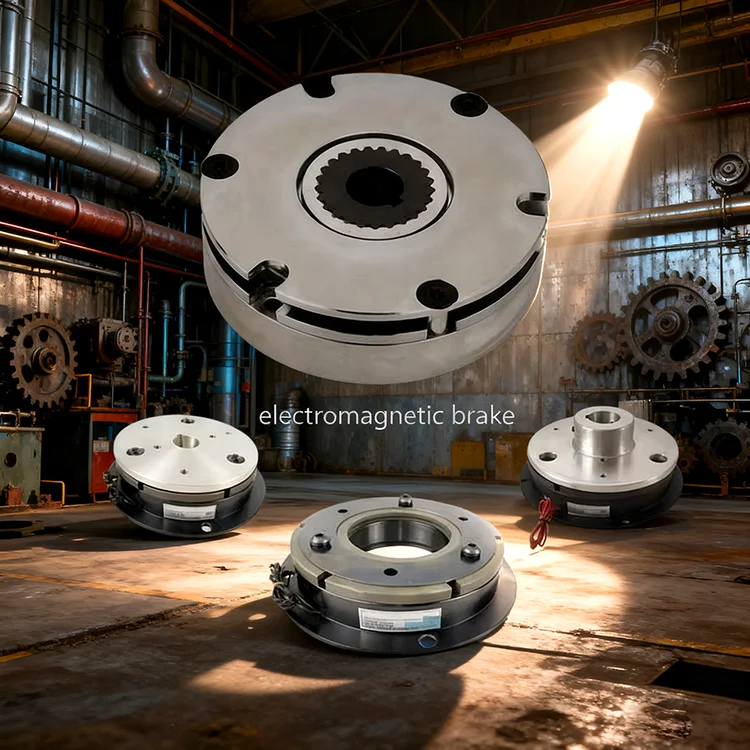
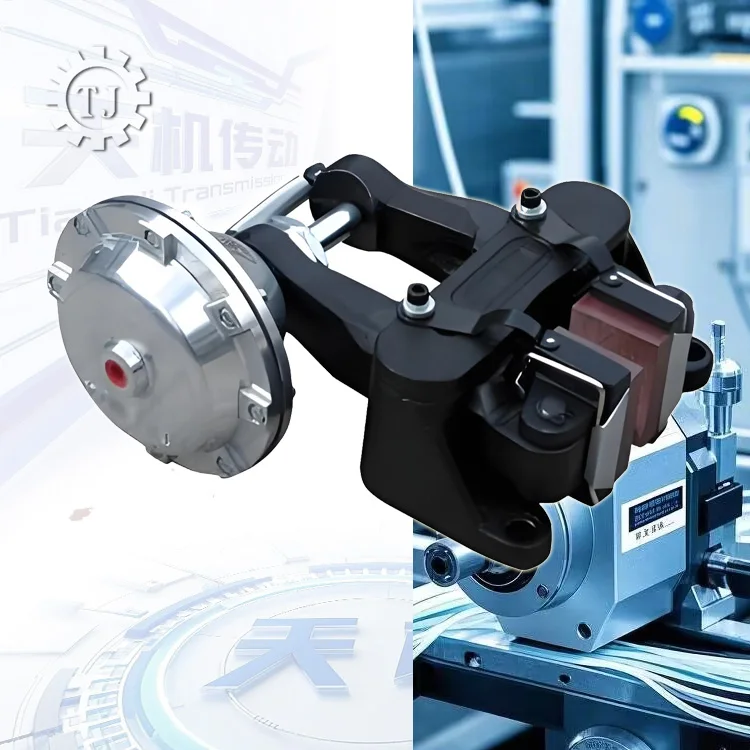
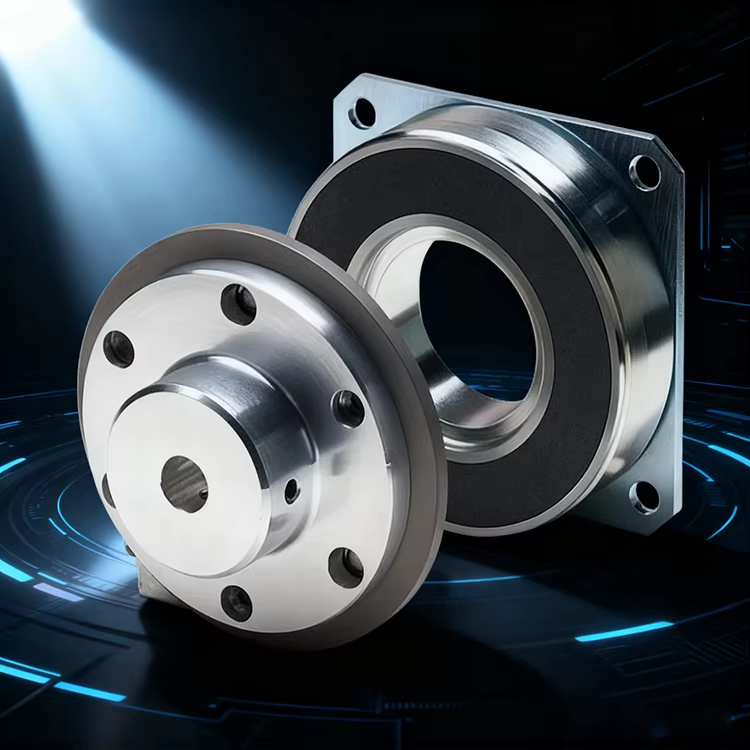
Electromagnetic clutches and brakes represent essential power transmission components that utilize electromagnetic force to control mechanical motion in industrial machinery and equipment. These devices operate on the fundamental principle of electromagnetic induction, where an electric current passing through a coil generates a magnetic field that either engages or disengages mechanical components. The main functions of electromagnetic clutches and brakes include starting and stopping rotational motion, controlling torque transmission, protecting equipment from overload conditions, and enabling precise speed regulation in various mechanical systems. Technological features of these components encompass rapid response times typically measured in milliseconds, excellent repeatability for consistent performance, smooth engagement without mechanical shock, and the ability to handle high-frequency cycling operations. Modern electromagnetic clutches and brakes incorporate advanced materials such as heat-resistant friction surfaces, precision-machined armature plates, and high-grade electrical coils that ensure reliable operation under demanding conditions. Applications span numerous industries including packaging machinery where precise stopping and starting capabilities enhance production efficiency, printing presses that require synchronized motion control, industrial automation systems demanding accurate positioning, material handling equipment needing reliable braking functions, and textile machinery requiring smooth torque transmission. In manufacturing environments, electromagnetic clutches and brakes serve critical roles in metal forming presses, woodworking equipment, food processing lines, and pharmaceutical production machinery. The versatility of these components extends to mobile equipment such as agricultural machinery, construction vehicles, and marine applications where dependable engagement and disengagement prove vital for operational safety and productivity. Their compact design allows integration into space-constrained installations while maintaining robust performance characteristics that meet rigorous industrial standards for durability and longevity.

Popular Products

Electromagnetic clutches and brakes deliver substantial practical benefits that directly impact your operational efficiency and bottom line. First, these devices provide instant engagement and disengagement, allowing you to start and stop machinery within milliseconds, which significantly improves production cycle times and throughput. This rapid response capability means your equipment spends less time in transition states and more time performing productive work. Second, you gain precise control over power transmission, enabling smooth acceleration and deceleration that protects your machinery from damaging shock loads and extends component lifespan. This controlled motion reduces maintenance costs and minimizes unexpected downtime that disrupts production schedules. Third, the absence of mechanical linkages in electromagnetic systems eliminates wear-prone components such as springs, levers, and mechanical actuators, resulting in longer service intervals and reduced maintenance expenses. You will appreciate the simplified maintenance procedures that require minimal technician training and less specialized tooling. Fourth, electromagnetic clutches and brakes operate quietly compared to mechanical alternatives, creating a more comfortable working environment that complies with noise regulations and improves employee satisfaction. Fifth, these devices consume electrical power only during engagement or disengagement operations, making them energy-efficient solutions that lower your operating costs while supporting sustainability initiatives. Sixth, the compact footprint of electromagnetic clutches and brakes allows flexible mounting options and easier integration into existing machinery without extensive modifications. Seventh, you benefit from consistent performance across millions of operating cycles, ensuring predictable equipment behavior that simplifies production planning and quality control processes. Eighth, these components handle overload conditions gracefully by slipping rather than breaking, providing inherent protection for your expensive machinery and preventing catastrophic failures. Ninth, electromagnetic systems offer remote control capabilities, allowing you to position actuating switches in convenient locations that enhance operator safety and ergonomics. Tenth, the simple electrical interface integrates seamlessly with modern programmable controllers and automation systems, enabling sophisticated motion control strategies that optimize your production processes. Finally, electromagnetic clutches and brakes require no adjustment throughout their service life, eliminating the need for periodic calibration and ensuring consistent performance from installation through retirement.

Tips And Tricks

Transmission Pain Points in Printing/Textile/Chemical Machinery: How Electromagnetic Clutches Improve Equipment Stability?

08

Dec

Transmission Pain Points in Printing/Textile/Chemical Machinery: How Electromagnetic Clutches Improve Equipment Stability?

Struggling with transmission instability in printing, textile, or chemical machinery? TJ-A electromagnetic clutches eliminate slip, boost throughput 15–20%, and ensure asbestos-free safety. Discover how top global manufacturers achieve 99.8% reliability—request a spec sheet today.
View More
High-Quality Web Guide Control Systems From a Leading Domestic Manufacturer With 20 Years of Expertise

08

Dec

High-Quality Web Guide Control Systems From a Leading Domestic Manufacturer With 20 Years of Expertise

Discover high-precision web guide control systems from a trusted domestic manufacturer with 20 years of R&D expertise. Reduce waste, boost efficiency, and ensure reliability. Request a quote today.
View More
The Pain of Non-Standard Transmission in Special Working Conditions

09

Apr

The Pain of Non-Standard Transmission in Special Working Conditions

Struggling with standard transmission failures in extreme temps, dust, or tight spaces? TianJi’s 20-year R&D delivers reliable custom clutches & brakes—engineered for your exact specs. Get a free technical consultation today.
View More

Get Your Custom Quote

Tell us your requirements and get a tailored solution for your project.
Name
Mobile
Email
Please include
Message
0/1000

electromagnetic clutches and brakes

Superior Response Time and Precision Control

Superior Response Time and Precision Control

The exceptional response characteristics of electromagnetic clutches and brakes stand as a cornerstone benefit for manufacturers seeking to optimize production efficiency and product quality. When you activate an electromagnetic clutch or brake, the magnetic field builds within 20 to 100 milliseconds depending on the model, achieving full engagement almost instantaneously from an operational perspective. This lightning-fast response time proves invaluable in applications requiring frequent starts and stops, such as packaging lines where products must be positioned with millimeter accuracy before processing steps occur. The speed advantage translates directly into higher production rates because machinery spends minimal time transitioning between operational states. Beyond raw speed, electromagnetic clutches and brakes deliver remarkable precision in controlling engagement force, allowing you to fine-tune torque transmission according to specific application requirements. This precision prevents damage to delicate materials during handling operations and ensures consistent product quality by eliminating variations in processing force. In printing applications, for example, precise engagement control maintains perfect registration between color stations, preventing costly waste from misaligned prints. The repeatability of electromagnetic systems ensures that performance remains consistent across millions of cycles, with engagement characteristics varying less than two percent under normal operating conditions. This consistency eliminates the drift and degradation common in mechanical systems where springs weaken, linkages wear, and adjustment points shift over time. You can program production sequences with confidence knowing that the electromagnetic clutch or brake will perform identically on the first cycle and the millionth cycle. Furthermore, the smooth engagement profile of electromagnetic systems reduces mechanical stress on connected components including shafts, bearings, and gearboxes. Unlike mechanical clutches that can produce jarring impacts during engagement, electromagnetic units gradually build magnetic force, allowing components to accelerate smoothly without shock loads. This gentle treatment extends the service life of your entire mechanical system, reducing replacement part costs and minimizing unexpected failures that disrupt production. The precision control capabilities also enable advanced motion profiles such as soft-start sequences that bring heavy loads up to speed gradually, preventing electrical overloads and mechanical damage while reducing peak power demands on your facility electrical system.
Minimal Maintenance Requirements and Extended Service Life

Minimal Maintenance Requirements and Extended Service Life

Electromagnetic clutches and brakes revolutionize maintenance practices by virtually eliminating routine service requirements that consume valuable technician time and production capacity. Traditional mechanical clutches demand regular adjustment to compensate for friction material wear, spring relaxation, and linkage play that develops during normal operation. These adjustment procedures require skilled technicians, specialized gauges, and machine downtime that collectively impose significant costs on your operation. Electromagnetic systems eliminate these burdens through their inherent design characteristics that remain stable throughout the service life. The friction surfaces in electromagnetic clutches and brakes wear at extremely slow rates because engagement occurs under controlled magnetic force rather than through mechanical leverage that can create excessive pressure points. When wear does eventually occur after years of service, the electromagnetic design automatically compensates by drawing the armature closer to the field housing, maintaining consistent torque capacity without any adjustment. This self-compensating behavior means you can install an electromagnetic clutch or brake and expect reliable performance for five to ten years without touching it. The sealed construction of quality electromagnetic units protects internal components from contamination by dust, moisture, and chemical vapors that plague open mechanical designs. This environmental protection proves especially valuable in food processing, pharmaceutical production, and outdoor applications where exposure to harsh conditions would quickly degrade mechanical clutches. The electrical coils in electromagnetic systems utilize high-temperature insulation materials that withstand continuous operation at elevated temperatures without deterioration, ensuring reliable performance in demanding thermal environments. Ball bearing support systems employed in rotating electromagnetic clutches provide smooth operation and long life, with premium sealed bearings operating maintenance-free for tens of thousands of hours. The absence of springs, pins, levers, and other mechanical actuating components eliminates common failure modes that cause unexpected downtime in conventional systems. When service is eventually required, replacement procedures prove straightforward because electromagnetic clutches and brakes typically mount as complete assemblies that you can exchange quickly without extensive disassembly of surrounding machinery. The modular design philosophy employed by leading manufacturers ensures that replacement units match original specifications exactly, eliminating compatibility concerns and simplifying spare parts inventory management. Your maintenance team will appreciate the reduced training requirements because servicing electromagnetic systems involves basic electrical troubleshooting rather than complex mechanical adjustments requiring specialized skills developed through years of experience.
Versatile Integration with Modern Control Systems

Versatile Integration with Modern Control Systems

The seamless compatibility of electromagnetic clutches and brakes with contemporary automation technology empowers you to implement sophisticated control strategies that maximize equipment capabilities and production efficiency. These devices operate on standard industrial voltage levels including 24VDC, 90VDC, and various AC voltages, allowing direct connection to programmable logic controllers, motion controllers, and industrial computer systems without requiring specialized interface hardware. This electrical simplicity accelerates installation, reduces component costs, and simplifies troubleshooting when problems occur. The low power consumption of electromagnetic coils, typically ranging from 5 to 200 watts depending on torque capacity, means you can control multiple units from standard industrial power supplies without expensive custom electrical infrastructure. Modern solid-state switching devices such as transistors and thyristors provide precise control over coil energization, enabling advanced features like pulse-width modulation that reduces power consumption during holding periods and soft engagement profiles that further minimize mechanical shock. These electronic control techniques allow you to optimize electromagnetic clutch and brake performance for specific applications, balancing engagement speed, smoothness, and energy efficiency according to your priorities. The ability to vary engagement characteristics through electronic control proves invaluable when a single machine must handle different products or operating modes requiring distinct motion profiles. In packaging applications, for example, you might program gentle engagement when handling fragile items but employ rapid engagement for sturdy products to maximize throughput. Remote mounting of control switches and sensors becomes practical with electromagnetic systems because only low-voltage control signals need to reach operator stations, eliminating the mechanical linkages and pneumatic lines that constrain machine layout in conventional designs. This flexibility enhances operator safety by allowing emergency stop buttons and other controls to be positioned ergonomically without compromise. Integration with feedback sensors such as encoders, resolvers, and tachometers enables closed-loop control systems that monitor and adjust clutch or brake engagement to maintain precise speed or position control despite load variations and environmental changes. These intelligent control systems can detect abnormal conditions such as excessive slip indicating wear or mechanical binding, triggering maintenance alerts before failures occur and preventing damage to expensive machinery. The digital communication capabilities of modern controllers allow electromagnetic clutches and brakes to participate in networked control architectures where production data flows seamlessly between devices, enabling real-time optimization and predictive maintenance strategies that maximize overall equipment effectiveness while minimizing total cost of ownership throughout the service life.
email goToTop